Tent Materials Explained: 20D vs 40D Nylon vs Polyester for Sourcing Teams
Published: 2026-09-27 | Category: B2B Buying Guide | Reading time: 8 min
Why does this matter now? Three forces are reshaping tent sourcing in 2026: rising UV exposure in formerly temperate markets, the move from retail to rental as a primary sales channel for family camping, and tighter flammability and chemical-compliance standards in the EU and California. Each of these makes fabric choice a more consequential decision than it was even three years ago. A tent that performed acceptably in 2022 can be a warranty liability in 2026 if its fabric spec was already at the marginal end of the performance range.
The goal of this article is not to recommend a single fabric for every buyer. The goal is to give a sourcing team a decision framework that produces the same answer a seasoned factory rep would give, but with the audit trail a procurement manager needs to defend the choice internally. Each section below adds a layer of decision criteria: fiber chemistry, denier, coating, weave reinforcement, and verification protocol. Used together, these five layers let a buyer walk into a supplier negotiation knowing exactly which questions to ask and which spec claims to challenge.
Executive Summary
For B2B tent buyers, fabric selection drives ~40% of landed cost and over 60% of field failures. The three spec combinations most often quoted in China — 20D nylon, 40D nylon, and 40D polyester — behave very differently on price, weight, waterproofing, and UV stability. This guide walks sourcing teams through what each spec means on the production floor, when to choose each, and how to verify a supplier’s claim before placing a bulk order.
What Denier Actually Measures
Denier (D) is the mass in grams of 9,000 meters of yarn. 20D is roughly half the cross-section of 40D, so 20D ripstop weighs 35–40% less per m² than 40D. Denier alone does not define strength: two “40D” fabrics can differ significantly depending on ripstop grid, yarn tenacity, and coating chemistry. Always request tear strength in Newtons (ISO 13937-1) and coated fabric weight in g/m², not just the denier number on the catalog page.
Nylon vs Polyester: Why Fiber Choice Matters
Nylon (PA 6 or 6,6) has higher tensile strength per gram and softer hand feel, which is why 20D–30D nylon dominates the ultralight backpacking category. Polyester (PET) has lower tensile strength but much better UV and hydrolysis resistance, so a 40D polyester fly outlasts an equivalent-weight nylon fly by 2–4× in tropical or high-UV climates. Polyester greige runs 8–15% cheaper than nylon at the same denier in most Chinese mill pricing for 2026.
| Fiber | Tear strength | UV resistance | Hydrolysis | Cost (relative) | Typical use |
|---|---|---|---|---|---|
| Nylon 6 (20D) | High | Lower | Poor in humid storage | Baseline | Ultralight backpacking |
| Nylon 6,6 (40D) | Very high | Moderate | Poor | +12% | Expedition, 4-season |
| Polyester (40D) | Moderate | High | Good | −8% | Family camping, rental |
| Polyester (75D) | High | Very high | Very good | Baseline | Glamping, military |
Coatings: PU, Silicone, PE
The coating is what makes a fabric waterproof; the base weave provides mechanical strength. Three chemistries dominate the 2026 China tent market:
- PU (polyurethane) is the cheapest and can reach HH ratings above 5,000 mm, but degrades with humidity over months of damp storage.
- Silicone coatings soak into fibers, increase tear strength, and last longer in tropical sun, but cap HH ratings around 1,500 mm on lightweight fabrics and resist seam-tape adhesives.
- PE (polyethylene) coatings are used on economy polyester rainflies: inexpensive and waterproof, but plasticky and prone to condensation.
For most B2B buyers placing 1,000+ unit orders for European/North American family camping, double-coated PU on 40D polyester remains the cost-versus-durability sweet spot. For expedition or tropical rental fleets, single-side silicone on 40D nylon extends service life by ~40% based on independent field data.
Ripstop Weave and Tear Propagation
Ripstop refers to thicker reinforcement yarns (typically 70D or 75D) woven at 5–8 mm intervals into a base fabric of 20D, 30D, or 40D. When a tear begins, it stops at the next reinforcement thread. Without ripstop, a 20D panel can rip end-to-end in a single snag; with ripstop, damage is limited to the small grid square. Verify ripstop presence by holding fabric up to strong light — the grid should be clearly visible as a slightly raised checkerboard. Suppliers sometimes label fabric “ripstop” without the thicker reinforcement yarns; this is one of the most common specification frauds, and the only reliable check is visual and tactile inspection on a swatch.
Climate Match: Which Fabric for Which Channel
The climate-to-spec mapping above assumes the tent will see 10-30 setup cycles per year. For high-turnover rental fleets (100+ cycles annually) the wear pattern shifts from UV aging to mechanical fatigue at seams and pole pockets. In that case, prioritize tear strength and seam-reinforcement construction over lightweight specs, even at the cost of added pack weight. A 75D polyester PU/PU fly will outlast a 20D nylon fly by roughly 4-6x in a high-cycle rental fleet, even though both are rated for the same weather exposure.
Fabric choice should be driven by end-customer climate and channel margin. Matching spec to climate avoids the most common field-failure pattern: premium ultralight fabric sold into a high-UV rental fleet, where it degrades inside one season and triggers warranty returns.
- 20D nylon + PU/Silicone (UL backpacking, ≤$300 retail): sub-1.2 kg packed weight, ~1,500 mm HH; summer alpine and fair-weather buyers.
- 40D nylon + SIL/PU (expedition, $400–$700 retail): stronger tear, moderate snow load; standard for 4-season guided-trip operators.
- 40D polyester + PU/PU (family camping, $80–$220 retail): cheaper, UV-stable, accepts sublimation graphics; best ROI for rental and large-box retail.
- 75D polyester + PU/PU (glamping / military, ≥$500 retail): heavy, very durable; tolerates repeated setup cycles.
How to Verify a Supplier’s Fabric Claim
Catalog claims and actual fabric behavior diverge often enough that any serious B2B order should run a five-step verification before deposit. None requires lab access.
- Swatch weight check. Cut a 30 × 30 cm swatch and weigh on a 0.1 g scale. Convert to g/m²: 40D ripstop PU-coated nylon should be 60–80 g/m²; 75D polyester PU/PU typically 110–130 g/m².
- Home hydrostatic head test. Clamp a swatch over a 1.5 L bottle with the bottom cut off, pour water in. 1,500 mm HH fabric holds 1.5 m of water column before seepage — if seepage starts at 30 cm and the supplier claims 3,000 mm, the spec is inflated.
- Inspect ripstop grid by eye against strong light. Count threads per cm: real 20D ripstop has 40–50 threads/cm; fakes may show 30 without thicker reinforcement.
- Smell the coating. PU has a faint solvent smell; silicone smells faintly of vinegar or is neutral. A strong acrid smell suggests off-spec recycled content.
- Ask for a third-party test report dated within 12 months covering tear strength (ISO 13937), hydrostatic head (ISO 811), and UV exposure (ASTM G154 or ISO 4892). If the mill cannot produce one, walk away or factor verification cost into unit price.
Sample Request Protocol
Always commission a sewn prototype before committing to a bulk PO. Send the supplier your final cut pattern, request a sewn sample in the exact fabric and color you plan to order, and put it through three setup cycles and one overnight rain exposure. This adds 15–25 days to the timeline but is the highest-use step in preventing mid-season defects that destroy retailer relationships.
One frequent point of confusion in supplier quotations is whether the listed denier refers to the yarn before coating or the finished fabric weight. In the Chinese mill convention, a fabric quoted as “40D ripstop PU/PU 2000mm” usually means the base yarn is 40 denier; the finished coated fabric will weigh 60-80 g/m² depending on coating thickness. Always confirm with the mill which figure they are quoting before comparing prices across suppliers. Two quotations using the same “40D” label can describe fabrics with very different final weight and tear strength.
The second frequent issue is price volatility. Nylon filament prices track crude oil and caprolactam supply; polyester tracks PTA and MEG. In 2026 the spread between nylon and polyester pricing has widened slightly compared to 2024-2025 due to ongoing paraxylene supply constraints in Asia. For buyers placing quarterly POs, building a dual-source spec file with one nylon option and one polyester option is the most reliable hedge against either input going into shortage.
Third, printing and sublimation compatibility varies by fiber. Polyester accepts dye-sublimation graphics directly; nylon requires a polyester face fabric or a polyurethane-based print layer. For brands that customize tent panels with logos, colorways, or co-branded graphics, sublimation-ready 40D polyester is the cost-effective default. Nylon with sublimation overlay typically adds 6-9% to fabric cost.
Bottom Line for Sourcing Teams
For buyers currently working with a single spec, the most cost-effective first step is to commission two parallel swatch packs (one 40D polyester, one 40D nylon with equivalent coating) and run the verification protocol above on both. Side-by-side comparison on the same shipment usually clarifies which spec the channel actually rewards, often within a single buying cycle.
The safest fabric spec for most B2B tent buyers in 2026 is a 40D polyester ripstop with PU/PU coating at 1,500–2,000 mm hydrostatic head. It balances price, UV durability, and print compatibility for sublimation graphics. Move to 20D nylon only when your end customer pays a premium for ultralight pack weight. Move to 75D polyester when the channel is rental, glamping, or any setup where the tent is reused more than 30 times per year. Run the five verification steps above before issuing the deposit; they pay for themselves in the first avoided warranty cycle.
About the Author
This article was prepared by the AnttifySport sourcing team. AnttifySport works with European and North American outdoor brands, glamping operators, and rental fleets on tent and shelter procurement from audited Chinese mills. We focus on fabric specification, seam construction, and supplier verification rather than commodity resale. Contact our sourcing desk to request a fabric swatch pack or arrange a pre-shipment inspection.
This article is provided for informational purposes only and reflects publicly available industry references as of the publication date. Fabric specifications and pricing change frequently; always request a current test report from your supplier before placing a bulk order. AnttifySport does not guarantee the accuracy of third-party specifications and is not liable for procurement decisions made on the basis of this article.
Further Reading & Sources
- Alton Goods : Tent Fabrics Explained: Nylon vs Polyester vs Dyneema Composite
- Better Trail : Backpacking Tent Fabrics: A Buyer’s Guide
- Kelly Kettle USA : Tent Fabric Specifications and Coatings Explained
- Garage Grown Gear : Tent Fabric Coatings: Pros and Cons of PU, PE and Silicone
- Let’s Go Aero : Tent Material Ratings: Denier, UV, and PU Explained
- SlingFin : Hydrostatic Headache: Waterproofness Ratings Explained
Related Products from AnttifySport
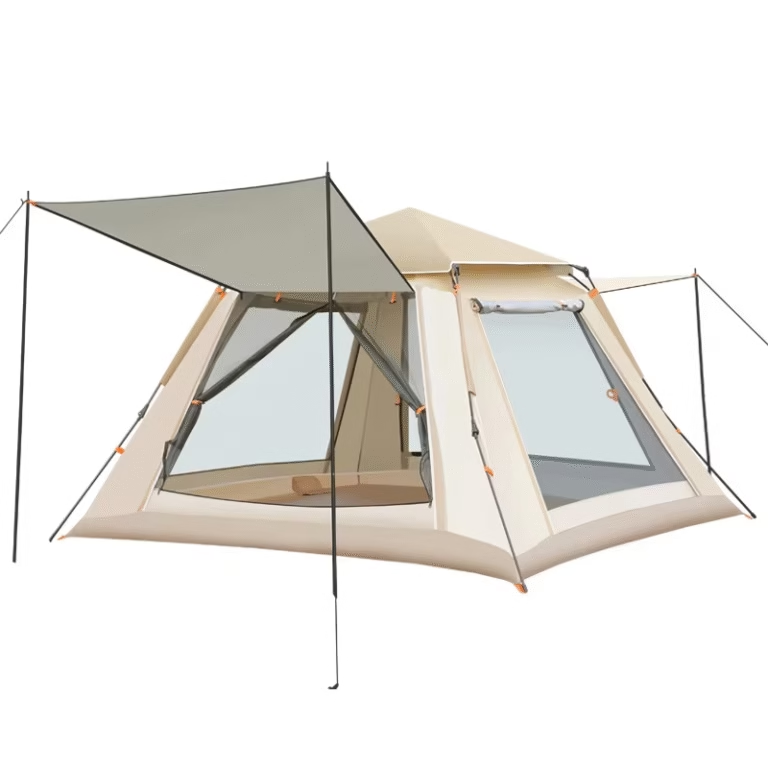
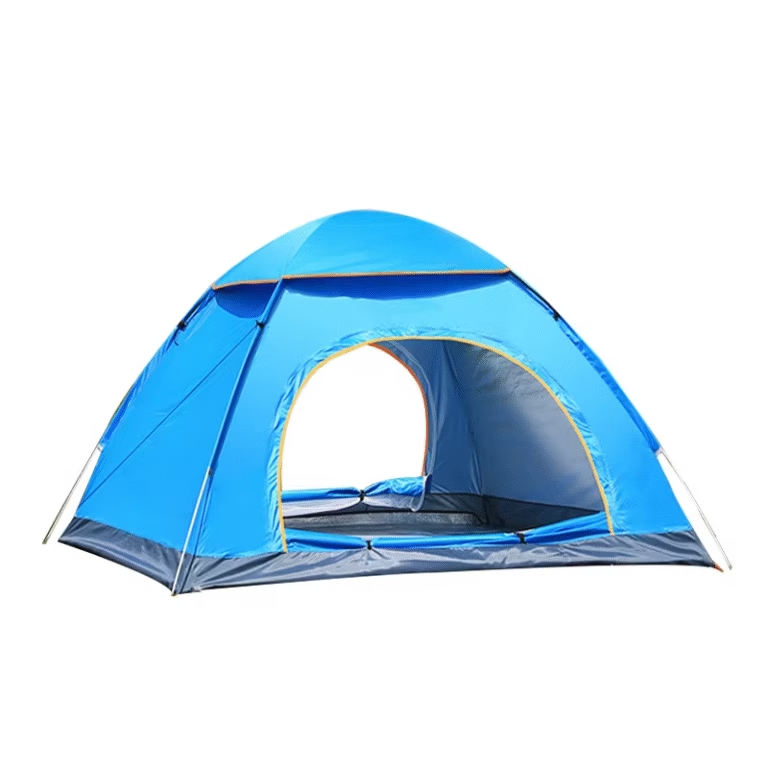
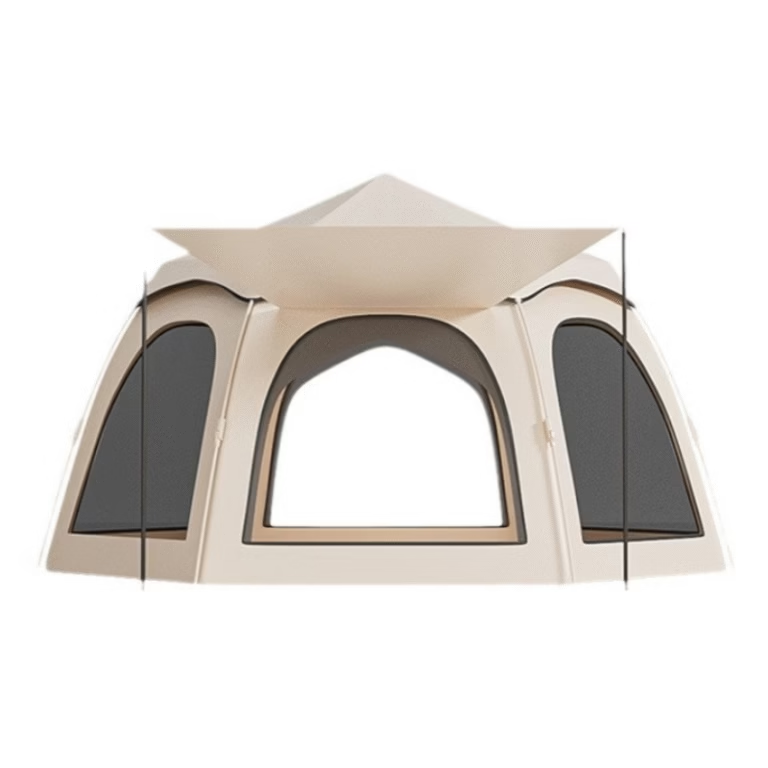
Browse the AnttifySport catalog for tents covered in this article. All products shown here are part of our wholesale lineup — wholesale pricing, low MOQ, and OEM/ODM support available. Contact our team for quotes.