Ski Equipment Assortment by Retail Channel: What Each Storefront Actually Sells
Published: 2026-11-01 | Category: Market Insights | Reading time: 10 min
Executive Summary
Ski equipment demand is usually discussed in terms of how much of it there is and when it peaks. For a supplier, the more useful question is what each retail channel actually stocks, because the four main ski channels carry deliberately different product mixes and they succeed or fail on completely different criteria.
A slope-side shop survives on depth in a handful of products and on the fact that a customer with a lift pass needs to buy something today. A city sports store survives on breadth, because the customer walking in is one of several thousand skiers in the catchment and might not be going to the slopes at all. A specialist shop sells expertise as much as equipment. An online seller competes on range and availability against a warehouse full of stock.
This guide works through the assortment each channel needs, why the technical divide between equipment and accessories matters more than the seasonal divide, and what that means for how a supplier should build and sequence a ski range. It is deliberately about what goes on the shelf, not about when to place the order.
The Technical Divide That Organises Every Channel
Before any channel discussion, one distinction has to be made because it organises everything else. Ski equipment splits into two groups with opposite commercial characteristics.
Technical equipment means skis, boots, poles, helmets and goggles. These are high value, technically demanding, and mostly bought once by a customer who already knows what they want. Fitting is involved, a mistake is expensive, and the customer is often advised rather than sold to. This group has a long replacement cycle and a slow, considered purchase.
Accessories and apparel means base layers, mid-layers, gloves, socks, neckwear, gaiters, hats and small equipment items. These are low to mid price, bought on impulse or as an add-on, frequently bought in multiples, and decided without any technical consultation. They also replenish far faster, because thermal layers and socks are consumed and because a customer who bought one pair of gloves frequently replaces the pair.
The commercial consequence is that technical equipment and accessories behave as two different businesses inside one category. A channel that carries both will still make most of its unit volume on accessories and most of its revenue on equipment. Suppliers who treat the category as one line, and therefore buy one assortment for every account, end up with the wrong depth in both directions.
Channel 1: Slope-Side and Resort Retail
The shop near the lifts is the narrowest and most intense channel. The customer has already bought a lift pass, may already have skis and boots rented elsewhere, and is shopping for the layer they do not own. The transaction is fast, the price sensitivity is surprisingly low because the customer has no alternative that day, and the shop carries almost no choice.
The assortment that works here is defined by depth in a small number of categories rather than breadth across many. Goggles, gloves, base layers, neckwear and socks make up the bulk of what actually moves. Helmets may sit here too, but only if the shop will fit them properly, because a badly fitted helmet is a liability rather than a sale.
Two characteristics matter commercially. The purchase is highly weather-dependent, so the shop orders more later in the season and the supplier needs to hold stock closer to the customer than normal. And the same customer returns to the same shop all season, which makes accessories a repeat-purchase category here in a way that technical equipment never is.
Channel 2: City Sports Stores and Department Chains
This is the channel with the largest addressable customer base and the weakest skiing conviction. The buyer is stocking a category for a customer who may ski two days a year, alongside dozens of other categories competing for the same shelf. The commercial case is made on margin percentage, on the customer already in the store for something else, and on how much space the category needs to look credible without taking too much.
What works in this channel is accessory-led. Helmets, goggles, gloves, thermal base layers, ski socks and neckwear account for the overwhelming majority of units, and they sell because they are understandable without any technical knowledge. A customer can look at a pair of insulated gloves and decide immediately. The same customer cannot look at a boot and decide.
Technical equipment is present in city stores, but it is a token presence and it carries a specific risk. Boots and skis sold in a store without fitting expertise generate returns, and in a chain that carries hundreds of stores, a single badly managed technical line damages the whole account relationship rather than one shelf. The pragmatic answer for most chains is to carry accessories properly and treat technical equipment as a special order item.
Channel 3: Specialist Ski Shops
The specialist shop is the smallest channel by units and the most demanding by expectation. Here the staff sell on knowledge, the customer buys a complete outfit in one visit, and the shop is the place where technical equipment actually gets sold. This is the channel where a supplier is judged on product quality and on whether the range is coherent, not on price.
The assortment logic is different from every other channel because the customer is outfitting, not topping up. A first-time skier buying in one visit needs skis, boots, poles, helmet, goggles, gloves and layers together. The shop therefore needs breadth across categories even while carrying depth within each, and it needs the categories to fit together in price and specification, because a customer who is advised into a mismatched combination will come back with a complaint rather than a reorder.
For a supplier this channel is worth the extra attention it takes. The basket value is the highest of any channel. The reorder rhythm is strong, often monthly through the season. And the shop is an unusually good source of information, because the staff know exactly which product is being returned and why, and they will tell you.
Channel 4: Online Marketplaces and Pure-Play Retail
Online is where the assortment expectation is highest and the switching cost is lowest. A customer comparing ten listings for the same helmet expects size range, colour range, a real sizing chart, delivery before the date they need it, and an easy return. Only a handful of suppliers can meet all five, which is why the online ski market concentrates so heavily on a small number of sellers.
The category mix online differs from the specialist shop in a consistent way. Breadth of size and colour matters more than depth of specification, and this shifts the mix decisively toward accessories, where a sizing chart solves the entire buying problem and where a wide colour range costs the supplier relatively little. Technical equipment sells online, but only where the fit can be resolved without trying something on.
Returns are the structural issue in this channel, and they are concentrated in exactly the products that generate the most margin. A boot returned for fit reasons is a full loss on a high-value item. A supplier with accurate sizing charts, clear fit guidance and a generous exchange policy on accessories sees materially lower return rates, and this shows up directly in the margin rather than appearing as a service cost.
What Each Channel Needs: The Assortment Matrix
The table below sets out the assortment each channel needs, using the two axes that actually govern the decision: breadth across categories, and depth within a category.
| Channel | Core categories | Breadth vs depth | Technical equipment | Accessories | Decision driver |
|---|---|---|---|---|---|
| Slope-side / resort | Goggles, gloves, base layers, socks | Narrow, deep | Minimal | Very high | Impulse, weather, on-the-day |
| City sports store | Helmets, goggles, gloves, thermal layers | Broad, shallow | Token or special order | Dominant | Margin and space efficiency |
| Specialist shop | Full outfit: skis, boots, poles, layers | Broad, deep | Central | Supporting | Expertise and fit |
| Online retail | Helmets, goggles, gloves, socks | Very broad, medium | Selective | Dominant | Range, delivery, returns |
Read across the accessory column and the pattern is consistent: accessories are the volume category in every single channel. Read down the technical equipment column and it becomes clear why the specialist shop is the only channel where technical equipment can be sold as the primary proposition rather than as an accessory to something else.
Category-Level Assortment Guidance
Within the ski category, individual products behave differently enough that they should be ranged separately rather than as one line.
- Base layers are the closest thing the category has to a consumable. They are layered, bought in multiples and replaced when worn out, which makes them the natural traffic driver for a city store building out a ski apparel section and the most reliable reorder item for a supplier.
- Goggles are the easiest product in the whole category for a new supplier to sell, and the reason is that the decision is aesthetic. Lens tint and colour are visible in a photograph, so the customer does not need advice, and the replacement cycle is tied to wear rather than to a multi-year technical decision.
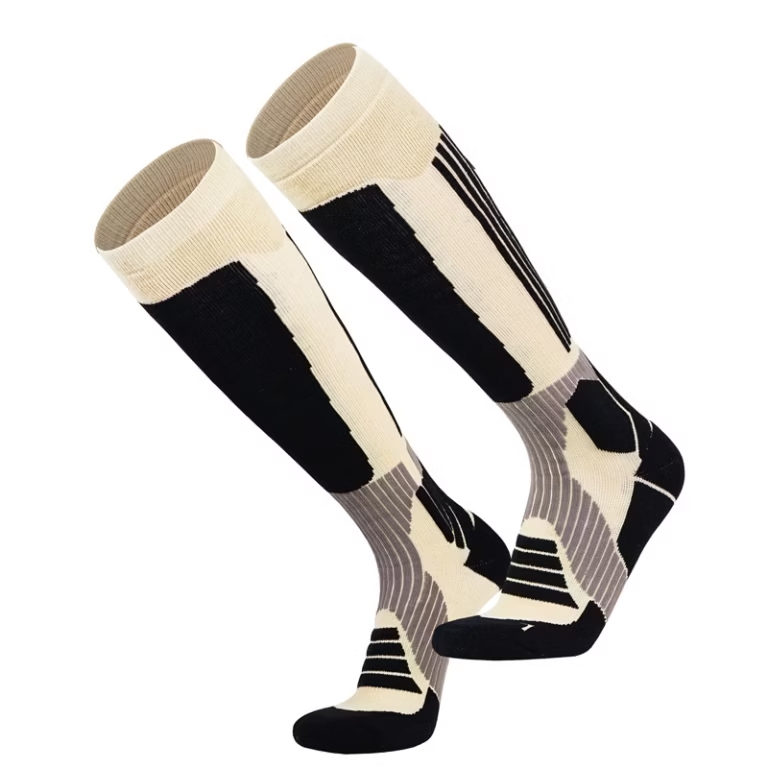
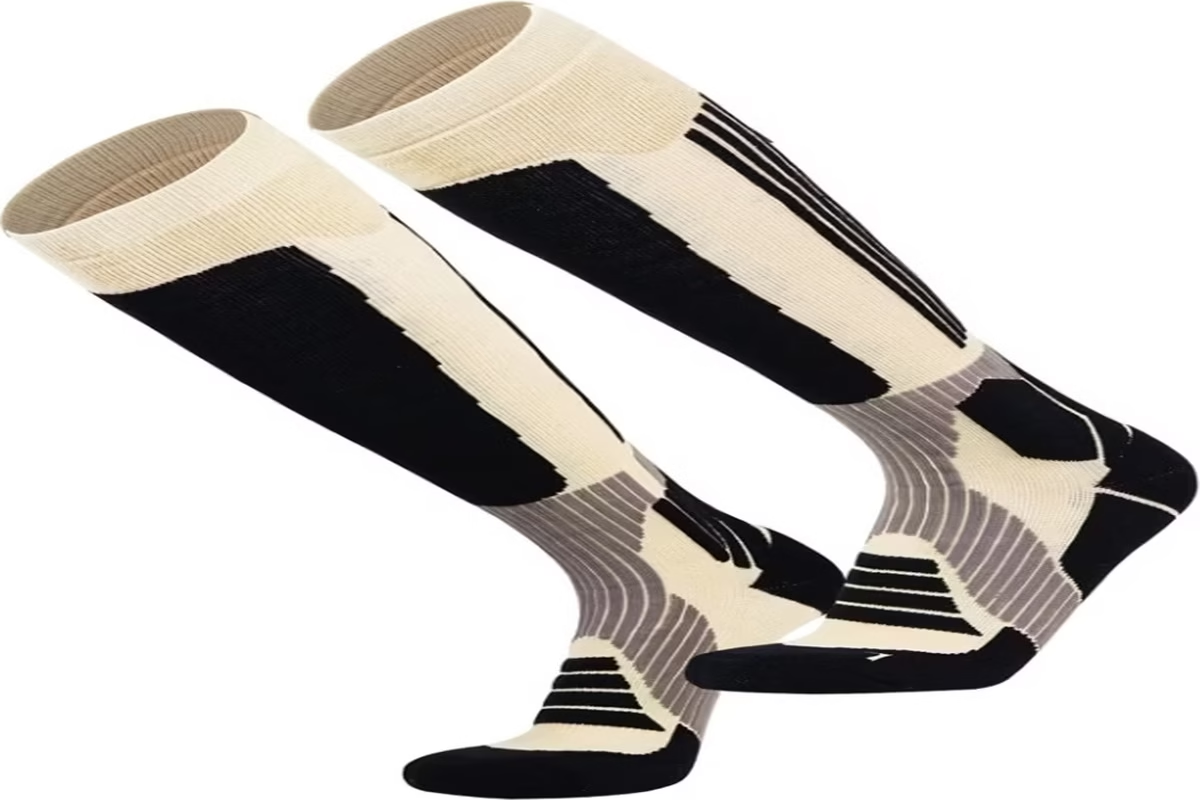
- Ski socks are a repeat-purchase line with a clear specification conversation around merino blend and cushioning density. They are also the item most often bundled at the point of sale with boots or gloves, which makes them a useful attachment product rather than a standalone purchase.
- Gloves and mittens split by climate rather than by feature, and getting that split wrong creates a season of unsold stock. Insulated models belong in colder regions and are judged on warmth; lighter shell gloves belong in city markets and are judged on fit and dexterity. The two are not substitutes and should be ranged as separate lines.
- Neckwear and gaiters are the smallest ticket item in the category and the highest margin percentage, and they are almost always an add-on at the till. They are the line that makes a small technical apparel range economically viable in a city store.
- Helmets sit in an awkward position between categories. The demand is broad and close to mandatory in developed markets, but the fitting requirement makes them a specialist channel product, and in several markets they are subject to safety certification requirements that raise the documentation burden considerably.
- Skis and boots are the highest value items and the hardest to sell from outside the specialist channel, because fit, flex and length are technical decisions with expensive consequences when wrong. A supplier entering ski with skis and boots alone is entering the hardest part of the category with the least support available.
How to Build and Sequence a Supplier Range
Pulling the channel logic together produces a fairly specific set of instructions for a supplier entering the ski category.
- Lead with accessories for any channel other than a specialist shop. Goggles, gloves, base layers, socks and neckwear are the products that sell without technical advice, at price points a general sporting goods customer accepts, and with a reorder rate that justifies the stock.
- Never send one assortment to every account. The slope-side shop needs depth in five categories, the city store needs breadth across twenty, and the specialist shop needs a coherent full outfit. These are different buys and they should be quoted as different buys.
- Match range depth to the channel’s customer, not to your production capacity. A supplier who can only produce one SKU per category should build the accessory range. One who has real technical capability should find the specialist accounts, because that is where technical equipment is actually bought.
- Treat the online channel as a separate assortment with separate depth rules. Online needs size and colour depth that a physical store does not, and it needs the fit problem solved in the listing rather than in the shop.
- Keep documentation ahead of the range. Safety certification records, material composition, care instructions and accurate size charts are not administrative overhead. They are the difference between a product a retailer can put on a shelf and one it cannot, and they determine whether the online channel is viable at all.
- Do not carry technical equipment into an account that cannot fit it. Returns from a technical line in a non-fitting channel cost more than the margin they generate, and they damage the account relationship across every other category.
Where the Real Competition Is
There is no shortage of suppliers offering ski accessories. What buyers in this category consistently report is a shortage of suppliers who can hand them complete, correctly documented product in the depth their specific channel requires, with a delivery date they can commit to their own customers.
That is the gap a new supplier can actually occupy. It is not found by matching the lowest price on a glove, and it is not found by having the widest nominal range. It is found by being able to answer three questions accurately: what does this channel stock, at what depth, and with what documentation behind it.