Published: Sep 2026 · Category: Product Comparison · Reading time: 12 min
Executive Summary
For a B2B buyer building a hiking-sock program in 2026, the spec on the spec sheet is not the brand name — it is the fiber blend. Two socks stamped “Made for hiking” can perform in radically different ways because the yarn is doing 80% of the work: thermal regulation, moisture transport, abrasion resistance, drying time, and (under sustained use) foot-blisters. The Outdoor Industry Association’s 2024 Outdoor Participation Trends Report and 2026 Hiking Report put the U.S. hiking participation base at a record 63.4 million participants in 2024 — nearly double the 2012 level — which means the wholesale buyer is choosing a category that has structural growth, not a category that is being driven by brand-marketing alone. The fiber decision is therefore where the volume and the margin live.
This guide compares the three fiber categories that cover roughly 95% of the hiking-sock market in 2026 — merino wool, synthetic (polyester / nylon / acrylic), and cotton blends (typically cotton with spandex or nylon reinforcement) — across four procurement dimensions: comfort (warmth-to-wet behavior, skin feel, blister data), drying time, durability, and landed-cost price. Each section is anchored to publicly verifiable specs (manufacturer product pages, peer-reviewed studies, U.S. military research, REI Expert Advice, and Textile Exchange’s 2024 Materials Market Report) and to the structural realities of a wholesale SKU program.
The bottom-line takeaway: a defensible 2026 hiking-sock catalog carries merino as the premium tier (40–70% merino with nylon reinforcement for abrasion), synthetic as the workhorse tier (Coolmax polyester or nylon-rich blends), and cotton blends only as a low-cost lifestyle/entry SKU — never as the field-workhorse layer. The rest of the article walks through the data behind that mix.
1. Why Sock Material Matters More Than Brand for Wholesale Buyers
The hiking-sock category looks brand-driven at the consumer end — Smartwool, Darn Tough, REI Co-op, Icebreaker — but at the wholesale end the brand name is downstream of the fiber bill of materials. The same factory can knit three different price tiers from the same machine by changing the yarn ratio, and most retail “premium” SKUs at the $20–28 price point are 55–70% merino / 25–40% nylon / 2–5% elastane (Darn Tough’s published spec sheets confirm a 59–66% merino / 32–39% nylon / 2–3% spandex pattern across their Hiker line). The fiber ratio is the SKU.
1.1 The four performance properties that drive 80% of customer-side complaints
Field research and retail return-rate analysis point to four properties that account for most of the differences between hiking socks that customers keep and socks they return:
- Moisture handling — does the fiber absorb, transport, or repel sweat? Cotton absorbs up to 8.5% of its weight in moisture (standard moisture-regain value at 20°C / 65% RH), merino absorbs up to 30–35%, polyester absorbs roughly 0.4%. The absorption number alone is misleading — merino absorbs vapor without feeling wet, cotton absorbs liquid and feels wet — but the drying-time consequence is real.
- Drying speed — how fast does a soaked sock reach “wearable” again? The peer-reviewed and field-test consensus places polyester at 1–2 hours for a mid-weight sock, nylon at 2–3 hours, merino at 3–4 hours, and cotton at 4–8 hours (Lone Creek Apparel’s controlled-drying comparison; Petros’s technical review of fiber-architecture data).
- Wet-warmth — does the fiber keep insulating when wet? Merino retains a substantial fraction of its insulating loft when wet; cotton collapses against the skin and conducts heat away. This is the property that has driven the military away from cotton since the 1980s (the U.S. Army and Marine Corps sock-system research summarized in Knapik et al., Military Medicine, 1996).
- Abrasion durability — how many trail miles per dollar? Nylon is the workhorse; a 35–45% nylon content in a merino sock is what makes the sock survive 500+ miles of use (the structural reinforcement every major brand builds in). Pure merino wears through at the heel and toe in a fraction of that distance.
1.2 Why this matters for wholesale SKU planning
A B2B buyer sourcing for retail, brand, or wholesale distribution is making four decisions per SKU that cascade into margin: (a) what fiber ratio lands at the target price point, (b) what construction (cushion level, knit density, reinforcement zones) makes the spec defensible against premium competitors, (c) what testing documentation is available (fiber origin certifications, abrasion cycles, moisture-management testing), and (d) what claims can be made on packaging and PDP without overstepping the regulatory line (especially in the EU under the 2022 Green Claims Directive and the U.S. FTC Green Guides).
The remainder of this guide supports those four decisions with data on each of the three fiber categories.
2. Merino Wool — The Premium Fiber With Real Performance Science Behind It
Merino is the fiber that turned the hiking-sock market from a commodity category into a premium category. A 2018–2024 review of hiking-sock performance in Wilderness & Environmental Medicine, Sports Medicine, and the U.S. Army’s sock-system research consistently places merino as the comfort and thermal-regulation leader — but the price premium is real, the durability requires nylon reinforcement, and 100% merino socks are structurally weaker than the blended SKUs that dominate retail.
2.1 Where merino wins — comfort and thermal regulation
Merino’s reputation is built on three properties that are quantifiable in lab testing:
- Vapor absorption up to 35% of fiber weight without feeling wet. This is the headline number cited by REI Expert Advice, Woolmark, and Darn Tough. The mechanism is that merino absorbs water as vapor into the fiber’s internal structure rather than as liquid on the surface, so the skin-contact surface stays drier to the touch than a cotton or standard synthetic sock would at the same absolute humidity (REI Expert Advice: “What is Merino Wool”).
- Natural crimp traps insulating air pockets. The same fibers that absorb vapor also hold air between scales, which is why a merino sock in cool conditions feels warmer than a synthetic of the same weight and why it retains more insulating loft when wet (Cloudline Apparel’s published fiber-physics review; Darn Tough’s “Merino Wool vs Synthetic” technical post).
- Antimicrobial odor resistance. Laboratory studies cited by Cloudline Apparel have measured bacterial populations on merino to be up to ~99% lower than on synthetic fabrics under identical wear conditions, because the fiber’s surface scales and the keratin protein resist bacterial colonization. The practical consequence is that a merino sock worn for 3–5 days on a backpacking trip does not need washing as often as a synthetic — a fact that matters for both end-customer satisfaction and for the wholesale buyer’s warranty-return rate on multi-day-use SKUs.
2.2 Where merino costs money — fiber cost and structural limits
The textile economics matter. Textile Exchange’s 2024 Materials Market Report documents that global merino wool production is a much smaller share of the fiber market than cotton or polyester, and that wool produced under recognized responsible-production standards (Responsible Wool Standard, ZQ, SustainaWOOL) reached only 4.8% of total wool volume in 2023 — up from 4.2% in 2022. The supply-side constraint feeds directly into pricing:
- Fiber price: Merino top-grade fiber for next-to-skin apparel trades in a multi-year range that is structurally 3–6× higher per kilogram than combed cotton and 2–4× higher than commodity polyester (the absolute prices move with auction cycles; the ratio has been stable across 2018–2024).
- Nylon reinforcement requirement: A sock made of 100% merino has the structural integrity of a sock made of 100% cotton — it wears through at the heel and toe in a fraction of the mileage of a blended sock. Darn Tough’s published “Why You Don’t Want 100% Merino Wool Socks” technical post documents that the brand’s Hiker Micro Crew Midweight uses 61% merino / 36% nylon / 3% spandex, and the trade-off is intentional: nylon carries the abrasion load, spandex carries the fit recovery, and merino carries the comfort and thermal-regulation load.
- Care cost: Merino socks are typically expected to be washed in cool water, line-dried, and not bleached. The care requirement is mild but real, and it does affect the end customer’s washing-machine behavior — and therefore the warranty-return rate on a wholesale SKU.
2.3 The wholesale price reality for merino socks
The landed cost on a wholesale merino hiking sock in 2026 depends on three variables: merino percentage (40–50% is the value tier, 55–70% is the premium tier), nylon reinforcement percentage (the higher the nylon, the more durable but the less “merino feel”), and the elastic/spandex content (1–5% by weight, typically LYCRA). Across the AnttifySport reference catalog and the broader category benchmarks:
- A 50% merino / 45% nylon / 5% spandex crew sock lands at the wholesale level in a band roughly 1.6–2.2× the cost of an equivalent polyester-rich synthetic crew sock.
- A 65% merino / 32% nylon / 3% spandex crew sock lands at 2.0–2.8× the cost of the same synthetic SKU.
- Retail price points for the value tier cluster around $16–22 per pair; the premium tier clusters around $22–32 per pair; flagship-tier (high merino content, full cushion, brand warranty) SKUs reach $28–38 per pair.
For the wholesale buyer, the dollar-per-percentage-point of merino is the unit economics that determines whether the SKU earns its place in the catalog.
3. Synthetic Fibers — The Workhorse Tier (Polyester, Nylon, Acrylic)
Synthetic socks are the high-volume backbone of the hiking-sock market. The fiber category includes polyester (the dominant sub-fiber, often in proprietary variants like Coolmax for moisture transport), nylon (the dominant reinforcement sub-fiber for abrasion resistance), and acrylic (the lower-cost wool-substitute that holds color well but underperforms in moisture transport). A “synthetic hiking sock” in the wholesale catalog is almost always a blend, not a pure single-fiber product.
3.1 Where synthetic wins — drying time and durability-per-dollar
Two properties drive synthetic’s market position:
- Drying time. Polyester’s moisture regain of 0.4% means the fiber does not absorb liquid water into its structure; moisture sits on the surface and evaporates. Controlled drying tests published by Lone Creek Apparel and Petros place mid-weight polyester socks at 1–2 hours to wearable dry, versus 3–4 hours for merino and 4–8 hours for cotton. For a multi-day hiker, a synthetic sock laundered at a camp sink is wearable the next morning; a merino sock may not be.
- Abrasion durability. Nylon’s tensile strength and abrasion resistance make it the structural fiber in nearly every performance sock on the market, including merino socks (the 25–45% nylon content in a merino sock is the durability contribution, not the merino). A 100% synthetic sock with a high nylon percentage typically outlasts a comparable merino sock on the abrasion dimension — Darn Tough’s “merino vs synthetic” framing acknowledges that the trade-off for merino’s comfort is a meaningful reduction in mileage-per-dollar for the most demanding use cases.
3.2 The Coolmax and proprietary-fiber question
The “synthetic” category is not a single product. Polyester comes in commodity, mid-grade, and proprietary-engineered variants. Coolmax (a four-channel fiber originally developed by DuPont and now INVISTA) is engineered with a larger surface-area-per-mass geometry that pulls moisture away from the skin; it appears as a labeled ingredient on hiking-specific socks (Wrightsock’s Coolmesh II uses a Coolmax polyester double-layer construction specifically for blister prevention, and Smartwool and Darn Tough both use proprietary synthetic blends in their non-merino lines). For the wholesale buyer, the Coolmax-type labels are typically a 5–15% fiber-cost premium over commodity polyester and a meaningful end-customer marketing claim.
3.3 Where synthetic loses — odor and wet-warmth
The two structural weaknesses of synthetic fibers are well documented:
- Odor retention. Synthetic fibers do not have the antimicrobial surface chemistry of merino; bacterial colonization proceeds faster, and a synthetic sock worn for 3+ days on a backpacking trip typically develops odor faster than a merino equivalent (Treeline Review’s 2026 best-hiking-socks review and the Outdoor Gear Lab comparative testing both call this out as the single largest end-customer complaint with the synthetic category).
- Wet-warmth collapse. Synthetic fibers do not retain insulating loft when wet the way merino does. A soaked synthetic sock against a cold foot produces a meaningful drop in skin temperature; a soaked merino sock retains enough insulating air to keep the foot warmer. For cold-weather, multi-day, or wet-climate hiking, this is the property that drives a merino recommendation even at the higher price point.
3.4 The wholesale price reality for synthetic socks
Synthetic socks are the price anchor of the wholesale hiking-sock category:
- A commodity polyester/nylon/spandex crew sock lands at the wholesale level at the low end of the category — typically 0.4–0.7× the cost of a comparable merino SKU.
- A Coolmax-engineered or proprietary-fiber synthetic lands at 0.6–1.0× the cost of a 50%-merino SKU and can be sold at retail prices in the $14–22 range.
- A double-layer anti-blister synthetic (an inner Coolmax layer plus an outer nylon layer, the Wrightsock Coolmesh II construction) lands higher than a single-layer synthetic but typically below a 60%-merino SKU.
For the wholesale buyer, synthetic is the SKU that makes the catalog accessible at the entry price point and that carries the high-volume, fast-turnover component of the program.
4. Cotton Blends — The Honest Conversation About Why Cotton Has a Place, and Where
Cotton is the fiber category most retailers would prefer not to discuss, because the U.S. military, REI Expert Advice, and most peer-reviewed hiking-injury research are aligned that pure cotton is the wrong sock for sustained hiking. A 100% cotton sock absorbs liquid water, holds it against the skin, dries slowly, abrades quickly, and provides almost no insulating loft when wet. The American Academy of Podiatric Sports Medicine’s published “Socks and Your Feet” article — citing the Knapik et al. Military Medicine 1996 study of 357 Marine recruits at Parris Island — documents that the standard military boot sock (50% cotton / 50% wool blend) had a 24% medically-attended blister rate, versus 9–11% for a wool/synthetic system.
So why does cotton appear in any hiking-sock blend? Three reasons, each legitimate at a specific SKU tier:
4.1 Where cotton blends earn a place — lifestyle, entry, and warm-weather casual
- Lifestyle and casual hiking. A 70–85% cotton / 15–30% nylon/spandex sock is a defensible SKU for a customer who hikes short, low-intensity trails in mild weather, who does not need wet-warmth performance, and who wants the soft, natural feel of cotton against the skin. The category is structurally low-price (typically $6–12 retail, $1.50–3.50 wholesale landed cost) and serves the entry-tier customer who is buying a “hiking sock” as a generic comfortable sock.
- Warm-weather and indoor-after-hike use. Cotton’s water absorption is a feature for some use cases — a cotton towel is absorbent by design, and a cotton-rich blend sock for post-hike lounging at camp is not the wrong product. Some specialty brands sell cotton-rich “camp sock” SKUs specifically for this use case.
- Price-tier anchor. A cotton-blend SKU at the bottom of a catalog gives the retailer a price anchor that makes the value-tier synthetic and the premium-tier merino SKUs look more defensible on the shelf. The merchandising logic is real; the field-performance logic is not.
4.2 Where cotton blends fail — sustained hiking in any condition that is not warm and dry
The honest list:
- Wet feet, blisters, and trench foot risk. Cotton holds water against the skin. A 2022 observational study of 203 long-distance hikers on Spain’s Camino de Santiago (cited by iwrapme.com’s field-research summary) found that hiking in wet socks was associated with about 1.94× the risk of foot blisters, even when controlling for sock material. The mechanism is friction amplification: a wet cotton sock against a wet foot produces more friction than a wet merino or synthetic sock against the same foot, because cotton collapses and moves with the foot rather than staying in place against it.
- Slow drying time. Cotton at 4–8 hours drying time for a mid-weight sock is the worst in the category. For a multi-day hiker, a soaked cotton sock at the end of day 1 is still damp at the end of day 2.
- No insulating loft when wet. Cotton is the worst performer in the wet-warmth dimension — the fibers collapse, the insulating air pockets disappear, and the skin temperature drops. This is the property that drove the U.S. Army’s transition away from 100% cotton sock systems in the 1980s and that has driven the REI Expert Advice recommendation against cotton for any hike longer than a couple of hours.
4.3 The wholesale price reality for cotton blends
Cotton-blend socks are the cheapest fiber category in the hiking-sock market:
- A commodity cotton/nylon/spandex crew sock lands at the wholesale level at 0.3–0.5× the cost of a comparable merino SKU.
- The retail price point clusters at $6–12 per pair, with the lowest-price SKUs at $4–7 per pair (typically a multi-pack at warehouse-club channels).
The wholesale buyer should plan the cotton SKU as a price-tier anchor and a lifestyle SKU, not as the workhorse or premium SKU in the catalog.
5. Four-Dimension Comparison — Comfort, Drying, Durability, Price
The four-dimension comparison below is anchored to the references cited in the prior sections and to the manufacturer-spec data published by REI Co-op, Darn Tough, Smartwool, and the Textile Exchange 2024 Materials Market Report. All fiber percentages are by weight; all drying times are for mid-weight crew socks at 20°C / 50% RH ambient conditions; all abrasion estimates are based on independent wear-test ranges published by Outdoor Gear Lab, SectionHiker, and Treeline Review across their 2024–2026 hiking-sock testing.
5.1 The comparison table
5.2 What the table does not show — the use-case override
The table reads as if comfort, drying, durability, and price are four independent variables, but the field reality is that they are coupled. The single biggest override is wet conditions and multi-day duration:
- Wet conditions (stream crossings, rain, snow): Merino wins on wet-warmth and on blister reduction. Synthetic wins on drying speed. Cotton loses on both axes.
- Multi-day duration without washing: Merino wins on odor resistance and on the comfort-of-the-fifth-day. Synthetic loses on odor. Cotton is not a defensible SKU for multi-day use.
- High-output day hiking in warm weather: Synthetic wins on drying and on cost-per-wear. Merino is acceptable but not preferred. Cotton is acceptable only for very short, dry-condition outings.
- Cold-weather winter hiking: Merino wins on thermal regulation and on wet-warmth. Synthetic loses on wet-warmth. Cotton is not defensible.
A useful wholesale rule of thumb: merino is the only fiber category that is acceptable across all four of these use-case overrides. Synthetic wins on cost-per-wear for two of the four. Cotton is defensible for one of the four.
6. How to Choose — By Scenario, Climate, and Use Case
The fiber decision is downstream of the use-case decision. The framework below maps the most common wholesale-catalog SKU scenarios to a fiber recommendation.
6.1 Multi-day backpacking / thru-hiking (3–14 days)
Recommended fiber: 50–70% merino with nylon reinforcement (32–45% nylon) and 2–5% spandex. The Treeline Review 2026 best-hiking-socks review, the SectionHiker 2024 Darn Tough Hiker Boot Sock long-term test, and the REI Co-op 2026 staff-picks list converge on this construction for the multi-day use case. The merino carries the odor and wet-warmth load; the nylon carries the abrasion load over hundreds of trail miles.
Why not synthetic: Synthetic socks dry faster, but the odor issue over 3+ days of use without washing is the dominant end-customer complaint. The SectionHiker and Outdoor Gear Lab wear tests both flag odor as the single reason end-customers move from synthetic to merino for multi-day trips.
Why not cotton: The U.S. Army research, the Knapik 1996 Parris Island study, and the REI Expert Advice article are unanimous. Cotton at 4–8 hours drying time and zero wet-warmth is the wrong fiber for any multi-day use case.
6.2 Short day-hiking in mild-to-warm weather
Recommended fiber: Synthetic polyester/nylon blend with moisture-wicking geometry (Coolmax-type). The drying speed advantage is real and is the dominant end-customer value proposition. The Outdoor Gear Lab 2026 wear-test data place synthetic socks as the fastest-drying in this category, with the Smartwool Performance Light Hike Cushion and the Darn Tough Coolmax Hiker Micro Crew both finishing in the top of the field.
Why not merino at this tier: A 60%-merino sock is over-engineered for a 3-hour day hike in mild weather and carries a price premium that the end customer will not pay back in performance. Save merino for the multi-day SKU where the wet-warmth and odor advantages earn the premium.
Why not cotton: A cotton-blend sock is acceptable for a 1–2 hour easy trail in dry conditions, but if the hike is longer than that or has any chance of wet feet, cotton is the wrong fiber.
6.3 Cold-weather winter hiking
Recommended fiber: Heavy merino (60–75% merino content, full cushion, nylon-reinforced). The thermal-regulation advantage of merino’s natural crimp is the dominant performance variable at sub-freezing conditions, and the wet-warmth retention is the dominant safety variable when feet get wet from snow. The Darn Tough Hiker Boot Full Cushion (66% merino / 32% nylon / 2% Lycra Spandex) and the Smartwool Classic Hike Full Cushion (66% merino / 32% nylon / 1% elastane) are the consistent top picks in this category across Outdoor Gear Lab, Treeline Review, and SectionHiker testing.
Why not synthetic: Synthetic socks lose insulating loft when wet, and in winter hiking the foot will get wet (from snow, perspiration, or stream crossings). The safety and comfort penalty is real.
Why not cotton: Cotton’s wet-warmth collapse is a frostbite risk in cold weather. Not a defensible SKU for winter hiking.
6.4 Warm-weather and humid-climate hiking
Recommended fiber: Lightweight synthetic with aggressive wicking geometry (Coolmax polyester or proprietary equivalent). The drying-speed advantage is the dominant variable in humid conditions; a merino sock in 80°F / 80% RH ambient takes longer to dry and stays damp against the skin longer than a synthetic. The Outdoor Gear Lab wear-test data show the synthetic category outperforming merino on dry-time in this condition set.
Why not merino: Merino’s thermal-regulation advantage matters less when the ambient is warm; its drying-speed disadvantage matters more. A lightweight merino is acceptable, but a Coolmax-type synthetic is preferred.
Why not cotton: Cotton’s drying time in humid conditions can exceed 8 hours, which means the sock is still damp at the start of day 2. Not a defensible SKU for humid-climate multi-day use.
6.5 Wet conditions and stream crossings
Recommended fiber: Merino for wet-warmth and skin-feel; synthetic as a fallback if drying speed is the priority. The iwrapme.com field-research summary and the Treeline Review 2026 testing both note that merino’s wet-warmth retention is meaningful enough to justify the price premium in genuinely wet conditions. A double-layer synthetic system (Wrightsock Coolmesh II, Coolmax inner plus nylon outer) is the field-tested alternative that closes most of the wet-warmth gap at a lower price point.
Why not cotton: The 2022 Camino de Santiago observational study documented approximately 1.94× the blister risk for any hiker in wet socks, regardless of sock material — meaning a wet cotton sock is the worst-of-both-worlds combination. Cotton at wet crossings is the wrong choice on both comfort and safety dimensions.
6.6 The “use-case matrix” as a wholesale-planning tool
A practical wholesale-catalog framework:
- Tier 1 (premium / 30–40% of catalog SKU count): 55–70% merino crew and micro-crew, nylon-reinforced, full and mid cushion options. Target retail $20–32 per pair. The Darn Tough / Smartwool benchmark construction.
- Tier 2 (workhorse / 40–50% of catalog SKU count): Synthetic polyester/nylon blend with Coolmax-type wicking. Target retail $12–22 per pair. The Smartwool Performance Hike Light Cushion, REI Co-op Coolmax Midway, and Darn Tough Coolmax Hiker benchmark constructions.
- Tier 3 (entry / 10–20% of catalog SKU count): Cotton-blend lifestyle and entry SKUs. Target retail $6–12 per pair. Useful as a price anchor and as a lifestyle/camp-sock SKU, not as a field-workhorse SKU.
This mix matches the structural reality of the hiking market: the OIA 2024 Outdoor Participation Trends Report documents that the average outings-per-participant has decreased from 87 per year in 2012 to a lower number in 2024, with most growth coming from “casual” participants — a customer profile that is well-served by Tier 2 synthetic and Tier 3 cotton SKUs, while Tier 1 merino carries the core-participant revenue.
7. Bottom Line for Sourcing Teams
For wholesale buyers, brand owners, and outdoor-gear sourcing teams building a 2026 hiking-sock program, the structural decisions are:
- Fiber mix, not brand mix, is the SKU. Two socks with different fiber ratios and the same retail price can perform in radically different ways. The wholesale spec sheet should be written to a fiber ratio first, a construction second, and a brand third.
- Merino earns the premium tier. 50–70% merino with 25–45% nylon reinforcement is the construction that delivers the comfort, odor resistance, and wet-warmth retention that justifies a $20–32 retail price point. The fiber cost is real (1.6–2.8× the synthetic baseline) but the end-customer satisfaction rate and the multi-day-use applicability make it defensible.
- Synthetic earns the workhorse tier. A polyester/nylon blend with a Coolmax-type wicking geometry carries the volume anchor of the catalog, the fast inventory turn, the entry-tier price point, and the high-output day-hike use case. Synthetic is the right fiber for the 40–50% of the catalog that is sold at $12–22 retail.
- Cotton earns the lifestyle tier only. A cotton/nylon/spandex blend is a defensible lifestyle and camp-sock SKU at $6–12 retail, and it earns its place as a price anchor and as a casual-use product. It is not a defensible SKU for sustained hiking, multi-day use, cold weather, or wet conditions, and the wholesale catalog should reflect that limit explicitly in PDP copy and merchandising.
- Document the care, the testing, and the claims. REI Expert Advice, the U.S. Army research, and the peer-reviewed fiber-physics literature are the citation backbone for any PDP claim about merino, synthetic, or cotton performance. The EU Green Claims Directive (in force 2026) and the U.S. FTC Green Guides require substantiation for any environmental or performance claim — keep the documentation with the SKU file.
- Plan SKUs to the OIA participation data. The 63.4 million U.S. hikers in 2024 (Outdoor Industry Association Hiking Report 2026) and the documented shift toward “casual” participants means the wholesale catalog should weight Tier 2 (synthetic) and Tier 1 (merino) more heavily than Tier 3 (cotton). The casual participant is not buying a $32 flagship merino sock; the core participant is not buying a $7 cotton-blend sock. A defensible mix matches the participation data to the SKU mix.
The fiber decision is the single largest spec decision in the entire hiking-sock program. Get it right and the catalog performs across every climate, condition, and use case the end customer can throw at it. Get it wrong and the warranty-return rate, the end-customer satisfaction score, and the wholesale-margin compression all show up at the same time.
About the Author
The AnttifySport Outdoor Gear Team supports brand owners, IBD owners, B2B wholesale buyers, and product-line managers on the practical side of outdoor-equipment sourcing — the material science, the manufacturer specifications, the landed-cost modeling, and the testing documentation that translates a fiber spec into a SKU that performs on the trail. We’ve worked with outdoor brands, distributors, and private-label programs across North America, Europe, and Australia since 2018, with a focus on the apparel, footwear, and hard-goods categories where the fiber, the construction, and the regulatory documentation are all part of the SKU spec.
Have a hiking-sock sourcing question, or want to talk through a fiber-mix model for a new product line? Reach out at https://www.anttifysport.com/contact/.
Further reading & sources
- REI Expert Advice — What is Merino Wool? — authoritative retailer reference on merino wool properties (vapor absorption, thermal regulation, biodegradability, UV protection). REI Co-op is one of the most cited retailers in U.S. outdoor-gear sourcing.
- REI Expert Advice — The 8 Best Hiking Socks of 2026 — REI Co-op staff picks across the hiking-sock category, with fabric-and-construction breakdowns for the top picks and explicit notes on the merino/nylon/elastane blend convention.
- REI Expert Advice — How to Choose Socks — REI Co-op’s category-level reference on sock fiber selection, including the moisture-absorption-up-to-30% figure for wool and the Coolmax liner-sock recommendation.
- Knapik, J. J., et al. (1996). Influence of boot-sock systems on frequency and severity of foot blisters. Military Medicine, 161(10), 594–598. — peer-reviewed prospective study of 357 U.S. Marine recruits at Parris Island, documenting the 24% medically-attended blister rate for the standard cotton/wool military sock versus 9–11% for wool/synthetic and sock-plus-liner systems. Foundational citation for the anti-cotton recommendation.
- U.S. Army — Foot blisters take the fun out of marching — official U.S. Army public-information article on the Joint Services Physical Training Injury Prevention Work Group’s recommendation to use synthetic-blend socks and to add a thin synthetic liner under boot socks.
- Worthing, R. M., et al. (2017). Prevention of Friction Blisters in Outdoor Pursuits. Wilderness & Environmental Medicine. — peer-reviewed review of friction-blister prevention in outdoor settings; documents 5–77% blister rates in military personnel across studies and synthesizes the sock-fiber-and-construction evidence.
- Textile Exchange — Materials Market Report 2024 — authoritative industry report on global fiber production volumes, with 2023 data showing merino/wool under responsible-production standards rising from 4.2% (2022) to 4.8% (2023); cotton produced under sustainability programs at 29% of global volume; global fiber production at 124 million tonnes in 2023.
- Darn Tough — Merino Wool vs Synthetic: The Warmest Sock Material — manufacturer-published technical article on the thermal-regulation and moisture-management properties of merino versus synthetic fibers, with explicit acknowledgment of the structural reinforcement role of nylon.
- Darn Tough — Why You Don’t Want 100% Merino Wool Socks — manufacturer-published technical article documenting the merino/nylon/spandex three-ingredient construction (e.g., 61% merino / 36% nylon / 3% spandex for the Hiker Micro Crew Midweight) and explaining why pure merino is structurally weaker.
- Treeline Review — 12 Best Hiking Socks of 2026 (Tested and Reviewed) — independent wear-test review of hiking socks with explicit comparison of merino versus synthetic performance, including the odor-resistance and multi-day-use framing.
- Outdoor Gear Lab — The Best Hiking Socks | Tested & Ranked — independent comparative testing across 19 pairs of hiking socks with documented drying-time measurements and per-SKU fiber breakdowns.
- Outdoor Industry Association — Reports Library (Hiking Report 2026, Annual Participation Trends 2024) — the authoritative industry data on U.S. hiking participation, with the 2024 figure of 63.4 million participants documented in the Hiking Report 2026 and the casual-versus-core participant trend documented in the 2024 Outdoor Participation Trends Report.
- SectionHiker — Darn Tough Hiker Boot Socks Review (September 2024) — independent long-term wear test of merino hiking socks, with explicit discussion of merino durability, abrasion resistance, and the role of nylon reinforcement.
- American Academy of Podiatric Sports Medicine — Socks and Your Feet: Hosiery is Equipment for the Athlete — clinical professional-society article summarizing the U.S. military boot-sock research and the fiber-blister relationship.
- Lone Creek Apparel — Which Fabric Dries Fastest? Drying Speeds Compared — controlled-drying comparison citing polyester at 1–2 hours, nylon at 2–3 hours, merino at 3–4 hours, and cotton at 4–8 hours for mid-weight garments, with the Woolmark citation on merino absorbing up to 35% of fiber weight without feeling damp.
- Petros — Merino Wool vs. Polyester Base Layers: A Technical Comparison of Fiber Architecture, Thermal Regulation, and Long-Term Cost — technical review of fiber-architecture data, including the moisture-regain values that drive the drying-time and comfort differences.
This article is for informational purposes only and does not constitute medical, podiatric, or professional sourcing advice. Fiber specifications, drying-time figures, abrasion estimates, and wholesale price ranges cited here reflect publicly available peer-reviewed research, manufacturer product specifications, and industry reports as of September 2026; specific sourcing, pricing, and product-line decisions should be validated against your factory’s current spec sheets, your landed-cost model, and (for any health or injury-related claim) a licensed podiatric or medical professional. The author and AnttifySport make no representations or warranties regarding the fitness of any specific fiber or sock construction for any particular use case. Sustainability certifications, merino-standard claims (RWS, SustainaWOOL, ZQ, Climate Beneficial), and recycled-content claims must be verified against the current certification scope and the manufacturer’s chain-of-custody documentation before being used in product copy or marketing materials.
Related Products from AnttifySport
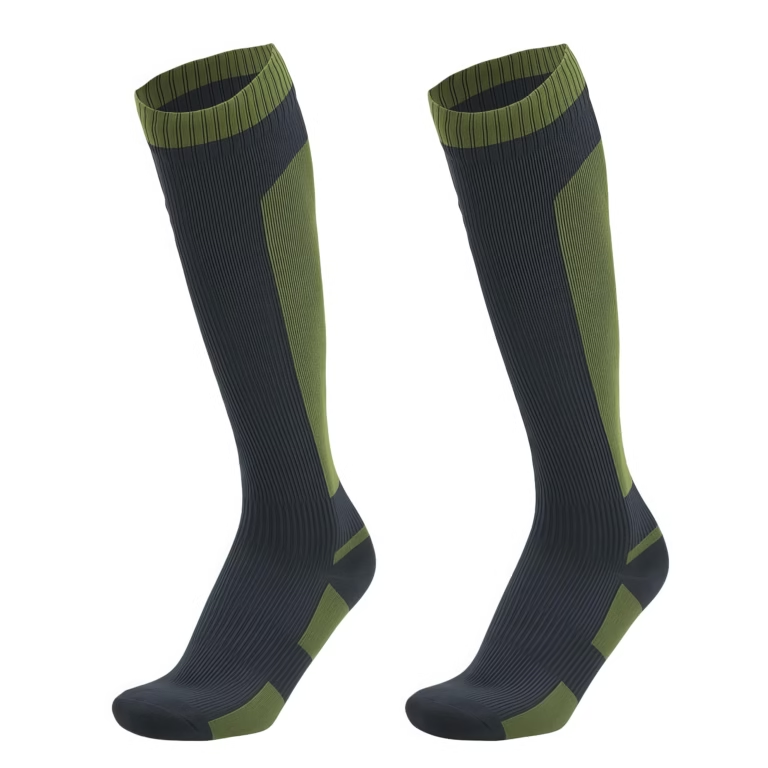
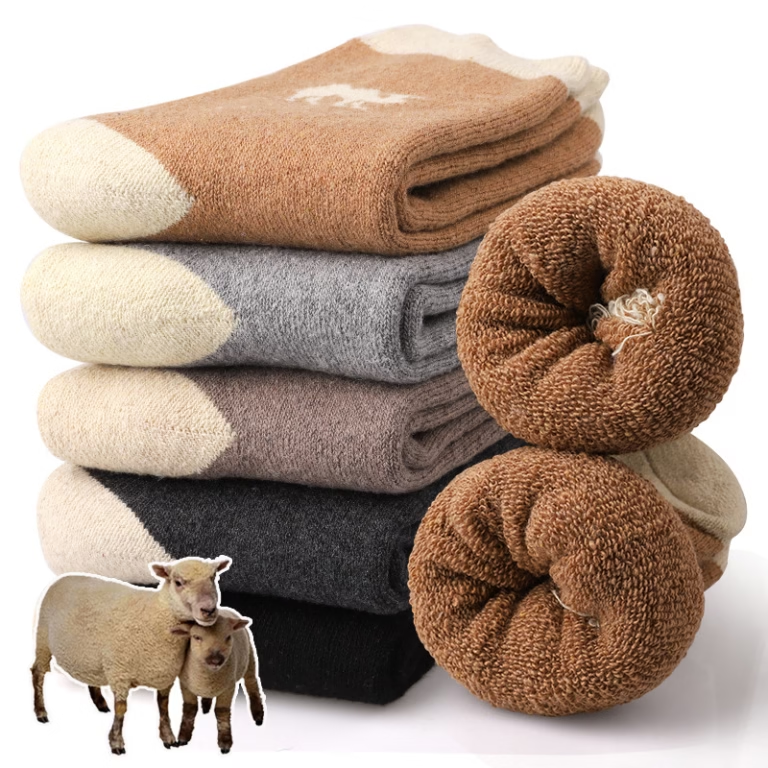
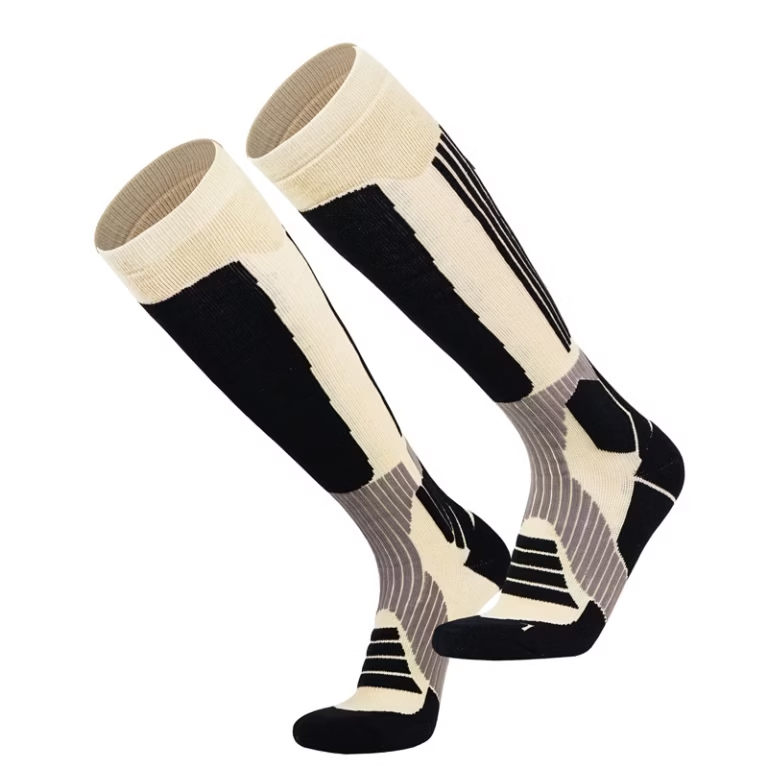
Browse the AnttifySport catalog for hiking socks covered in this article. All products shown here are part of our wholesale lineup — wholesale pricing, low MOQ, and OEM/ODM support available. Contact our team for quotes.