Published: July 2026 · Category: Product Comparison · Reading time: 8 min min

# Hiking Socks Height Comparison: No-Show vs Ankle vs Crew vs Mid-Calf vs Knee-High — Which One Your Customer Actually Needs
Executive Summary
Hiking socks come in five distinct heights, and the wrong height on the wrong trail is the single most common reason for customer returns in the category. The five heights — no-show, ankle (low-cut), crew (mid-cut), mid-calf, and knee-high — each map to specific use cases, boot cuff heights, and season ranges. Picking the right one is not a matter of preference; it is a matter of matching sock cuff to boot cuff, and matching sock height to trail conditions.
This guide walks through each height, the boots it pairs with, the trail conditions it handles, and the wholesale specification differences between them. Whether you are stocking a private label line or assembling a multi-SKU catalog, the height choice shapes both your landed cost and your return rate more than fiber blend does.
The recommendations below draw on industry-typical fit conventions and the supplier experience base at AnttifySport, where we work with retailers building hiking sock catalogs from scratch.
Why sock height matters more than most buyers think
Sock height interacts with three variables: boot cuff height, debris exposure on the trail, and temperature regulation. Get any of the three wrong and the customer returns the sock. Get all three right and you have a customer who buys a second pair within six months.
The average wholesale return rate in the hiking sock category is 8-15%. The single biggest driver of returns is “didn’t fit my boots” — which is really a sock-height mismatch. Spec’ing the right height mix for your customer base drops that return rate to 5-8% and improves repeat purchase.
The five sock heights, side by side
No-show hiking socks (also called “hidden” or “ankle hidden”)
Height: sits below the ankle bone, hidden inside the shoe.
Pairs with: trail running shoes, low-top hiking shoes, approach shoes, and casual sneakers.
Best for: warm-weather hiking, trail running, fastpacking, and any activity where the user is not wearing a mid or high boot. Designed to protect the foot from abrasion without showing above the shoe collar.
Limitations: offers zero protection against trail debris (twigs, dirt, gravel) entering the shoe. Not suitable for bushwhacking or off-trail hiking. Provides minimal ankle warmth in cool weather.
Wholesale spec notes: typically the lowest-priced height in a catalog due to lower yarn usage per pair. Common MOQ is 5,000-10,000 pairs per SKU. Pack as 3-pair bundles for retail to maintain margin.
Ankle (low-cut) hiking socks
Height: sits at or just above the ankle bone. Sometimes called “ankle-cut” or “quarter” in industry catalogs.
Pairs with: low and mid-cut hiking shoes, trail runners, and casual outdoor footwear. The lowest height that still protects the ankle from abrasion against the shoe collar.
Best for: warm-weather hiking on maintained trails, light backpacking, and casual outdoor use where the user wants more protection than a no-show but does not want a tall sock. The most popular height in the trail running sub-segment.
Limitations: still offers minimal debris protection. Not suitable for snow, deep mud, or off-trail use. Less ankle warmth than crew or higher.
Wholesale spec notes: low yarn usage per pair, so landed cost is similar to no-show. Popular at retail because it is the most versatile “everyday hiking” height. Stocking 2-3 colors (black, gray, white) covers most demand.
Crew hiking socks (also called “mid-cut” or “hiking crew”)
Height: sits roughly halfway up the lower calf, around 6-8 inches above the ankle. The traditional “hiking sock” silhouette.
Pairs with: mid-cut hiking boots and most work boots. The most universally compatible hiking height.
Best for: three-season hiking on maintained trails, day hiking, light backpacking, and casual wear with work boots. The workhorse of the category.
Limitations: not tall enough to pair with high-cut mountaineering boots or to prevent snow/debris from entering the cuff. Not cool enough for summer running in hot climates.
Wholesale spec notes: mid-range yarn usage and landed cost. The highest-velocity height in most catalogs — typically 40-50% of pairs sold. MOQ is 5,000-10,000 pairs per SKU and turn is fast. This is the height to lead a catalog with.
Mid-calf hiking socks (also called “boot height” or “traditional hiking”)
Height: sits roughly at the upper calf, around 8-12 inches above the ankle. The “boot sock” silhouette.
Pairs with: high-cut hiking boots, work boots, and most mountaineering boots. Designed to fill the gap between the foot and the boot cuff.
Best for: cool to cold weather hiking, day hiking in variable terrain, light backpacking with mid to heavy packs, and any use where the user wants calf coverage. Pairs well with gaiters for snow or mud.
Limitations: too tall for trail running and warm-weather use. Too short for deep snow conditions (knee-high is required). Less popular in casual channels.
Wholesale spec notes: higher yarn usage per pair, so landed cost is 15-25% above crew. Popular with serious hikers and in cold-climate markets (Northern US, Canada, Northern Europe). MOQ is typically 5,000-10,000 pairs per SKU. Worth stocking 1-2 SKUs in this height even in a casual catalog — it is the “step up” purchase for an existing customer.
Knee-high hiking socks (also called “over-the-calf” or “snow sock”)
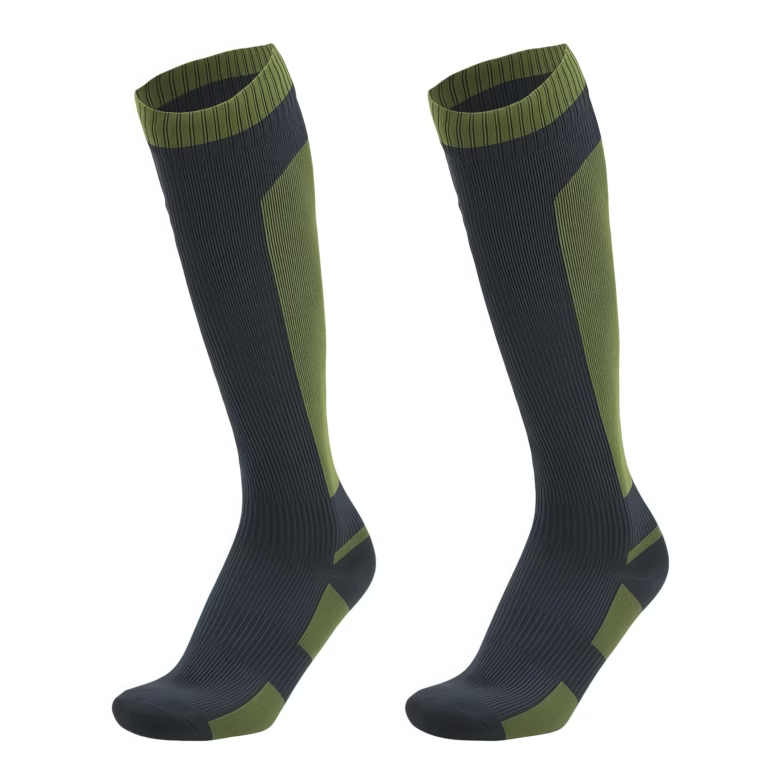
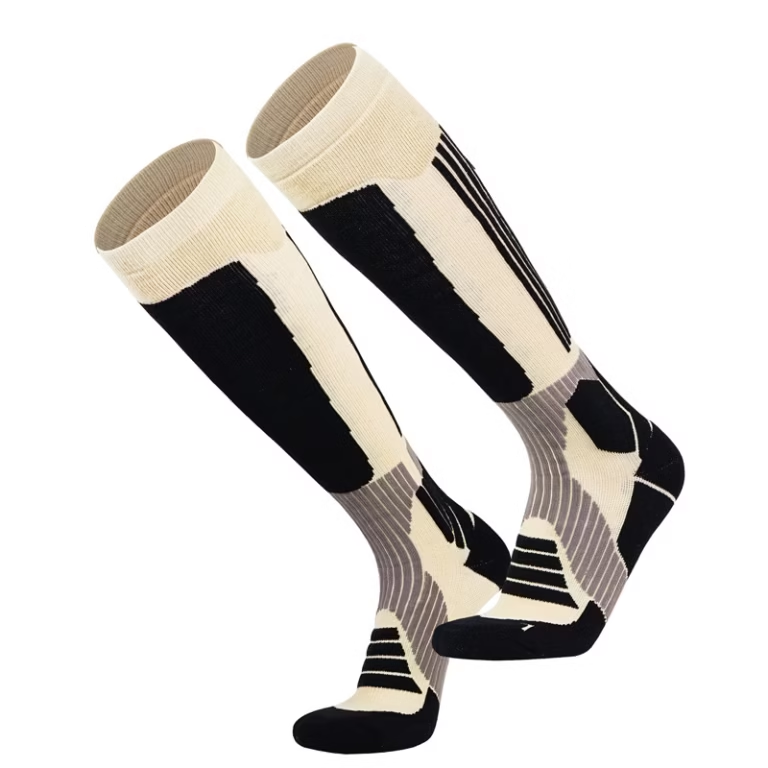
Height: sits just below the knee, around 12-18 inches above the ankle. The tallest standard hiking sock height.
Pairs with: mountaineering boots, high-cut ski boots (when worn as a liner or under a thicker sock), and winter work boots. Designed to seal out snow and debris.
Best for: snow hiking, winter mountaineering, ice fishing, snowmobiling, and any use where deep snow or debris ingress is a concern. Pairs with gaiters for deep snow conditions.
Limitations: too tall for any warm-weather or casual use. Limited shelf life at retail in non-winter markets. Pricing pressure from technical mountaineering brands (Smartwool, Darn Tough) is intense.
Wholesale spec notes: highest yarn usage per pair and most expensive to produce. MOQ is typically 5,000 pairs per SKU. Best sellers in the ski, mountaineering, and northern US/Canadian markets. Usually 5-10% of catalog pair counts but 15-20% of revenue in winter.
Matching sock height to boot cuff
A simple table for your customer-facing catalog or website:
| Boot type | Recommended sock height |
|---|---|
| Trail running shoe | No-show or ankle |
| Low-cut hiking shoe | Ankle or crew |
| Mid-cut hiking boot | Crew or mid-calf |
| High-cut hiking boot | Mid-calf or knee-high |
| Mountaineering boot | Knee-high |
| Snow boot | Knee-high |
A common retail mistake is stocking all five heights across all SKUs. The smarter move is to anchor the catalog on crew (the universal height) and add ankle and mid-calf as your volume workhorses. Add no-show for trail runners and knee-high for the winter market.
Matching sock height to trail conditions
| Trail condition | Recommended sock height |
|---|---|
| Maintained trail, warm weather | No-show or ankle |
| Maintained trail, three-season | Crew |
| Maintained trail, cold weather | Crew or mid-calf |
| Off-trail / bushwhacking | Mid-calf |
| Snow | Knee-high |
| Mud | Mid-calf or knee-high |
| Scree / loose rock | Crew or mid-calf |
Bottom line for sourcing teams
The right sock height mix depends on your customer base, your climate, and your channel. A simple starting framework for a mid-volume wholesale catalog:
- 50% of pair counts in crew height — the universal workhorse
- 20% in ankle height — for trail runners and casual outdoor
- 15% in mid-calf — for serious hikers and cold-weather
- 10% in no-show — for trail running and warm weather
- 5% in knee-high — for winter and mountaineering
Adjust the mix based on your regional climate and your customer demographics. A retailer in Texas will sell more no-show and ankle; a retailer in Minnesota will sell more mid-calf and knee-high.
The category is forgiving on spec — most private label programs are spec’d to the same yarn, fiber blend, and reinforcement pattern across heights. The yarn usage per pair is what changes. So the wholesale spec is straightforward; the retail mix is where the return-rate savings live.
About the Author
The AnttifySport Sourcing Team supports wholesale buyers, importers, and brand owners sourcing cycling, hiking, camping, and skiing gear from qualified Asian factories. We’ve worked with over 200 B2B clients across North America, Europe, and Australia since 2018, with a focus on low-MOQ custom orders and OEM/ODM partnerships for emerging outdoor brands.
Have a sourcing question or want to discuss your next product line? Reach out at https://www.anttifysport.com/contact/.
Sources cited in this article
- American Hiking Society, hiking and backpacking trail classification references — used for trail condition categories
- Outdoor Industry Association, 2025 Outdoor Recreation Economy Report — used for hiking participation and category sizing data
- Industry supplier experience base at AnttifySport — used for wholesale MOQ ranges, return rate estimates, and category velocity figures
Related Products from AnttifySport
Browse the AnttifySport catalog for outdoor gear covered in this article. All products shown here are part of our wholesale lineup — wholesale pricing, low MOQ, and OEM/ODM support available. Contact our team for quotes.