Camp Stove Types Compared: Canister, Liquid Fuel and Alcohol Stoves
Published: 2026-11-01 | Category: Product Comparison | Reading time: 11 min
Executive Summary
Camp stove selection is usually treated as a weight-versus-price decision. It is really a decision about three variables that pull in different directions: how cold the environment gets, how long the cook needs the stove to stay lit, and how far the stove has to travel between fuel purchases.
A canister stove is the cheapest to buy, the easiest to light, and the fastest to shut down. It is also the one that stops working when the canister runs cold, because the pressure that pushes fuel to the burner depends on the temperature of the gas itself. A liquid fuel stove keeps working in the cold because it pumps its own fuel, but it weighs more, takes longer to set up, and is the only one of the three that can be refuelled from a large bottle. An alcohol stove sits between them: simple like a canister stove, but with a consumable that can be carried almost anywhere.
For buyers sourcing for resale, the practical conclusion is that the three types do not compete for the same shelf space. They serve different trip lengths, different climates and different customer segments, and the range that gets ordered is a mix of all three rather than a single winner.
How the Three Stove Types Actually Work
The mechanical difference between the three is where fuel comes from and how it reaches the flame. Understanding that one thing explains almost every practical difference buyers argue about.
Canister stoves use a sealed threaded canister of propane, butane or an iso-butane mix. The canister sits below the burner, and fuel rises to the jet under pressure from the liquefied gas vapourising in the container. Nothing moves except the gas itself, which is why start-up is instant and shutdown is a single twist of the valve.
Liquid fuel stoves (often called multi-fuel or white gas stoves) carry their own fuel tank. A pre-heat tube burns off liquid before the main burner engages, which is why startup takes two to five minutes. After that, a hand pump pressurises the tank and a jet drives fuel to the burner under a pressure that does not depend on ambient temperature.
Alcohol stoves burn denatured ethanol or methanol from an open cup. The flame sits in a small brass or stainless bowl, and there is no pressurised fuel path at all. The trade is the opposite of a liquid fuel stove: it is the simplest mechanism available, and it also has no mechanism to fail.
Side-by-Side Comparison
The table below compares the three on the dimensions that actually determine buying decisions for a wholesale customer.
| Factor | Canister Stove | Liquid Fuel Stove | Alcohol Stove |
|---|---|---|---|
| Typical unit weight | 60–120 g | 250–400 g | 90–180 g |
| Fuel cost per boil | Lowest | Lowest per litre | Mid-range |
| Minimum fuel carried | 70–100 g canister | 200–400 ml bottle | 100–150 ml |
| Cold weather performance | Poor below 0 °C | Excellent | Fair |
| Start-up time | Instant | 2–5 minutes | 30–60 seconds |
| Heat output control | Basic | Good, continuous | Basic |
| Refuelling away from a shop | Bring full canisters | Refill from any bottle | Bring a full fuel bottle |
| Burn time per fill | 3–5 hours | 8–14 hours | 2–4 hours |
| Flame adjustment | Yes | Yes | Limited |
| Spare parts availability | High | Medium | Medium |
Where Canister Stoves Win
The canister stove is the default recommendation for short trips in mild conditions, and it wins on almost every practical measure. The primary burner is a small brass or stainless unit with no moving parts beyond the valve, and the whole thing fits in a fist. Start-up is a click of the piezo igniter and a hold of the lever. Once the meal is cooked, closing the valve stops everything immediately, which matters in dry country where an open flame left unattended is a genuine risk.
The economics are decisive for wholesale buyers. A canister stove is inexpensive to manufacture because there is little to assemble, and the fuel ecosystem is mature enough that replacement canisters are stocked by every outdoor shop in the market. A customer who buys one canister stove will almost certainly come back for more canisters or a spare stove, which makes it a good entry product that pulls repeat sales rather than sitting on a shelf.
The Cold Weather Problem With Canister Stoves
The weakness of a canister stove is temperature, and it is worth being precise about why. Canister gas is stored as a liquid under pressure. When the canister is cold, the liquid does not vapourise quickly, and the pressure pushing fuel towards the burner drops. The result is a weak flame that will not sustain a rolling boil, and in severe cold it can stop producing fuel altogether.
There are three practical workarounds, and they explain what you will see on the trail. Keeping the canister in your sleeping bag or inside a pocket jacket warms it enough to restore normal performance. Inverting the canister so the liquid fuel sits next to the burner uses the liquid directly and works in cold conditions, at the cost of more complex stove designs. Warming the canister with body heat before use is the simplest approach and is what most experienced hikers do without thinking about it.
For a buyer, this translates directly into product guidance. A range marketed as general-purpose camping cookware will disappoint users heading into alpine or northern winter conditions if it ships only with a canister stove. Pairing a warmer-rated stove with an insulated sleeping system matters as much for winter comfort, and the two categories are frequently bought in the same order.
Where Liquid Fuel Stoves Win
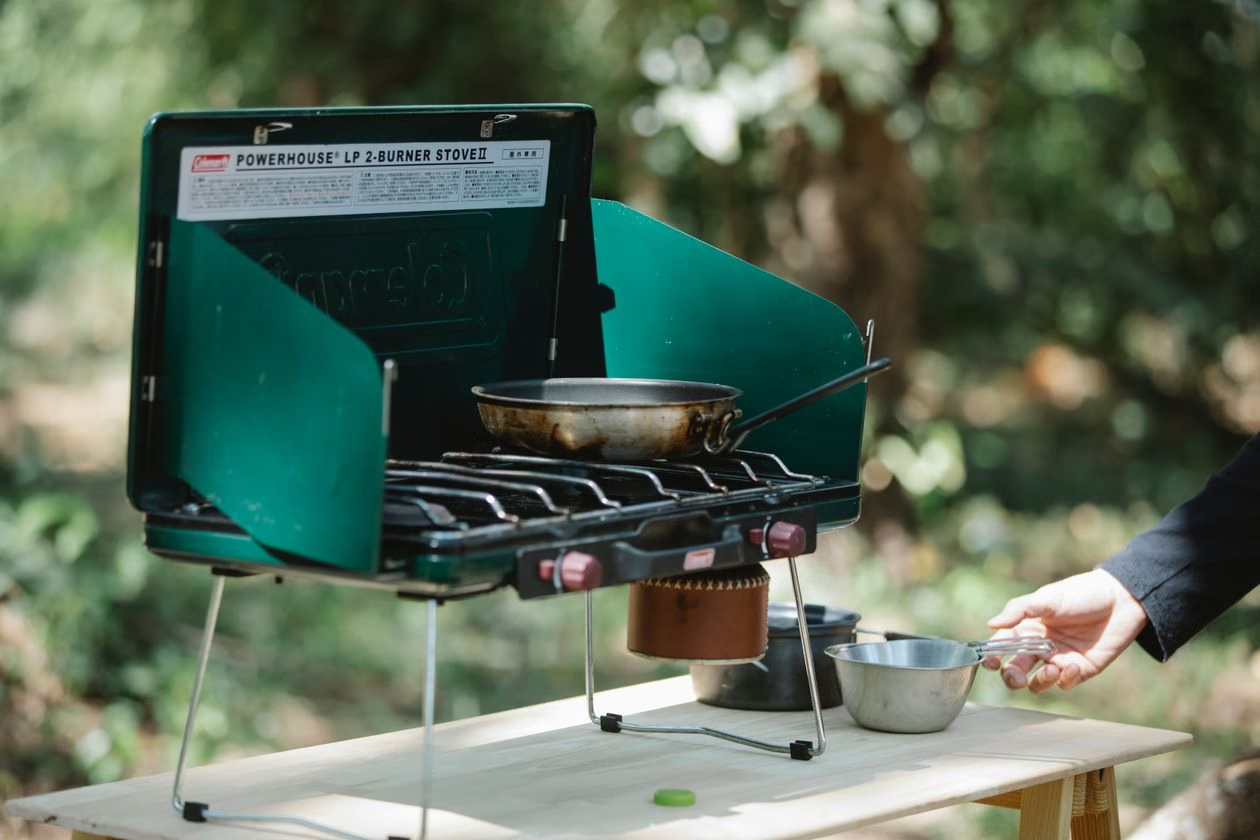
A liquid fuel stove is the right answer for base camp, for winter, and for any trip long enough that carrying individual canisters becomes awkward. Its advantage is that the fuel tank holds liquid, and the stove pumps its own pressure regardless of how cold the day is. A single 900 ml bottle can run a two-burner camp stove for most of a week, which is why expedition and van-based travellers treat them as standard equipment.
The refillability is the commercial argument. A user who runs out of fuel buys a bottle of white gas at any fuel station or outdoor shop and tops up. That means the customer relationship continues, and it also means the stove becomes a platform rather than a sealed product. Multi-fuel versions also run on unleaded petrol, which is the version that appeals to international buyers who cannot source a specific white gas blend at home.
The costs are real and should be stated plainly. These stoves are heavier, they need a pre-heat tube and a pump, and the initial light takes several minutes. A customer who has used a canister stove since university will find the process fiddly the first time. They also need a windscreen and a pot support sized to the stove, which means the stove rarely sells alone.
Where Alcohol Stoves Win
Alcohol stoves are often dismissed as a budget option, which undersells them. They are the simplest stove mechanism that works reliably: fuel sits in an open cup, a wick or a small flame sits in the liquid, and a lid with a stand holds the pot. There are no jets to block and no pressurised path to leak.
Two practical advantages make them worth stocking. First, fuel is available almost everywhere — the same denatured alcohol used for a fondue burner is sold in supermarkets and pharmacies in most markets, so a stove that runs out in a foreign country is a stove that can be refuelled rather than discarded. Second, the whole unit is typically lighter than a liquid fuel stove with its fuel, which matters when every gram is counted against a pack weight budget.
The limitations are equally clear. Alcohol produces a relatively weak, low-output flame, so boiling a large pot of water takes considerably longer than on a gas stove. Methanol, the higher-output variant, carries toxicity and shipping restrictions that limit its use in some markets. For anything beyond a single-cup boil or a small pot, the trade-off stops being attractive.
Choosing by Trip Type: A Buyer’s Guide
The clearest way to specify a stove range is by the trip it is sold for, rather than by its technical specification.
- Weekend car camping and festival use: Canister stove. Any competent two-burner unit works, and a wind shield plus a fuel bottle should be sold alongside it.
- Three-season hiking and backpacking: Canister stove, ideally titanium or aluminium construction. This is the largest-volume segment and the most price-sensitive.
- Winter and high-altitude mountaineering: Liquid fuel stove. Nothing else holds pressure and output reliably at altitude and low temperature. Pair it with a winter sleeping bag and a windproof tent, since the stove is useless without them.
- Long-distance travel and ultralight backpacking: Alcohol stove. The lowest weight and the easiest refuelling in countries where specialist fuel is not stocked.
- Base camp and van expeditions: Liquid fuel stove with two burners and a windscreen. This is the segment where buyers accept the highest prices.
- International and travel-focused retail: Alcohol stove, sold with a fuel bottle. The availability advantage is decisive in markets outside North America and Europe.
Safety Rules That Apply to Every Type
Whatever the fuel type, the same basic rules apply, and they belong in the product instructions for every stove sold.
- Never cook inside a tent or an enclosed vehicle. Carbon monoxide from a stove in a closed space is the cause of a large share of camping accidents.
- Cook outdoors in the open or under a designated windscreen, never under a tarp or inside a vestibule.
- Use a windscreen for canister and alcohol stoves in any wind. A flame that leans is a flame that will reach the fuel container.
- Check the stove and the fuel container for damage before every trip, and never refill a hot stove.
- Follow the manufacturer’s ventilation guidance for the fuel type. Liquid fuel stoves require the pre-heat tube to be used correctly every single time.
- Store fuel away from food and away from heat, and never transport a liquid fuel stove and its bottle loosely together in a pack.
What Buyers Should Check Before Ordering
When placing a stove order, the specification decisions that matter most are rarely mentioned in supplier catalogues.
- Material and weight for the burner body: Stainless steel is heavier and more durable; titanium is the weight choice for backpacking. Aluminium is the budget middle ground. The stated weight is often for the stove alone, excluding the fuel and the pot support.
- Pot support diameter: This determines which pots a customer can use. A narrow support will not hold a wider pot, and a customer who owns the wrong pot will simply not use the stove. State the support diameter on the listing.
- Output in watts or kilowatts: A useful reference point is roughly 1,500 W for a single burner used for one-pot cooking. Multi-burner camp stoves run considerably higher.
- Burner head material and hole design: Brass and stainless offer better flame control and durability than aluminium at modest cost. Well-designed hole patterns are the difference between an even flame and a flame that concentrates on one side.
- Ignition method: Piezo igniters need no battery and last indefinitely. Flint or match ignition is cheaper but fails in wind and damp. Most buyers in developed markets now expect piezo as standard.
- Included accessories: A windscreen, a lighter and a small pot are what turn a bare burner into a set that a first-time buyer can actually use. Sets are easier to sell and easier to price at a higher point.
- Fuel compatibility and threading standard: Canister stoves use the EN 417 thread, which is the international standard. Confirm this explicitly because it determines whether customers can use locally sourced fuel.
How to Build a Balanced Stove Range
For a retailer or distributor building a stove category, a balanced range usually follows a predictable split. Canister stoves in small and large single-burner formats, plus one or two two-burner models for car campers, cover the majority of volume. Liquid fuel belongs in a small but high-value segment, positioned for winter and base camp use where the customer is buying for a specific trip rather than by price. Alcohol stoves occupy the entry price point and the travel market.
Two merchandising points consistently move more units than price reductions do. The first is selling the accessories together with the stove: a stove without a windscreen or a pot is a product a customer is likely to return. The second is clarity about what the stove is for. A customer who buys a 120 g titanium burner for winter mountaineering will be disappointed, and that complaint returns as a negative review. A clear use case on the listing prevents it.
The final factor is fuel ecosystem, and it is the one most often overlooked when sourcing. A stove is only as sellable as the availability of its fuel in the customer’s market. Where canister gas is universally stocked, the canister stove is straightforward. Where it is not, an alcohol or liquid fuel stove with locally available fuel is the product that actually sells. Matching the stove to the local fuel supply is worth more than any spec-sheet advantage.