First Sample Order Strategy for Small Outdoor Gear Buyers
Published: 2026-10-26 | Category: B2B Buying Guide | Reading time: 9 min
Executive Summary
A first bulk order from a new mill is a specification decision disguised as a purchase order. By the time a container is loaded, the fabric weight, colour, size grading, hardware, and labelling are all fixed, and every one of them came from a sample that someone approved. The buyers who do well with a first order are not the ones who find the lowest unit price; they are the ones who sequence the sample process so that each stage resolves a different set of questions before the next one starts. This guide lays out a four-stage sampling protocol, the specific sign-off each stage should require, the failure modes that appear when stages are skipped, and the cost of getting it wrong when a container of unsellable stock arrives.
Why the First Order Is the Riskiest One
Every subsequent order is a negotiation against a known baseline. The first order has no baseline: the mill may not have produced this model before, the quoted lead time is an estimate rather than a record, and the buyer has no way to verify what arrives until the container is opened. Small buyers feel this more acutely because a single unsellable colourway can represent a meaningful share of their working capital. The structural risk is that each decision gets taken by a different person on a different day. Without a written record, the mill is the only party holding the full specification, and when production disagrees with expectation, the argument becomes about memory rather than about paper.
The Four-Stage Sampling Protocol
A workable first-order process has four stages, each with a different purpose and a different sign-off. The stages can run partly in parallel, but each one should be closed before the next depends on it. Rushing stage three to save two weeks is the most common reason a first order goes wrong.
Stage 1: Pre-production sample, specification locked
The pre-production sample, often called the PP sample, confirms the specification rather than the quality. Its job is to prove that the mill can and will build the model exactly as written down. Before approving it, the buyer should have a written specification that includes fabric composition and weight in grams per square metre, the main components with their dimensions, thread and zip types, hardware colours, logo method and placement, and label content. If the specification is still being negotiated verbally at the sample stage, the sample will not settle it.
Stage 2: Size set, construction verified
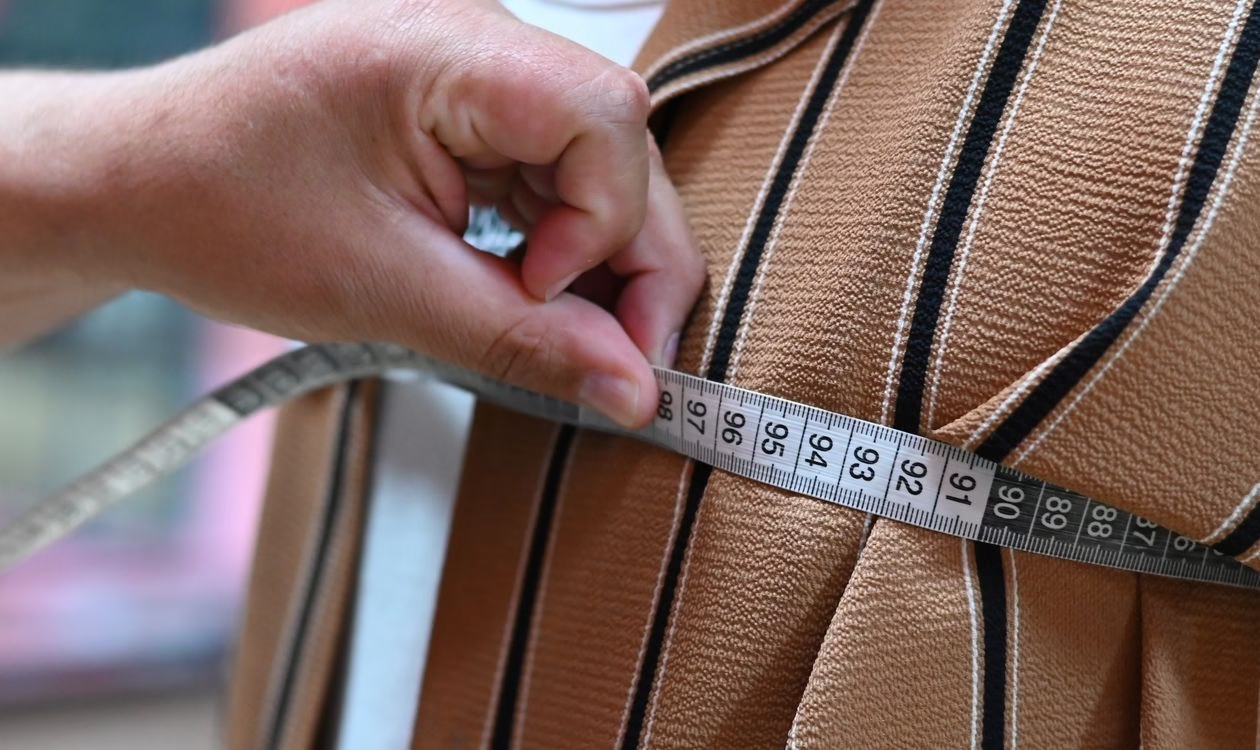
A size set is one sample in every size of the model, usually four to six sizes. It exists to check two things that a single sample cannot show: whether the size grading across the range is consistent, and whether the construction holds up in the extremes. The smallest size exposes a construction that cannot be sewn, and the largest size exposes grading that runs narrow at the shoulders or hips. Buying a full size set on the first order is a modest cost compared with a mid-size run that does not fit the customer.
Stage 3: Colour approval and lab testing, parallel
Colour approval and lab testing can run in parallel because they answer different questions. Colour approval is a subjective decision against a physical standard, and it needs the same light source each time it is judged. Lab testing is an objective measurement against a published standard. Approving colour against a photograph rather than a physical swatch is the single most common cause of a colour dispute on arrival, because screens are calibrated differently and daylight shifts the perceived tone.
Stage 4: Pre-shipment inspection, before the balance is paid
The pre-shipment inspection is the last point at which a problem can still be fixed without the goods leaving the factory. It should be booked against the mill production schedule with enough notice that it happens while the order is still in assembly, not after the cartons are sealed. The inspection should verify against the approved sample rather than against a verbal description, and it should include a packing list check, a carton count, a spot check on the measured specifications, and a photograph record of the goods.
| Stage | Question it answers | Cost scale | Sign-off required |
|---|---|---|---|
| 1. Pre-production sample | Will the mill build it to the written spec? | 1-3 units | Written spec sheet signed |
| 2. Size set | Does the construction work across the size range? | 4-6 units | Fit and construction note |
| 3a. Colour approval | Is the colour the one that was chosen? | 1-2 units per colour | Physical swatch sign-off |
| 3b. Lab testing | Does it meet the published standard? | 1-2 units per colour | Test report on file |
| 4. Pre-shipment inspection | Is the finished goods correct before shipping? | Inspection fee | Photo report and pass note |
What Each Stage Should Specifically Test
A sample review is only as good as the checklist behind it. Without a checklist, the reviewer notices whatever stands out and misses the specification detail that actually caused the problem. The following list covers the failures that recur most often in first orders across outdoor gear categories.
- Fabric weight measured in grams per square metre, not judged by hand, because hand-feel varies by reviewer.
- Fabric composition confirmed against the mill invoice, particularly for blends where a percentage difference changes performance.
- Colour measured against the approved physical swatch, under consistent lighting, with the sample and swatch side by side.
- Stitch density and seam construction checked on a seam that will carry load, not only on a decorative seam.
- Zipper and hardware function, tested repeatedly rather than once, because a binding zipper fails on the first pull.
- Logo method verified at final size, since embroidery, heat transfer, and woven labels all differ noticeably at small sizes.
- Label content checked against the destination market labelling requirements before the labels are printed.
- Measurement chart applied to the finished sample, with tolerances defined in advance rather than judged at the end.
Failure Modes When Stages Are Skipped
The cost of a skipped stage is rarely visible at the time. It becomes visible when the goods arrive and the buyer discovers that a decision was made on the wrong basis. The four failure modes below account for most first-order problems in outdoor gear sourcing.
| Failure mode | What was skipped | Consequence at bulk stage |
|---|---|---|
| Colour drift | Physical swatch approval | Reordering or a dead colourway in the range |
| Size inconsistency | Full size set | Returns from a size that was never checked |
| Label error | Specification sheet review | Customs delay, rework, or unsellable stock |
| Hardware failure | Repeated function test | Safety complaints and warranty cost |
Two of these are worth a second look because they look like supplier failure but are usually process failure. A colour drift is frequently caused by approving a sample photographed under studio lighting and then comparing it to goods produced under a different light. A size inconsistency frequently comes from approving a single size in the largest size of the range, where the grading allowance is tightest and the fit looks correct.
Cost Control: Where to Spend and Where to Save
Sample spending should follow a simple rule: spend on the stages that resolve irreversible decisions, and economise on the stages that can be repeated cheaply later. Specification and colour are irreversible once production starts. A repeat bulk run is a smaller problem than a first bulk run, because the mill already understands the specification and the process is established.
- Spend on the pre-production sample for every model, even when the model is close to something the mill already makes.
- Spend on the full size set for any model with a fitted construction, such as apparel, backpacks, or footwear.
- Spend on physical colour swatches, and reuse them across every subsequent order with the same mill.
- Save on lab testing for models where the mill has a recent, dated test report for the same fabric and construction.
- Save on duplicate samples by consolidating all colourways into one review session with one decision maker.
- Do not save on the pre-shipment inspection. It is the cheapest stage relative to the value of a blocked container.
A Sample Order Timeline That Works
A realistic first-order timeline for a small buyer runs eight to twelve weeks from specification to loading, and most of the delay sits in two places: the mill getting to the sample queue, and the buyer getting approval decisions made. Both are controllable.
| Week | Activity | Buyer action required |
|---|---|---|
| 1 | Specification drafted and sent | Confirm every field, in writing |
| 2-3 | Pre-production sample produced | Review against the specification, request one revision round |
| 3-4 | Size set produced | Check grading and construction across sizes |
| 4-5 | Colour swatch and lab samples | Approve colour in person, collect test reports |
| 5-6 | Bulk production starts | Book the inspection date before production begins |
| 7-8 | Pre-shipment inspection | Review the report, hold the balance until it passes |
| 8-10 | Loading and shipping | Confirm packing list and carton marks against the order |
The single biggest schedule risk is a revision round on the pre-production sample. Buyers who allow one round of revisions in the plan, and who collect all the feedback into a single consolidated list rather than sending piecemeal comments, typically hold the schedule. Buyers who send comments in three separate messages usually add a second sample cycle and two weeks.
How to Review a Sample Without Wasting a Round
Sample reviews fail when the feedback is a list of preferences rather than a list of decisions. The reviewer should arrive with the written specification open, and every comment should be either a confirmation that a specified item is correct, or a requested change with a stated reason. Preferences about colour or feel that cannot be expressed as a change to the specification will not survive into production.
- Review against the specification document, line by line, rather than against an impression of the product.
- Have one decision maker per approval, so feedback is consolidated rather than accumulated.
- Record every approval with a date, so a later dispute about what was agreed has a paper trail.
- Photograph each approved item in a fixed setup, and keep the physical sample as the reference standard.
- Send one consolidated revision list per round, with the specification changes highlighted.
- Keep the physical approved sample until the bulk goods have been inspected and accepted.
A Sample Register for Small Buying Teams
A one-page register is enough to keep a first order on track, and it prevents the most common failure, which is a specification that exists in three people heads and in no document. The register should carry one row per stage, with the date the sample was requested, the date it was approved, the approver, the storage location of the physical reference, and any outstanding condition attached to the approval.
For a buyer handling several models, the register is also the place to record which fabric or hardware approvals can be reused on the next order. A first order is expensive partly because everything is decided for the first time. A good register turns that into a one-time cost, and every subsequent order starts with a specification that is already known to work.
Common Mistakes to Avoid
Five mistakes account for most first-order problems that a sample protocol is designed to prevent. They are listed here in the order they tend to occur.
- Approving colour from a photo or a screen instead of a physical swatch, then discovering a difference at the container.
- Skipping the size set to save a week, then finding that one size in the run does not fit.
- Approving a sample while the specification is still being changed, so the mill builds a version that nobody specified.
- Booking the inspection after production is finished, which turns it into a paperwork exercise.
- Retaining no physical approved sample, so a dispute about the agreed standard cannot be settled.
None of these are expensive to prevent, and each one costs a small buyer a container of product they cannot move. The protocol is not bureaucracy; it is the cheapest insurance available in a first order.
About the Author
This guide was prepared by the AnttifySport sourcing team. AnttifySport works with European and North American outdoor brands, outfitters, and rental fleets on outdoor gear procurement from audited Chinese mills. We focus on MOQ negotiation, sample-protocol discipline, and pre-shipment inspection rather than commodity resale. Contact our sourcing desk to request a sample protocol worksheet or to arrange a supplier introduction.
Related Products from AnttifySport
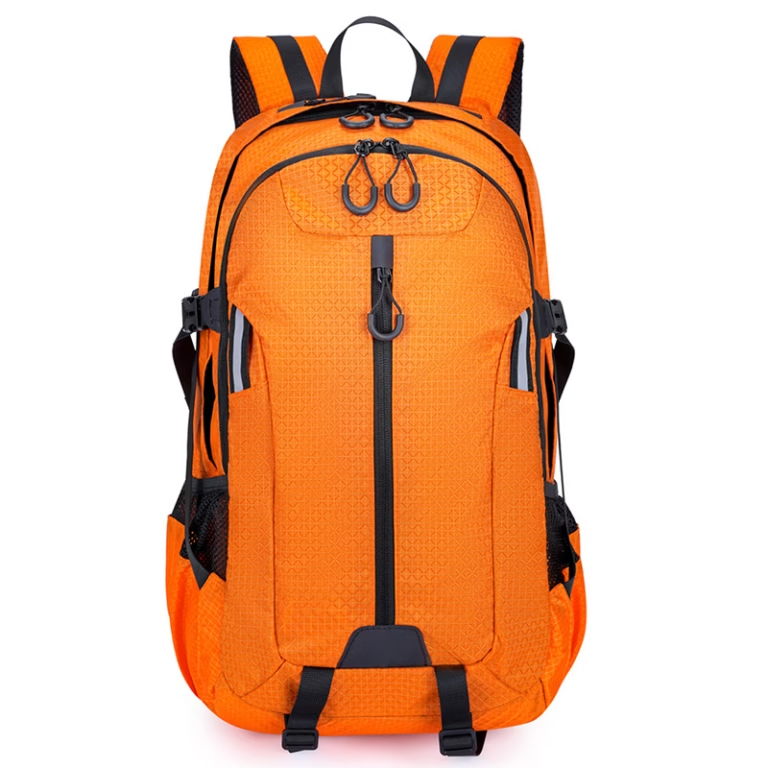
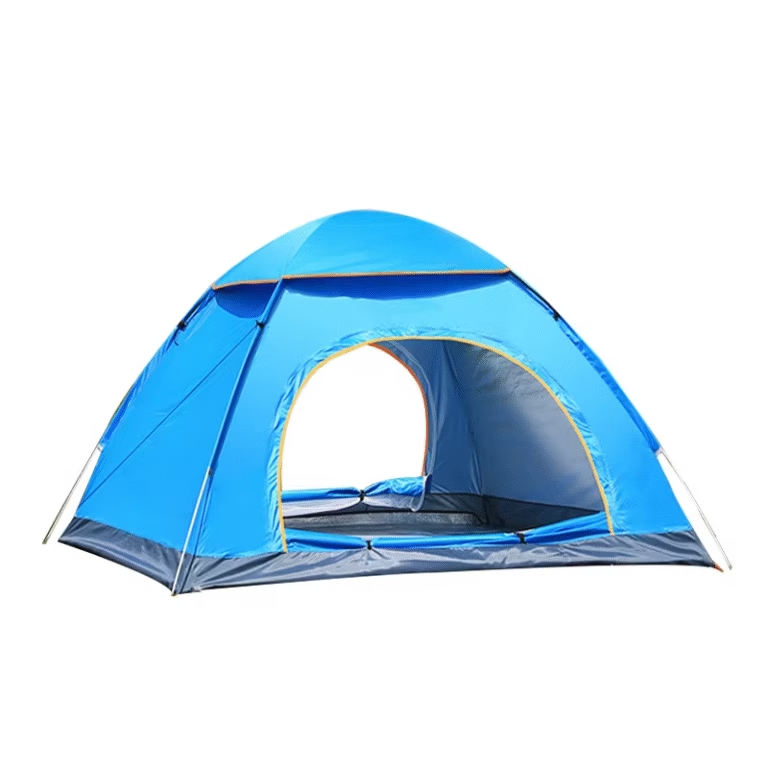
Browse the AnttifySport catalog for the outdoor gear styles referenced in this guide. All products shown here are part of our wholesale lineup, with wholesale pricing, low MOQ, and OEM/ODM support available. Contact our team for quotes.