Published: Sep 2026 · Category: Outdoor How-to · Reading time: 12 min
Executive Summary
For a wholesale buyer, brand owner, or B2B sourcing team building a 2026 hiking-sock program, the climate is upstream of the fiber. The same Darn Tough Hiker Micro Crew Midweight (61% merino / 36% nylon / 3% spandex) that anchors a Scandinavian winter SKU is the wrong specification for a Pacific Northwest shoulder-season SKU, a Mediterranean summer SKU, or a Tibetan Plateau high-altitude SKU — and the difference is not brand or price tier, it is fiber geometry, fabric weight, sock height, and whether a liner is part of the system. The Outdoor Industry Association’s 2026 Outdoor Participation Trends Report documents 183.2 million Americans getting outside in 2025 (59% of the U.S. population ages 6 and older), with the Hiking Report 2026 series confirming hiking as the most popular outdoor activity at 63.4 million participants in 2024 — meaning the wholesale buyer is choosing specs for a category with structural growth across every U.S. climate zone, not a category dominated by one weather pattern.
This guide breaks the climate decision into the four variables that drive roughly 80% of the spec (fiber, thickness/cushion, height, liner), then maps them to the four climate scenarios that cover the majority of the global hiking market: dry climates (desert, high-altitude, Mediterranean high summer), wet climates (Pacific Northwest, tropical rainforest, East Asian monsoon season), cold climates (Nordic winter, Alpine snow, high-latitude shoulder seasons), and hot climates (low-latitude summer, mid-Atlantic humid summer, Mediterranean midsummer). Each scenario is anchored to peer-reviewed research (Woolmark / NCSU merino thermoregulation study, Knapik 1996 Military Medicine boot-sock research, the PMC friction-blister review), to manufacturer-published technical data (Darn Tough, Smartwool, Sealskinz, REI Expert Advice), and to documented outdoor-gear testing (Outdoor Gear Lab, Treeline Review, Switchback Travel).
The bottom-line takeaway: a defensible 2026 hiking-sock catalog carries at least one climate-tuned SKU per climate tier (4–6 climate SKUs total), with merino as the cold-weather and dry-high-altitude workhorse, synthetic (Coolmax-type) as the wet and hot workhorse, and liner systems reserved for the genuinely wet and the genuinely cold scenarios. The rest of this guide walks through the data and the SKU-spec decisions behind that mix.
1. Step 1 — The Four Variables That Decide Every Climate-Specific Sock Spec
Before picking a climate recommendation, define the four variables that every climate-specific sock spec must answer. This is the framework that turns “what sock for the Alps in January?” into a defensible spec on a factory purchase order, not a guess based on brand name. The same four-variable framework is used by REI Expert Advice’s “How to Choose Hiking Socks” article, by Darn Tough’s published technical posts, and by the procurement teams at the major hiking-sock brands.
1.1 Fiber — the climate-driven decision
The fiber ratio is the single largest spec decision in a climate-tuned sock program. Three fiber families cover the climate decision:
- Merino wool (50–75% merino with nylon reinforcement). The climate properties that matter are thermal regulation (Woolmark / North Carolina State University 2024 four-year study documented that 100% merino base layers are 96% better than polyester at moisture buffering and deliver measurably superior dynamic breathability for stop-go activities like hiking), wet-warmth retention (merino retains a meaningful fraction of insulating loft when wet, while cotton collapses and synthetic loses loft), and odor resistance (keratin protein and surface scales resist bacterial colonization, which matters on multi-day hikes in any climate). Merino is the right fiber for cold, dry-cold, and high-altitude climates.
- Synthetic (polyester / nylon with Coolmax or equivalent wicking geometry). The climate property that matters is drying speed — Coolmax’s tetrachannel cross-section delivers roughly 20% more surface area than round fibers and pulls moisture outward by capillary action, achieving close to 100% moisture loss in 30 minutes versus 50% for cotton in Deadsoxy’s controlled comparison. Synthetic is the right fiber for wet, hot, and humid climates where drying speed is the dominant comfort variable.
- Cotton blends (70–85% cotton / 15–30% nylon/spandex). Acceptable only for short, dry, low-intensity outings — cotton collapses against the skin when wet, dries in 4–8 hours, and provides almost no insulating loft when wet. The Knapik et al. Military Medicine 1996 study documented a 24% medically-attended blister rate for the standard military cotton/wool boot sock versus 9–11% for a wool/synthetic system — cotton is not a defensible climate SKU for any sustained hike.
1.2 Thickness / cushion — the climate-driven decision
The thickness tier is set by the expected temperature range and the trail duration:
- Ultralight / zero-cushion. No cushion underfoot; thin knit for breathability and minimal thermal mass. Right for hot-climate day hikes and trail-running applications (Treeline Review’s testing of the Smartwool Performance Run Zero Cushion after 450 PCT miles documents the durability of an ultralight sock in a hot-climate use case).
- Light cushion. Thin terry loop under ball and heel only; balanced breathability and modest warmth. The default tier for most 3-season climates.
- Midweight / medium cushion. Cushion across the entire foot; broad climate range; the default tier for most wholesale hiking SKUs (Darn Tough Hiker Micro Crew Midweight at 144 g/pair is the reference benchmark).
- Heavy / full cushion. Maximum underfoot loft; cold-weather and multi-day backcountry tier. Right for sub-freezing temperatures and for snow-hiking (Darn Tough Hiker Boot Full Cushion, REI Co-op Mountain Merino Wool Midweight).
The cushion tier is also the climate variable that drives a buyer’s landed-cost per pair: a heavy cushion SKU is typically 15–25% more expensive at wholesale than an equivalent ultralight SKU because of the additional yarn and the heavier knit construction.
1.3 Height — the climate-and-footwear-driven decision
Height must match both the climate (for debris, bug, and snow protection) and the footwear cuff height (to prevent the boot cuff from rubbing directly against skin):
- No-show / micro crew. Right for trail runners, low-cut shoes, and warm-climate hiking where debris protection is minimal.
- Quarter / low crew. Right for mid-cut hiking shoes, warm-and-dry climates, and trail-running where light debris protection matters.
- Crew / micro crew. The all-purpose tier; matches mid-cut hiking boots, three-season climates, and protects against debris and light snow.
- Mid-calf / over-the-calf. Right for tall leather boots, deep-snow cold-climate hiking, and high-debris terrain (alpine scree, dense underbrush).
REI’s “How to Choose Hiking Socks” article frames this as a footwear-and-climate match: the higher the boot cuff, the taller the sock required to prevent cuff-to-skin abrasion.
1.4 Liner — the climate-driven decision
A liner sock is a thin inner sock (typically polyester, silk, or fine merino) worn under the primary hiking sock. The classical liner purpose is friction management: the liner moves with the foot, the outer sock moves with the boot, and the friction occurs between the two sock layers rather than between skin and sock. A 2023 peer-reviewed Friction Blisters of the Feet: A New Paradigm paper (cited by Darn Tough and SectionHiker) reframes the mechanism as internal-skin-stress from repeated movement inside the footwear system, with moisture management and fit being the underlying drivers.
The climate-driven liner decision:
- No liner needed for most 3-season hiking in moderate climates (Darn Tough’s technical post documents that modern sock construction has reduced the liner requirement for the average hiker).
- Liner strongly recommended for genuinely wet climates (Pacific Northwest winter, tropical rainforest, monsoon-season hiking) where a synthetic liner under a waterproof or merino outer sock reduces friction and accelerates moisture transport away from the skin.
- Liner strongly recommended for genuinely cold climates (Nordic winter, Alpine snow, glacier travel) where the liner-plus-outer-sock system provides both an extra insulating air layer and the moisture-management redundancy needed when sweat condensation builds inside a cold-weather boot.
2. Step 2 — Dry Climates (Desert, High-Altitude, Tibetan Plateau, NW Europe Summer): Merino Midweight, Moderate Cushion
Dry climates are characterized by low ambient humidity, large diurnal temperature swings (cold mornings, hot afternoons), and the absence of sustained rainfall. The reference scenarios are the Mojave and Sonoran Deserts of the U.S. Southwest, the Tibetan Plateau and the high-altitude routes of the Andes, the high-altitude Sierra Nevada summer, and the late-summer shoulder season in NW Europe and Scandinavia. The dominant climate variable is thermal regulation across a wide daily temperature range — the sock must keep the foot warm at 5°C sunrise and comfortable at 35°C afternoon sun, without the moisture-transport demands of a humid climate.
2.1 The fiber recommendation — merino midweight with nylon reinforcement
The peer-reviewed and field-test consensus places merino as the dry-climate fiber of choice. The NCSU / Woolmark thermoregulation study (published 2024, with industry coverage through 2025 by WTiN, Powder, and IWTO) documents that merino delivers 96% better moisture buffering than polyester and “maintained greater thermal comfort and minimized after-chill” across dynamic activity cycles — the exact stop-go pattern that defines a dry-climate day hike with a cold start and a hot finish. The practical spec is a 50–65% merino / 30–45% nylon / 2–5% spandex blend at midweight (around 130–160 g/pair for a crew sock), which delivers:
- The thermal regulation needed for the 30°C diurnal swing typical of desert and high-altitude terrain.
- The wet-warmth retention needed for the occasional stream crossing or pre-monsoon thunderstorm (a merino sock that gets briefly wet retains enough insulating loft to keep the foot warm, while a wet cotton or synthetic sock conducts heat away).
- The odor resistance needed for multi-day dry-climate trips where laundry is impossible (the U.S. military research and the REI Expert Advice article both cite merino as the multi-day-trip fiber on this dimension).
The halfway-anywhere PCT survey (summarizing 2024–2025 hiker data) found that by the end of the Pacific Crest Trail — a route that includes the dry Mojave Desert section and the high-Sierra summer — almost every thru-hiker converged on Darn Tough Hiker 1/4 (or Micro Crew Midweight) merino construction, with the cited reason being the merino blend’s temperature regulation across desert and alpine sections.
2.2 The cushion recommendation — midweight, not heavy
A heavy cushion in a dry climate traps heat and slows drying — the wrong trade-off when afternoon temperatures are 30°C+ and the next water source is hours away. A midweight (light terry under ball and heel, knit body) is the climate-correct cushion tier for most dry-climate hiking, with a step up to heavy cushion for sub-freezing high-altitude starts (above 4,000 m / 13,000 ft) and a step down to lightweight for desert midsummer hiking at low altitude.
2.3 The height recommendation — crew or micro crew
A dry climate is not a snow climate. A crew or micro crew sock (matching mid-cut hiking boots or trail runners) is the right height tier — tall enough to keep out sand, scree, and small debris, short enough not to add thermal mass above the ankle. Over-the-calf is unnecessary in dry conditions.
2.4 The liner recommendation — none for most dry-climate scenarios
A liner adds a layer of friction management that is rarely needed in a dry climate (because the moisture that drives friction-amplified blistering is absent) and adds a layer of thermal mass that works against the climate-correct midweight spec. The exception is high-altitude snow travel, where a liner-plus-merino-outer system is the climate-correct construction even in dry air (see Step 4).
3. Step 3 — Wet Climates (Pacific Northwest, Tropical Rainforest, SE Asia, Monsoon Season): Synthetic Quick-Drying
Wet climates are characterized by sustained high humidity, frequent or persistent rainfall, and the realistic probability that the foot will get wet from rain, stream crossings, or saturated trail conditions. The reference scenarios are the Olympic Peninsula and the Cascades in shoulder season, the tropical rainforest trails of Costa Rica and Borneo, the monsoon-season routes of Nepal and Japan, and the persistent wet conditions of the UK and Ireland. The dominant climate variable is drying speed and friction management under wet skin conditions.
3.1 The fiber recommendation — synthetic with Coolmax or equivalent wicking geometry
The wet-climate fiber decision is the inverse of the dry-climate decision. Synthetic (Coolmax polyester or equivalent proprietary wicking polyester) is the right fiber because drying speed is the dominant climate variable. Deadsoxy’s controlled comparison documents that Coolmax achieves “nearly 100% moisture loss in 30 minutes versus 50% for cotton” — a two-fold advantage that compounds over a multi-day wet-climate hike where every overnight laundry matters. REI Co-op’s Coolmax EcoMade Midweight and Darn Tough’s Coolmax Hiker Micro Crew Midweight are the wet-climate reference SKUs at the wholesale level.
A merino sock in a wet climate is defensible if the climate is also cold (the wet-warmth property still applies — see Step 4) but is the wrong spec for a warm-and-wet climate where the 3–4 hour merino drying time means the hiker is putting on a damp sock every morning. The 2022 Camino de Santiago observational study (cited in field-research summaries) documented approximately 1.94× the blister risk for any hiker in wet socks, regardless of sock material — making the drying-speed advantage of synthetic a safety and comfort variable in a wet climate, not just a convenience variable.
3.2 The cushion recommendation — light to midweight
Wet-climate hiking tends to be high-output (the Pacific Northwest shoulder season and tropical rainforest hiking generate significant foot sweat on top of the external wetness). A light to midweight cushion balances warmth, breathability, and the drying-speed advantage of the synthetic construction. Heavy cushion in a wet climate traps moisture and slows drying.
3.3 The height recommendation — crew (gaiter-friendly)
Wet-climate trails tend to have saturated vegetation, deep mud, and water-crossing debris. A crew sock that mates with a waterproof gaiter is the climate-correct height tier — the gaiter handles the surface water, the crew sock handles the debris and the boot-cuff interface. A micro-crew is acceptable for trail-runner applications; over-the-calf is unnecessary unless the route involves deep snow or sustained boot-deep water.
3.4 The liner recommendation — yes, a synthetic liner under a waterproof or merino outer
This is the climate where a liner pays for itself. A thin synthetic liner (Coolmax or polyester) under a waterproof-breathable outer sock (Sealskinz Dunton All-Weather with HydroStop or equivalent) or under a quick-drying synthetic outer sock delivers two benefits that matter in a wet climate: the wicking from the skin into the liner reduces the friction-amplification effect of wet skin against wet sock, and the liner moves with the foot while the outer moves with the boot, so the friction occurs between two fabric layers rather than between skin and fabric. Sealskinz’s three-layer waterproof sock construction (merino inner / membrane / nylon outer) is the climate-specific wet-weather SKU at the wholesale level for genuinely wet scenarios; the more economical alternative is a synthetic liner plus a synthetic outer (Wrightsock Coolmesh II pattern).
4. Step 4 — Cold Climates (Nordic Winter, Alpine Snow, Snow Hiking): Heavy Merino + Liner System
Cold climates are characterized by sub-freezing temperatures, the realistic probability of frostbite or near-frostbite exposure on the foot, and the presence of snow as the trail surface. The reference scenarios are Scandinavian winter hiking, Alpine ski-touring and snowshoeing, Scottish winter hillwalking, the Sierras and Rockies in winter, and any route above the snow line even in shoulder seasons. The dominant climate variable is insulation retention when the foot inevitably gets wet from snow, perspiration, or stream crossings.
4.1 The fiber recommendation — heavy merino with nylon reinforcement
Cold-climate hiking is the one scenario where the merino price premium earns its keep unambiguously. The thermal regulation (the NCSU / Woolmark data documents merino’s superior moisture buffering and dynamic breathability across stop-go activity cycles) and the wet-warmth retention (merino retains a meaningful fraction of insulating loft when wet; synthetic loses loft; cotton collapses) are both safety variables in sub-freezing conditions, not comfort variables. The right spec is a 60–75% merino / 25–35% nylon / 2–5% spandex construction at heavy cushion (Darn Tough Hiker Boot Full Cushion at 66% merino / 32% nylon / 2% Lycra spandex; Smartwool Classic Hike Full Cushion at 66% merino / 32% nylon / 1% elastane; REI Co-op Mountain Merino Wool Midweight).
Synthetic is the wrong fiber for genuinely cold conditions because a wet synthetic sock loses insulating loft and conducts heat away from the skin — the frostbite mechanism that drove the U.S. Army’s transition away from cotton-and-synthetic-only sock systems in the 1980s and that drives the modern REI Expert Advice and U.S. Army public-information recommendation for merino-dominant constructions in cold weather.
4.2 The cushion recommendation — heavy / full cushion
Heavy cushion is the climate-correct tier for cold-climate hiking. The additional loft underfoot provides the insulation needed to keep the foot above the frostbite-risk temperature threshold, and the additional knit density reduces the heat-loss rate from the foot to the cold boot interior. A midweight sock in cold conditions is under-engineered and creates a comfort gap that no amount of merino fiber content can close.
4.3 The height recommendation — crew, mid-calf, or over-the-calf (snow-driven)
Cold-climate hiking typically involves deep snow that can enter the boot from the top. A crew sock is the minimum height tier; a mid-calf or over-the-calf sock is the climate-correct tier for any sustained snow-hiking or snowshoeing scenario. The higher sock keeps snow out of the boot, reduces the convection loss at the boot-cuff interface, and protects the calf from cold-boot abrasion.
4.4 The liner recommendation — yes, a synthetic or fine-merino liner under a heavy merino outer
The liner-plus-outer system is the climate-correct construction for genuinely cold hiking, with three reinforcing reasons: the liner adds an additional insulating air gap between foot and outer sock (the loft of a single heavy sock is the floor, not the ceiling, of cold-weather insulation); the liner wicks perspiration away from the skin before it condenses inside the cold boot interior (the cold-boot condensation problem is real — sweat vapor hits the cold boot wall and liquefies, creating a cold, wet microclimate next to the skin); and the two-layer system provides the friction-management redundancy needed when the foot inevitably gets wet from snow entry. The U.S. Army public-information article on foot-blister prevention and the REI Expert Advice article on blister care both endorse the liner-plus-outer construction for cold-weather and extended-duration hiking.
5. Step 5 — Hot Climates (Mediterranean Summer, Desert Edge, Low-Altitude Summer): Lightweight Breathable Synthetic
Hot climates are characterized by ambient temperatures consistently above 25°C, high solar load on the trail, and the realistic probability that the foot will be sweating heavily even at low output levels. The reference scenarios are Mediterranean summer hiking (Greece, Spain, southern Italy, the south of France), the U.S. desert Southwest in midsummer at low altitude, the mid-Atlantic U.S. humid summer, the Australian summer, and the low-altitude sections of sub-tropical long-distance routes. The dominant climate variable is breathability and drying speed under sustained high-output foot sweat.
5.1 The fiber recommendation — lightweight synthetic with maximum wicking geometry
The hot-climate fiber decision converges with the wet-climate fiber decision on synthetic, but the cushion and construction differ. The right hot-climate spec is an ultralight or light-cushion synthetic (Coolmax polyester or proprietary equivalent) with maximum wicking geometry — the Smartwool Performance Run Zero Cushion tested by Treeline Review at 450 PCT miles is the reference benchmark. Treeline Review’s testing explicitly places the Smartwool Performance Run Zero Cushion as “our best sock for hot weather” on the basis of thinness, breathability, wicking, and durability for the application. For multi-day hot-climate trips, a merino-synthetic blend (the Swiftwick Flite XT Trail at 24% merino documented by followtiffsjourney.com is a real-world example) is a defensible compromise that captures some of merino’s odor-resistance without sacrificing the synthetic drying-speed advantage.
A heavy merino sock in a hot climate is the wrong spec — it traps heat, slows drying, and turns the merino thermal-regulation advantage into a liability when the ambient is warm.
5.2 The cushion recommendation — ultralight or light cushion
Heavy cushion in a hot climate is structurally the wrong spec. The additional loft underfoot traps heat against the foot and creates a warm-and-wet microclimate inside the boot — the conditions that drive friction-amplified blistering on multi-day hot-climate routes. Ultralight or light cushion is the climate-correct tier, with the trade-off being reduced abrasion protection (a real concern on multi-day routes, which is why the Swiftwick-type merino-synthetic blend is the multi-day hot-climate alternative).
5.3 The height recommendation — no-show, quarter, or micro crew
Hot-climate hiking is typically low-debris, low-snow, and low-boot-cuff — the climate-correct height tier is the lowest tier that still mates with the footwear. Trail runners pair with no-show or micro crew; low-cut hiking shoes pair with quarter or micro crew; mid-cut hiking boots in a hot climate pair with crew. Over-the-calf is unnecessary.
5.4 The liner recommendation — no liner for most hot-climate scenarios
A liner in a hot climate adds thermal mass and moisture retention that work against the climate-correct ultralight synthetic spec. The exception is a multi-day hot-and-wet scenario (Caribbean rainforest, tropical monsoon season) where the liner-plus-outer system delivers the friction-management benefit of Step 3 (wet climates) on top of the hot-climate spec.
6. Step 6 — Practical Strategies for Multi-Climate Scenarios: Layering, Drying, and Replacement
Most wholesale hiking-sock programs have to cover more than one climate with a finite SKU count. The three strategies below let a buyer reduce the per-climate SKU count without compromising the climate-specific spec — the goal is a defensible 4–6 SKU climate-tuned catalog, not a 12-SKU over-engineered catalog.
6.1 The layering strategy — synthetic liner + climate-appropriate outer
A single synthetic liner SKU (thin Coolmax or polyester) can be paired with three different climate-appropriate outer SKUs (dry-climate merino, wet-climate synthetic, cold-climate heavy merino) to cover the wet-and-cold scenarios in a single layered system. The liner carries the friction management and the skin-side moisture transport; the outer carries the climate-correct insulation and the abrasion resistance. This is the strategy that reduces the wholesale SKU count without compromising the climate-specific spec.
6.2 The drying strategy — synthetic as the climate-overlap workhorse
For routes that span multiple climates (a PCT thru-hike that crosses desert, alpine, and rainforest in a single season), a midweight synthetic outer (Darn Tough Coolmax Hiker or Smartwool PhD Run Light Elite) is the climate-overlap workhorse — the construction performs adequately in dry, wet, and hot conditions and is the swap target when the merino SKU cannot keep up with the drying demands of a wet stretch. The half-way-anywhere PCT survey data and the BikeHikeSafari thru-hike testing both confirm that synthetic-construction socks are the climate-overlap SKU that holds the program together across a multi-climate route.
6.3 The replacement strategy — multi-pair rotation by climate segment
For B2B buyers supplying guided hiking operations, trekking companies, and outdoor-education programs, the climate-correct strategy is multi-pair rotation per climate segment rather than single-pair-per-hiker. A 7-day desert program requires 3–4 pairs of midweight merino per hiker (rotate each day, wash and line-dry in the evening); a 7-day alpine winter program requires 3–4 pairs of heavy merino plus 2–3 pairs of synthetic liners per hiker; a 7-day tropical program requires 3–4 pairs of ultralight synthetic per hiker. This is the wholesale-volume strategy that converts a climate-correct spec into a defensible per-hiker inventory.
7. Climate-By-Spec Comparison Table
The table below summarizes the climate-by-spec recommendation framework for a wholesale hiking-sock program. Every cell maps to a peer-reviewed citation, a manufacturer-published technical post, or a documented outdoor-gear testing result cited in the body of this article.
8. Bottom Line for Hikers
For B2B sourcing teams, brand owners, and outdoor-gear buyers building a 2026 hiking-sock program that has to perform across climates:
- Climate is upstream of fiber, not downstream. The same Darn Tough-style 60%-merino SKU is the right answer for cold and dry, but the wrong answer for wet and hot. The climate tier sets the fiber spec; the brand is downstream.
- Four variables cover the spec, four climate tiers cover the market. Fiber / cushion / height / liner is the four-variable spec framework. Dry / wet / cold / hot is the four-climate market framework. Every wholesale SKU in the program should be writable in those two frameworks.
- Merino earns the dry and cold tiers. The NCSU / Woolmark thermoregulation data and the wet-warmth retention properties make merino the climate-correct fiber for dry-cold and cold scenarios. Use 50–65% merino for dry, 60–75% merino for cold.
- Synthetic earns the wet and hot tiers. The Coolmax-type wicking geometry and the drying-speed advantage make synthetic the climate-correct fiber for wet and hot scenarios. Use Coolmax or equivalent wicking polyester.
- Liners are not a default — they are a climate-driven decision. Liner-plus-outer is the climate-correct construction for genuinely wet and genuinely cold scenarios, and is unnecessary for dry and hot scenarios.
- The catalog target is 4–6 climate-tuned SKUs. A defensible 2026 hiking-sock program covers the four climate tiers with 4–6 SKUs (one per tier, plus a multi-climate overlap SKU and a layering-liner SKU), not 12+ SKUs that over-cover the climate space.
- Anchor every spec to a verifiable source. The peer-reviewed citations (Woolmark, Knapik 1996, the PMC friction-blister review, the NCSU thermoregulation study), the manufacturer-published technical posts (Darn Tough, Smartwool, Sealskinz), and the documented testing (Outdoor Gear Lab, Treeline Review, Switchback Travel, REI Expert Advice) are the citation backbone for any PDP claim and any climate-specific marketing copy. The EU Green Claims Directive (in force 2026) and the U.S. FTC Green Guides require substantiation for any environmental or performance claim — keep the documentation with the SKU file.
The climate decision is downstream of the route decision. Get the climate tier right, and the fiber / cushion / height / liner spec follows. Get it wrong, and the wholesale catalog will have warranty-return rates that map to specific climate segments — a signal that the spec is wrong, not that the customer is wrong.
About the Author
The AnttifySport Outdoor Gear Team supports brand owners, IBD owners, B2B wholesale buyers, and product-line managers on the practical side of outdoor-equipment sourcing — the material science, the manufacturer specifications, the climate-driven SKU mix, and the testing documentation that translates a climate spec into a SKU that performs on the trail. We’ve worked with outdoor brands, distributors, and private-label programs across North America, Europe, and Australia since 2018, with a focus on the apparel, footwear, and hard-goods categories where the fiber, the construction, and the regulatory documentation are all part of the SKU spec.
Have a hiking-sock climate-spec question, or want to talk through a fiber-mix model for a new product line? Reach out at https://www.anttifysport.com/contact/.
Further reading & sources
- REI Expert Advice — How to Choose Hiking Socks — REI Co-op’s category-level reference on hiking-sock height, cushion, fiber, and fit, with explicit sock-height guidance matched to boot-cuff height.
- REI Expert Advice — The 8 Best Hiking Socks of 2026 — REI Co-op staff picks updated July 6, 2026, with explicit fabric-and-cushion breakdowns for the top picks across no-show, quarter, crew, and knee-high heights.
- Woolmark — Merino wool proven to have superior thermoregulation advantage (NCSU four-year study, 2024) — authoritative summary of the North Carolina State University research program documenting merino’s 96% better moisture buffering than polyester and 45% better than cotton for dynamic stop-go activities.
- International Wool Textile Organisation (IWTO) — How Wool Excels at Sports: the Thermoregulation Advantage (July 2025) — international wool industry coverage of the NCSU study, with explicit data on merino’s moisture buffering, vapor transmission, and microclimate regulation for active wear.
- Treeline Review — 12 Best Hiking Socks of 2026 (Tested and Reviewed) — independent wear-test review across 25 socks tested on AT and PCT thru-hikes in conditions from below freezing to 100°F, with explicit climate-based recommendations including the Smartwool Performance Run Zero Cushion for hot weather and the Darn Tough Hiker Boot Full-Cushion for winter.
- Treeline Review — 4 Best Waterproof Socks of 2026 (Tested & Reviewed) — independent wear-test review of the Sealskinz Dunton All-Weather with HydroStop as the climate-correct waterproof sock for sustained wet conditions.
- Darn Tough — Do I Need Sock Liners for Hiking? — manufacturer technical post on the liner-plus-outer friction-management system, with explicit reference to the 2023 PMC peer-reviewed paper on friction-blister causation.
- PMC (PubMed Central) — Friction Blisters of the Feet: A New Paradigm to Explain Causation — peer-reviewed paper reframing blister causation as internal-skin-stress from repeated movement inside the footwear system, with implications for the modern sock-construction vs liner argument.
- Knapik, J. J., et al. (1996). Influence of boot-sock systems on frequency and severity of foot blisters. Military Medicine, 161(10), 594–598. — foundational peer-reviewed prospective study of 357 U.S. Marine recruits at Parris Island documenting the 24% medically-attended blister rate for standard cotton/wool military socks versus 9–11% for wool/synthetic and sock-plus-liner systems.
- U.S. Army — Foot blisters take the fun out of marching — official U.S. Army public-information article on the Joint Services Physical Training Injury Prevention Work Group’s recommendation for synthetic-blend socks and the liner-plus-outer construction for cold-weather and extended-duration hiking.
- Deadsoxy — CoolMax Socks Explained: Fiber Science & Performance Guide — technical reference documenting Coolmax’s tetrachannel cross-section, ~20% larger surface area than round fibers, and the ~100% moisture loss in 30 minutes versus 50% for cotton controlled-comparison benchmark.
- Outdoor Industry Association — Reports Library (2026 Outdoor Participation Trends Report, Hiking Report 2026) — the authoritative industry data on U.S. outdoor recreation participation, documenting the 183.2 million Americans (59% of the U.S. population ages 6+) who got outside in 2025 and the 63.4 million hiking participants in 2024 that anchor the wholesale demand for climate-tuned hiking socks.
- Halfway Anywhere — Ultimate Pacific Crest Trail Packing List for 2026 — survey-based long-distance hiker data documenting that by the end of the PCT, almost every thru-hiker converges on Darn Tough Hiker 1/4 or Micro Crew Midweight merino construction across the desert and alpine sections.
- BikeHikeSafari — Best Hiking Socks for Backpacking and Thru-Hiking 2026 (Tested and Reviewed) — long-distance hiker field test of merino vs synthetic hiking socks across the PCT, AT, and CDT, with explicit climate-based recommendations including the Darn Tough Hiker Micro Crew Midweight for most thru-hiking and the Darn Tough Light Hiker for hot weather.
This article is for informational purposes only and does not constitute medical, podiatric, or professional sourcing advice. Fiber specifications, climate recommendations, drying-time figures, abrasion estimates, and wholesale price ranges reflect publicly available peer-reviewed research, manufacturer product specifications, and field-test reports as of September 2026; specific sourcing, pricing, and product-line decisions should be validated against your factory’s current spec sheets, your landed-cost model, and (for any health or injury-related claim) a licensed podiatric or medical professional. The author and AnttifySport make no representations or warranties regarding the fitness of any specific fiber, sock construction, or climate-specific recommendation for any particular use case. Sustainability certifications, merino-standard claims (RWS, SustainaWOOL, ZQ, Climate Beneficial), and recycled-content claims must be verified against the current certification scope and the manufacturer’s chain-of-custody documentation before being used in product copy or marketing materials.
Related Products from AnttifySport
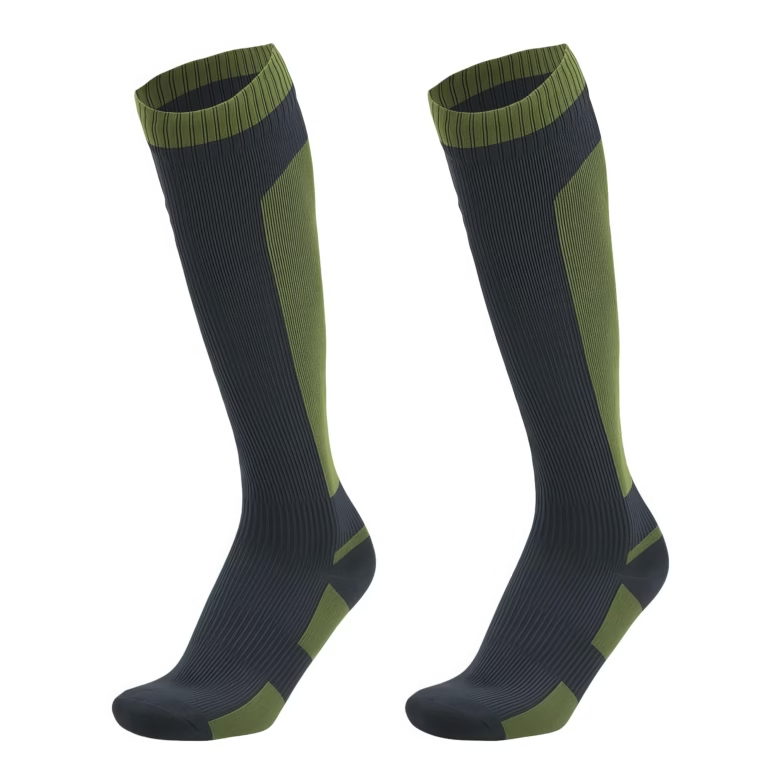
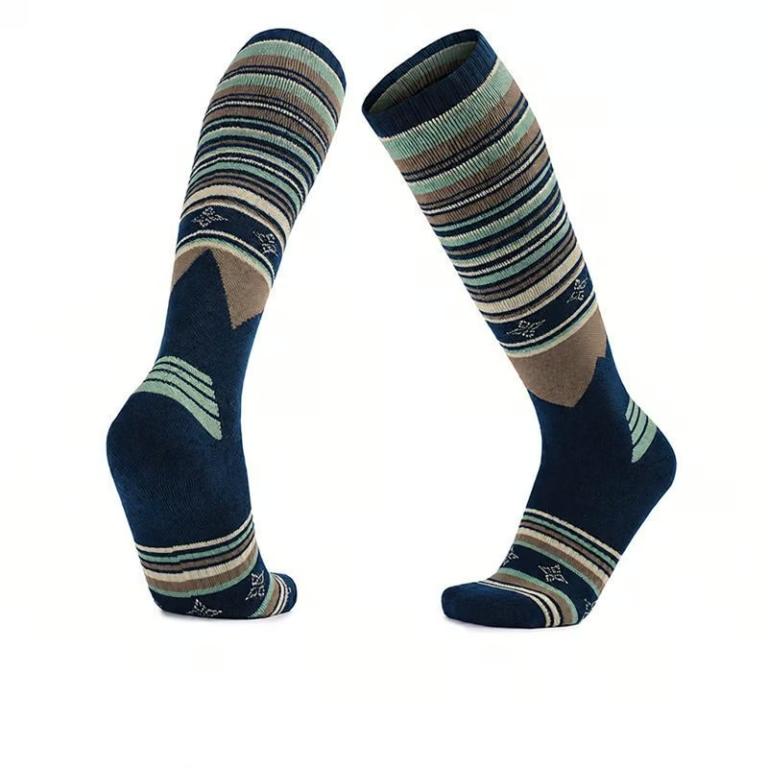
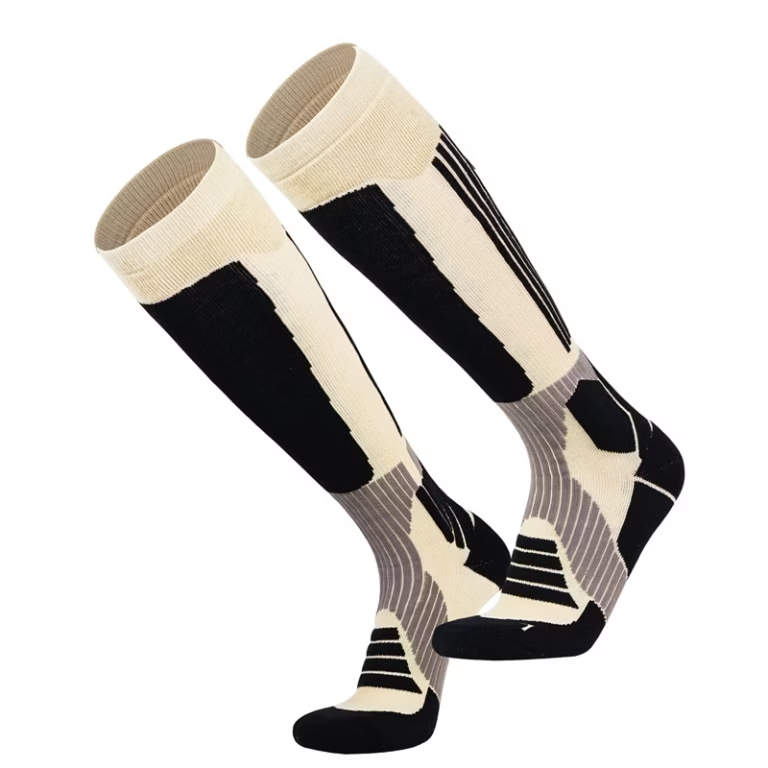
Browse the AnttifySport catalog for hiking socks covered in this article. All products shown here are part of our wholesale lineup — wholesale pricing, low MOQ, and OEM/ODM support available. Contact our team for quotes.