Published: Sep 2026 · Category: B2B Buying Guide · Reading time: 11 min
Executive Summary
For an independent outdoor-gear buyer sourcing tents, sleeping bags, backpacks, hiking apparel, ski accessories, or cycling bags from an overseas factory, the supplier-selection decision is the single highest-leverage choice in the whole program. Two factories with identical quoted prices and identical quoted lead times can have radically different landed-cost outcomes, defect rates, audit risk, and customer-experience consequences — and most of those differences are visible only if the buyer runs a structured vetting workflow before the first PO is issued.
This guide lays out five concrete verification items a procurement team should run on every short-listed Asia-based factory before placing a pilot order, with the focus squarely on evidence a buyer can collect and check, not on trust. The five items are: (1) compliance and social/environmental certification verification (ISO 9001, amfori BSCI, SMETA, OEKO-TEX Standard 100, GRS, Bluesign); (2) production capacity verification (machine list, worker count, monthly output, reference customer mix); (3) track-record verification (export data, REX registration, customs records, third-party audit history); (4) sample testing (gold sample, pre-shipment sample, third-party lab reports from SGS, Intertek, Bureau Veritas); and (5) quality-control process verification (inline QC, final random inspection, AQL standards, pre-shipment PI). Each step is anchored to publicly verifiable standards (amfori BSCI, SEDEX SMETA, IAF CertSearch, OEKO-TEX Label Check, ISO 2859-1 / ANSI Z1.4 AQL sampling) so a wholesale buyer can run the same playbook against any candidate factory without inventing new procedures per supplier.
The bottom-line takeaway for a 2026 sourcing team: a defensible supplier qualification program treats certifications as one input (not a substitute for verification), uses export records and REX numbers as the cheapest evidence layer, requires a third-party lab test on every new material before the first production run, and gates the first PO on a final random inspection that meets an AQL standard the buyer has agreed to in writing. Skip any one of these and you accept a level of risk that no wholesale margin can absorb.
1. Step 1 — Verify Compliance Certifications (ISO 9001, amfori BSCI, SMETA, OEKO-TEX Standard 100, GRS, Bluesign)
Certifications are the most common first-pass filter on a supplier list, and the most common place where a wholesale buyer is misled. A scan of a certification logo on a factory website or a PDF certificate attached to a sales email is not verification — the logos are reproducible, the certificates can be forged, and expired or scope-narrow documents are routinely re-circulated. The first step is to confirm every claim against the issuing body’s own public registry or verification tool.
1.1 ISO 9001 — Quality Management System (QMS)
ISO 9001 is the international QMS standard and the floor of any supplier qualification program. The certification is issued by accredited certification bodies and covers process discipline (document control, corrective action, management review), not product compliance — so ISO 9001 alone does not prove a factory makes safe or compliant outdoor gear. It proves the factory has a documented and audited process for making whatever it makes. The IAF CertSearch database (run by the International Accreditation Forum) is the canonical global lookup for ISO 9001 and other management-system certifications issued under IAF-accredited bodies; the certificate number, the issuing body’s accreditation mark, the scope statement, and the validity dates can all be checked there.
A buyer should specifically confirm: (a) the certificate is issued by an IAF-accredited body — non-accredited ISO 9001 certificates have no international standing; (b) the scope statement names the relevant product (e.g., “manufacture of backpacks and sleeping bags”), not a generic “manufacture of textile products” that could cover unrelated lines; (c) the certificate is current, not within 90 days of expiry. A common mistake is to accept a “valid through” date without checking the surveillance-audit dates underneath — surveillance audits are annual, and a certificate that has lapsed surveillance is functionally expired.
1.2 amfori BSCI — Social Compliance (amfori, Brussels)
amfori BSCI (formerly Business Social Compliance Initiative) is the social-audit framework most widely demanded by European retailers and importers. Crucially, amfori BSCI does not issue certifications — it operates as a platform for shared social audits and improvement tracking, with suppliers receiving audit ratings that reflect compliance with the amfori BSCI Code of Conduct (working hours, wages, health and safety, worker protection, labor rights, and environmental/ethical business practices). The 2025 amfori membership base covers more than 2,400 companies globally.
To verify a BSCI claim, ask the factory for the audit report ID and the audit-issuing body (BSCI audits can only be delivered by amfori-approved third-party audit companies such as Eurofins, Intertek, SGS, Bureau Veritas, and TÜV). Independent confirmation: the audit report is shared via the amfori BSCI platform with participating members. A supplier showing you a BSCI logo without an audit report ID is signaling that they have participated but are not in good standing, or are reusing a stale member-relationship claim. BSCI audit validity follows the platform’s standard 24-month cycle unless a specific buyer requires a tighter schedule.
1.3 SMETA (SEDEX) — Ethical Trade Audit
SMETA (Sedex Members Ethical Trade Audit) is the Sedex-platform equivalent to BSCI and is the dominant social-audit framework in UK, US, and many European supply chains. SMETA audits come in 2-pillar (Labor Standards + Health and Safety) and 4-pillar (Labor Standards + Health and Safety + Environment + Business Ethics) variants. The 4-pillar format has become the default for high-risk sectors and for buyers operating under the EU Corporate Sustainability Due Diligence Directive (CSDDD). A SMETA audit report is generally valid for 24 months from the date of the site inspection, though individual buyers often require annual audits to keep up with evolving ESG regulation.
Verification of a SMETA claim is via the Sedex platform (sedex.com), where the supplier uploads the full SMETA audit report and you, as a buyer member, can read it directly. A supplier providing only a “we passed SMETA” statement without sharing the Sedex platform reference is a yellow flag. Confirm: the audit was conducted by a Sedex-approved auditor (ACUMEN, Bureau Veritas, DNV, Eurofins, Intertek, SGS, UL, etc.), the audit type is 2- or 4-pillar as agreed, and the corrective-action plan is current.
1.4 OEKO-TEX Standard 100 — Product Safety
OEKO-TEX Standard 100 is the product-level safety standard every wholesale outdoor-gear buyer should require for any fabric, lining, trim, webbing, or finished good that touches the skin or the body. Unlike ISO 9001 (process) and BSCI/SMETA (social), OEKO-TEX Standard 100 tests the actual finished product for harmful substances (regulated and non-regulated chemicals, dyes, formaldehyde, heavy metals, pesticides, phthalates) against the OEKO-TEX Annex 4 criteria.
Verification is straightforward: every OEKO-TEX certificate has a unique certificate number, and the OEKO-TEX Label Check tool at oeko-tex.com lets any buyer enter the certificate number and pull up the live certificate, scope, validity, and the issuing institute (Hohenstein, TESTEX, etc.). A label on a tag without a certificate number that resolves in Label Check is not OEKO-TEX certification. For finished goods, each finished product must have its own certificate, even if every component fabric is already certified — the standard requires finished-goods testing on the assembled item. A common pitfall: a factory cites an OEKO-TEX certificate for a raw fabric and represents it as covering the finished backpack; it does not.
1.5 GRS — Global Recycled Standard
If your product brief contains a recycled-content claim (recycled polyester, recycled nylon, recycled down), the Global Recycled Standard (GRS) is the dominant verification standard. GRS is a voluntary, full product standard for tracking recycled content from feedstock to final product, with chain-of-custody, environmental, social, and chemical criteria, all third-party certified. The standard is owned by Textile Exchange; certification is delivered by accredited bodies (Intertek, Bureau Veritas, SCS Global Services, IDFL, GCL, etc.).
The GRS labelling tiers are: GRS label (≥ 50% recycled content) and GRS (No Label) (20–49% recycled content). Below 20%, products fall under the Recycled Claim Standard (RCS) rather than GRS. A buyer should verify the certificate scope (the specific site and product), the recycled-content percentage claimed, and the supply-chain scope certificate chain — every step from recycler to manufacturer needs to be in the chain for the final-product claim to be defensible. Bureau Veritas, for example, has GRS accreditation specifically in mainland China and can issue scope certificates across the whole supply chain excluding first-batch processors.
1.6 Bluesign — Chemical and Environmental Management
Bluesign is a Swiss-origin sustainable chemistry and environmental-impact system for textile manufacturing, with a System Partner network of more than 900 chemical suppliers, mills, manufacturers, and brands worldwide. Two label tiers are used at the product level: bluesign PRODUCT (≥ 90% bluesign-approved fabric + ≥ 30% bluesign-approved accessories such as labels, zippers, and thread) and bluesign APPROVED (a component within the product is bluesign-approved but the finished product does not meet the 90/30 threshold).
Bluesign does on-site assessments and reassesses System Partners every two to three years. Verification is via the Bluesign FIND A PARTNER directory and the Verify a Product tool. A claim that a factory “uses bluesign chemicals” without being a System Partner, or that a fabric is “bluesign approved” without a label number traceable in the directory, should be treated as marketing language.
1.7 The Cross-Cutting Principle
Certifications are evidence of process, not a substitute for verification. Six certifications for one factory is fine; six logo images for one factory with no verifiable certificate numbers is a red flag. The procurement discipline is: every claim must resolve in the issuing body’s public tool, the scope must match the buyer’s intended purchase, and the certificate must be current.
2. Step 2 — Verify Production Capacity (Machines, Workers, Monthly Output, Reference Customers)
A passing certification does not mean the factory can deliver your order. Capacity verification is a separate workstream and is the second item in the vetting checklist.
2.1 Machine List and Workshop Footprint
Ask for a written machine list specifying the make, model, year, and quantity of each production asset: cutting machines, CNC sewing stations, seam-sealing machines (for waterproof outerwear), laser cutters, hot-press machines, screen-printing or sublimation lines, and final-assembly stations. Cross-check the list against the factory’s claimed monthly output — a tent factory claiming 30,000 units/month with eight seam-sealing stations is mathematically inconsistent (each seam-sealing station runs ~250–400 units per shift per day, depending on product complexity), and that inconsistency is information.
If your product is technical (waterproof shells, down jackets, ski jackets, technical packs), confirm the factory owns the specialized equipment required. A factory claiming GORE-TEX or comparable waterproof-shell capacity without a dedicated seam-sealing machine is fabricating capability. If the equipment is leased or shared across multiple sites, that is a delivery-risk factor you want disclosed up front, not discovered during a peak-season delay.
2.2 Worker Count and Shift Structure
Ask for the headcount on each shift, the average tenure of the production-line workforce, and the ratio of full-time to seasonal/temporary workers. A factory running a single 8-hour shift with 60 sewing operators produces roughly half the output of the same factory running two shifts — and a factory that relies heavily on temporary labor during peak season has a quality-consistency risk that the line count alone does not capture. The seasonal-labor ratio should be a known number, not a guess.
2.3 Monthly Capacity by Product Category
Ask for the factory’s monthly production by product category, not a generic “monthly capacity” figure. A factory that makes 80,000 backpacks a month may produce zero sleeping bags, even if it owns cutting and sewing equipment suitable for sleeping bags. The buyer should request: (a) the peak-month capacity in the relevant category; (b) the current utilization (so you can calculate available capacity); (c) the lead time from PO to ex-works for the requested product mix and quantity.
For a wholesale program placing recurring orders, the question to ask is not “can you do this pilot?” but “what does the production calendar look like for my SKU across the next 12 months, and where do I sit relative to your top three customers in priority?” A factory that already serves a large brand as its top customer can deprioritize a mid-size wholesale buyer during peak season; that risk is unaddressable by certifications alone.
2.4 Reference Customer Mix
Ask for three to five reference customers in your target market (North America, Europe, UK, Australia) with contactable buying or sourcing contacts. A factory with no European or North American reference customers has not yet learned the documentation, packaging, labeling, or shipping norms your program will require — that gap is a real cost. A factory with five major brand references will be more cautious about quality control because reputation risk is high, but it will also deprioritize your order when those five brands’ reorder calendars collide with yours.
The reference list should be checked by direct outreach (an email to the reference contact with a short set of structured questions about on-time delivery, defect rate, communication responsiveness, and how disputes were handled). Reference contacts who decline to respond are a yellow flag; reference contacts who respond with detailed, candid answers are the strongest external evidence a buyer can collect short of an on-site visit.
3. Step 3 — Verify Track Record (Export Data, REX Number, Customs Records, Third-Party Audit Reports)
Track record is the cheapest evidence layer to collect and the most under-used by small and mid-size wholesale buyers. Three public or semi-public sources can be checked in hours, not weeks.
3.1 Export Data and Customs Records
Most large customs jurisdictions publish aggregated export data, and commercial data providers (Panjiva, ImportGenius, 52WMB, Volza, ImportYeti) compile shipment-level records from customs filings. A buyer can pull a candidate factory’s export history by HS code (backpacks 4202.92, tents 6306.22, sleeping bags 9404.30, ski gear 9506.11/9506.12, down jackets 6201/6202, etc.) for the last 12–24 months and see: the destination countries, the volume trend, the buyer names (when disclosed), the consistency of shipment frequency, and any anomalies (a sudden volume drop, an unusually large one-off shipment, or a destination-country shift).
A factory claiming ten years of experience with no customs-data trail, or with customs records that show only sporadic shipments to unrelated destinations, is making a claim that does not survive document review. Conversely, a factory with steady monthly shipments to the US, Germany, UK, and Australia for the last three years in your product category has a verifiable track record.
3.2 REX Number (Registered Exporter System)
If you intend to ship into the EU under GSP (Generalized System of Preferences) preferential tariff treatment, the factory must hold a REX (Registered Exporter) number registered with its national customs authority. The REX system is the EU’s self-certification regime for preferential origin and has been in place since January 2017; Türkiye joined in April 2024. Each registered exporter is assigned a REX number, and that number can be validated against the EU’s REX database by any third party.
Verification is via the European Commission’s REX validation page — a buyer enters the REX number and the system returns the registered exporter’s name, address, and country of registration. A factory claiming EU-GSP eligibility without a verifiable REX number is not eligible to declare origin on EU-bound shipments under GSP; the importer will be charged full MFN duty and may face compliance exposure. The REX check costs five minutes and prevents a multi-thousand-euro per shipment surprise at EU customs.
3.3 Third-Party Audit History
Beyond the social-compliance audits covered in Step 1, a factory’s history of buyer-conducted audits, C-TPAT/SOX-style security audits, and financial-credibility reviews is relevant. The buyer can request: a list of audits conducted in the last 24 months (by whom, what type, what finding), the corrective-action close-out rate, and any unresolved major non-conformities.
A factory that refuses to share audit history or that has a pattern of unresolved major findings across multiple audits is signaling a capacity-to-improve gap that the certification scope alone does not capture. Financial-credibility reviews (via services like Dun & Bradstreet, CreditSafe, or local equivalents) add a separate signal — a factory under severe financial stress may cut corners on materials or labor in the late stages of a contract.
4. Step 4 — Test Samples (Gold Sample, Pre-Shipment Sample, Third-Party Lab Reports)
Sample testing is the only step in the vetting process where the buyer holds the finished product in their own hands and can apply their own judgement. Three sample stages matter, and each has a different role.
4.1 Gold Sample (Counter Sample / Approval Sample)
The gold sample (also called counter sample or approval sample) is the physical reference the factory builds against your tech pack, material specification, and quality requirements. It is the single source of truth for what “acceptable” looks like — color, dimensions, stitching density, seam-sealing coverage, hardware function, fabric hand-feel, zipper cycling, snap strength, logo placement, packaging, and labeling.
A disciplined buyer writes the gold-sample sign-off as a multi-stage gate: (a) materials approved (every fabric, lining, trim, and component checked against spec); (b) construction approved (seam types, stitch density, reinforcement at stress points); (c) function approved (zipper cycling, buckle strength, seam-seal integrity, waterproof rating where applicable); (d) finish approved (color, logo placement, packaging, hangtags, care labels, barcodes). Each gate is signed off in writing before the next stage begins, and the signed-off gold sample is retained by both parties as the reference for production.
A factory that pushes back on multi-stage gold-sample sign-off — for example, that wants a single yes/no on a finished sample without breaking down the materials spec — is signaling either process immaturity or an intention to substitute materials after sign-off. Both are red flags.
4.2 Pre-Shipment Sample (Production Sample)
The pre-shipment sample is pulled from the actual production run, typically at 10–30% completion, and is sent to the buyer for visual and functional check before bulk shipment. It is the last opportunity to catch a substitution (wrong fabric, wrong color, wrong component) before the buyer pays for a container of inventory that does not match the gold sample.
A disciplined buyer compares the pre-shipment sample against the gold sample side-by-side and against the original material spec — same fabric weight and hand-feel, same color under standard daylight (D65) and UV light, same hardware, same labeling, same packaging. A common failure mode: the gold sample is signed off in a face-to-face factory meeting where lighting is warm and the pre-shipment sample is reviewed by a different team member under office fluorescents, and the color delta is missed.
4.3 Third-Party Lab Tests (SGS, Intertek, Bureau Veritas)
For any material or product claim with regulatory, retailer, or consumer-safety implications, the buyer should commission an independent third-party lab test rather than relying on the factory’s own test reports. The three most widely used TIC (Testing, Inspection, Certification) providers in Asia-based factory programs are SGS, Intertek, and Bureau Veritas, each with mainland-China coverage and international accreditation (ISO 17025 labs, ILAC mutual recognition).
The standard third-party tests for outdoor gear include: fabric composition verification (the actual fiber content matches the label claim), colorfastness (to washing, light, rubbing, perspiration — ISO 105 B02 / C06 / X12 series), tear strength and tensile strength (ISO 13937 / ISO 13934 for fabrics; ISO 4674 for coated fabrics), waterproof / hydrostatic head (ISO 811 for fabrics; AATCC 127 for finished garments), down fill power and down cluster / feather ratio (IDFL or RDS lab test for down products), zipper cycle testing (ISO 15025 / BS 3084 for slider durability), REACH / RoHS / CA Prop 65 chemical compliance for the destination market, and restricted-substance screening against the OEKO-TEX Standard 100 Annex 4 list.
The buyer should request a specific test program tied to the destination market (e.g., CPSIA + Prop 65 for California, REACH for EU, UKCA / BS standards for UK) and should review the lab report — not just the “pass” line, but the actual test method, the measured value, the standard limit, and the accreditation of the issuing lab. A factory willing to share lab reports openly is a good sign; a factory that only shares a summary “pass” certificate without underlying data is a yellow flag.
4.4 The Sample Cost Is the Cheapest Insurance
Sample cost (typically $200–$1,500 per SKU depending on complexity) is the cheapest insurance in the whole sourcing program. A $1,000 sample test that catches a fabric substitution before a $30,000 production run is the highest-ROI spend in the program. A buyer that skimps on samples to save $500 on the front end is accepting an order-of-magnitude larger risk on the back end.
5. Step 5 — Verify the Quality-Control Process (Inline QC, Final Random Inspection, AQL, Pre-Shipment PI)
The fifth and most operationally critical step is verifying how the factory runs quality control during production. A factory with a passing certification and a good sample can still ship a defective container if QC discipline breaks down on the production line.
5.1 Inline QC (During Production)
Inline QC is the routine check the factory’s own QC team runs at defined stages of production — typically after cutting, after main assembly, after secondary assembly, and after finishing/packing. The buyer should ask for the QC station count, the number of QC staff per shift, the QC checklist used at each station, and the defect-tracking log format (most mature factories use a digital QC log; paper-only is acceptable but slower).
A useful specific question: what is the inline defect rate the factory measures internally over the last six months, by product category? A factory reporting 0% inline defects is either lying or measuring wrong; a factory reporting 2–5% on a complex product like a technical pack is in a normal range. The buyer’s job is not to compare inline rates across factories (definitions vary), but to confirm the factory measures it at all and trends it over time.
5.2 Final Random Inspection (FRI) — AQL Standard
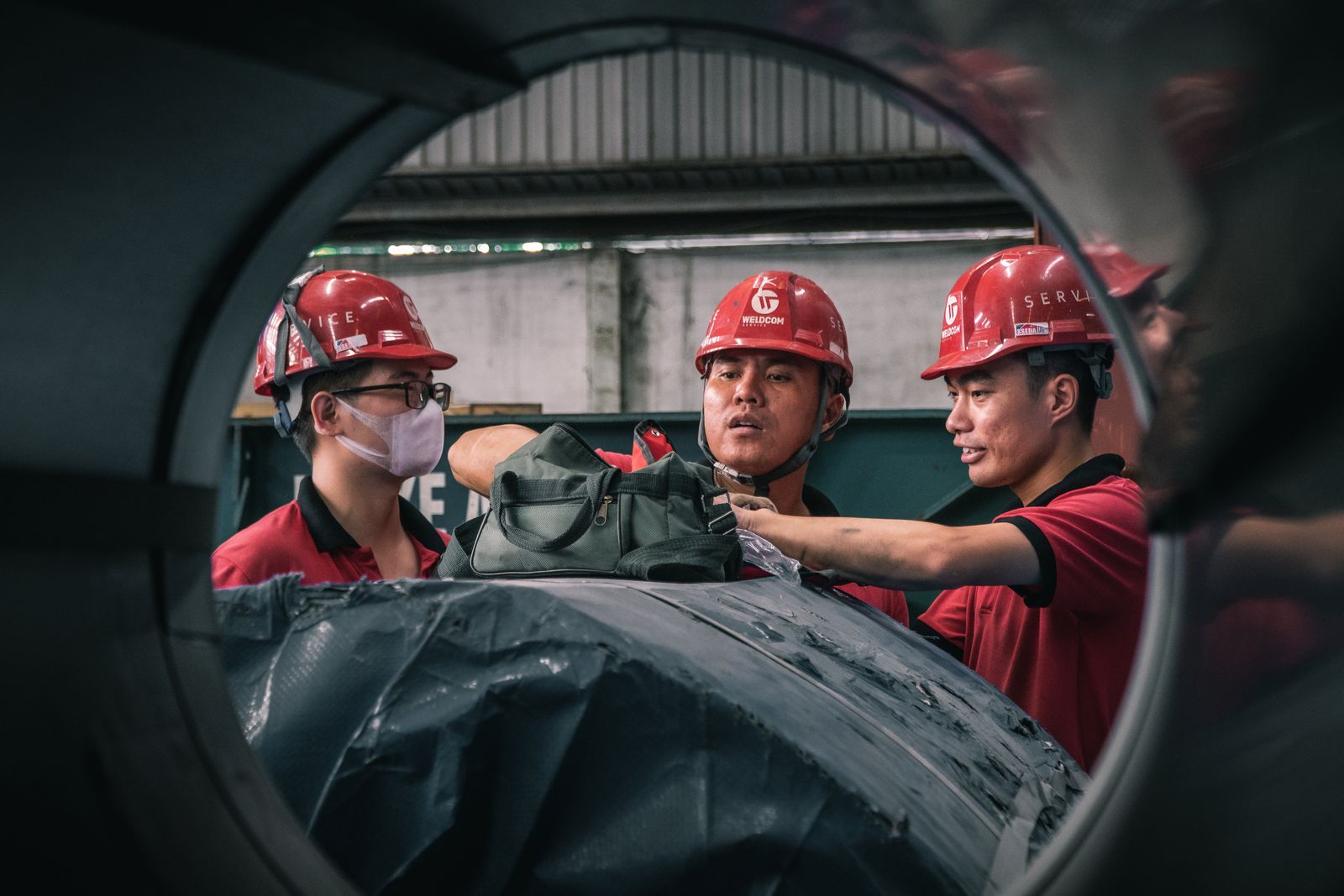
The Final Random Inspection (FRI) is the buyer’s last gate before shipment and is the single most valuable QC instrument a wholesale buyer has. The FRI is conducted by an independent third-party inspector (most commonly SGS, Intertek, Bureau Veritas, or AsiaInspection / QIMA) at the factory when production is 80–100% complete and at least 80% of the goods are packed. The inspector pulls a sample from the lot using the AQL (Acceptable Quality Limit) sampling tables defined by ISO 2859-1 (also published as ANSI/ASQ Z1.4 in the US), records defects by severity (Critical / Major / Minor), classifies the lot as Pass / Fail / Pending based on the agreed AQL limits, and issues a written report.
The standard AQL configuration for outdoor gear is AQL 2.5 Major / 4.0 Minor at General Inspection Level II — this is the convention used across most retail and wholesale programs and is unambiguous to any certified inspector. A buyer with a tighter tolerance (technical mountaineering gear, life-safety products) may specify AQL 1.0 Major / 2.5 Minor; a buyer with a looser tolerance (high-volume commodity apparel) may accept AQL 4.0 Major / 6.5 Minor. The contract must specify the AQL standard, the inspection level, and the sampling plan in writing before production begins.
5.3 Why the Inspector Selection Matters
The third-party inspector must be independent of the factory — not a related party, not paid via the factory’s account, not selected by the factory’s trading company. The buyer should book and pay the inspector directly, and the inspector should have no commercial relationship with the factory beyond the inspection engagement. SGS, Intertek, and Bureau Veritas are the three globally recognized TIC firms with mainland-China coverage and ISO 17025-accredited labs. Smaller reputable firms (QIMA / AsiaInspection, V-Trust, TestRite) cover the same scope at lower cost.
5.4 Pre-Shipment PI (Pre-Inspection / Pre-Shipment Inspection)
The pre-shipment inspection (PI) is a complementary gate to the FRI. Where the FRI checks the product, the PI checks the shipment readiness — packaging condition, carton dimensions and weight, palletization, labeling, barcodes, shipping marks, container condition (for FCL), documentation (packing list, commercial invoice, certificate of origin, REX statement where applicable), and the quantity reconciliation between the order, the production count, and the shipped count.
A buyer that runs an FRI but skips the PI can still face shipment-stage failures: wrong shipping marks (causing customs or retailer-side rejection), mis-labeled cartons (causing retailer chargebacks), or quantity mismatches (causing short-shipment claims). The PI is a 60–90 minute check that prevents a 30-day dispute.
5.5 Documentation Discipline
Every inspection — whether inline QC, FRI, or PI — should produce a written report with photos, defect classification, and signature. The buyer should retain reports across orders to track defect-rate trends by factory, by product, and by season. A factory’s defect-rate trend over six to twelve months is the single best leading indicator of capacity, morale, and process discipline. A rising trend demands a conversation before it becomes a claim.
6. Comparison Table — Five Major Compliance Standards
The table below summarizes the five most common compliance and product-safety standards a wholesale outdoor-gear buyer will encounter when vetting an Asia-based factory. Scope, typical use case, and verification method are listed for each.
Bottom line for sourcing teams
- Treat certifications as evidence, not endorsement. Every claim must resolve in the issuing body’s public tool (IAF CertSearch, amfori BSCI platform, Sedex, OEKO-TEX Label Check, Bluesign partner directory). A PDF certificate attached to a sales email is a starting point, not a verification.
- Use export records and REX numbers as the cheapest evidence layer. Customs data, REX validation, and reference customer contacts can be checked in hours and provide external corroboration that the supplier actually ships the right products to the right markets.
- Run multi-stage gold-sample sign-off, not a single yes/no. Materials / construction / function / finish, each signed off in writing, with the gold sample retained by both parties as the reference for the production run.
- Commission independent third-party lab tests for every new material. SGS, Intertek, and Bureau Veritas are the standard TIC firms; the lab report (not just the “pass” line) should be reviewed against the destination market’s regulatory regime (CPSIA + Prop 65 for California, REACH for EU, UKCA / BS for UK).
- Gate every shipment on a Final Random Inspection under a contractually agreed AQL. AQL 2.5 Major / 4.0 Minor at General Inspection Level II is the standard convention; specify the AQL standard, inspection level, and sampling plan in writing before production begins.
- Run a separate pre-shipment inspection for packaging, labeling, and documentation. The FRI checks the product; the PI checks the shipment. Both gates are needed.
- Track defect-rate trends by factory, product, and season. A rising trend over six to twelve months is the best leading indicator of capacity, morale, and process discipline — and the cheapest signal that an intervention is needed before the next order.
A defensible supplier qualification program treats these five steps as a checklist, not a menu. Skipping any one of them converts a documented sourcing decision into a trust-based one, and trust is not a wholesale margin.
About the Author
This guide was prepared by the AnttifySport sourcing team — a B2B outdoor-gear buying desk that supports wholesale buyers, importers, and brand owners sourcing tents, sleeping bags, backpacks, hiking apparel, ski accessories, and cycling bags from qualified overseas factories. The team has worked with over 200 B2B clients across North America, Europe, the United Kingdom, and Australia since 2018, with a focus on low-MOQ custom orders, OEM/ODM partnerships, and supplier-qualification workflows for emerging outdoor brands. AnttifySport is a buying group and category-management consultancy, not a brand; recommendations are spec-driven and certification-verified.
For questions on a specific supplier-vetting workflow or to talk through a candidate factory’s qualification program, reach out at https://www.anttifysport.com/contact/.
Further Reading & Sources
The links below are the public, verifiable sources used to anchor the certification, audit, lab-testing, and AQL guidance above. Each was retrieved in September 2026.
- IAF CertSearch — ISO 9001 Quality Management Systems (QMS) — the canonical global lookup for ISO 9001 and other management-system certifications issued under IAF-accredited bodies; verification workflow for accreditation mark, scope statement, and validity dates covered in Section 1.1.
- IAF — Frequently Asked Questions — the International Accreditation Forum’s FAQ on the MLA scope (Management Systems Certification, Product Certification, Certification of Persons, GHG Validation/Verification) and the joint ISO/IAF statement on outcomes expected from accredited certification.
- Intertek — amfori BSCI Audits and Supplier Compliance Services — third-party explanation of the amfori BSCI framework: shared Code of Conduct, amfori-approved audit company roster, audit-rating system, and 2,400+ member base used in Section 1.2.
- Eurofins — What is amfori BSCI: the Requirement, Benefits and Process — audit-company approval process, supply-chain mapping requirement, and the producer-profile workflow that supports verification of a BSCI claim.
- Sedex — SMETA vs In-House Auditing: Strategic Guide for Ethical Supply Chains — SMETA four-pillar scope (Labor Standards + Health & Safety + Environment + Business Ethics), 2025 methodology evolution, and the strategic case for SMETA over single-buyer audits covered in Section 1.3.
- IA-UK — SEDEX Audit Guide 2026: Prepare For A SMETA Audit — 2026 2-pillar vs 4-pillar selection guide, the 24-month validity rule, and the alignment with the EU Corporate Sustainability Due Diligence Directive (CSDDD) referenced in Section 1.3.
- Eurofins — Eight FAQs for New SMETA Audit Booking — SMETA audit validity (24 months from the date of issue, per the 2025 Sedex guideline) and buyer-specific variation covered in Section 1.3.
- OEKO-TEX — Label Check — the official OEKO-TEX verification tool that lets a buyer enter a certificate number and confirm live certificate scope, validity, and issuing institute, used in Section 1.4 and the comparison table.
- OEKO-TEX — What OEKO-TEX Labels Mean and Why They Matter — the STANDARD 100 vs ORGANIC COTTON vs MADE IN GREEN taxonomy and the requirement that finished goods carry their own certificate even when every component is certified, referenced in Section 1.4.
- Intertek — Global Recycled Standard (GRS) and Recycled Claim Standard (RCS) Certification — GRS scope (≥ 50% recycled content) and RCS (20–49%) tiers, accredited-body roster, and end-to-end supply-chain certification model used in Section 1.5 and the comparison table.
- SCS Global Services — Global Recycled Standard (GRS) Certification — Textile Exchange GRS scope (processing, manufacturing, packaging, labeling, trading, distribution), chain-of-custody requirement, and the 20–49% / ≥ 50% content tiers covered in Section 1.5.
- Bluesign — Textile Sustainability Services Overview — System Partner assessment and reassessment cycle (every 2–3 years), bluepass product certification, and the System Partner vs bluesign PRODUCT / bluesign APPROVED label hierarchy covered in Section 1.6.
- Better Trail — Bluesign Certified Textiles Explained — System Partner network scope (chemical suppliers, textile mills, manufacturers, brands, retailers), 90/30 label threshold, and outdoor-industry partner roster used to anchor Section 1.6.
- European Commission — Registered Exporter (REX) system — the official REX registration database, self-certification principle, and the public REX-number validation page used in Section 3.2.
- Norwegian Customs — The Registered Exporter system (the REX system) — origin-declaration format (“P” for wholly obtained, “W” followed by HS heading for sufficiently worked or processed), replacement-statement rules, and the EUR 6,000 threshold covered in Section 3.2.
- SGS — Final Random Inspection — SGS’s published FRI methodology, ANSI/ASQ Z1.4 (ISO 2859-1) AQL sampling basis, and the detailed inspection report format covered in Section 5.2.
- Hohenstein — OEKO-TEX STANDARD 100 FAQ — the requirement that finished goods carry their own STANDARD 100 certificate, the label-and-certificate reconciliation rule, and the B2B-buyer verification discipline covered in Section 1.4.
The certification, audit, and AQL sampling information in this article reflects the public standards, public databases, and TIC-firm methodologies in effect as of September 2026. Standards are revised periodically (amfori BSCI platform updates, SMETA 2-pillar / 4-pillar revisions, OEKO-TEX Annex 4 annual update, ISO 2859-1 revisions); always verify the current standard version, the current certificate number, and the current scope statement on the issuing body’s public tool before treating any claim as valid. Third-party inspector selection, AQL configuration, and lab-test scope should be agreed in writing between buyer and factory before each production run; this article is for informational and educational purposes only and does not constitute legal, customs, or product-safety advice.
Related Products from AnttifySport
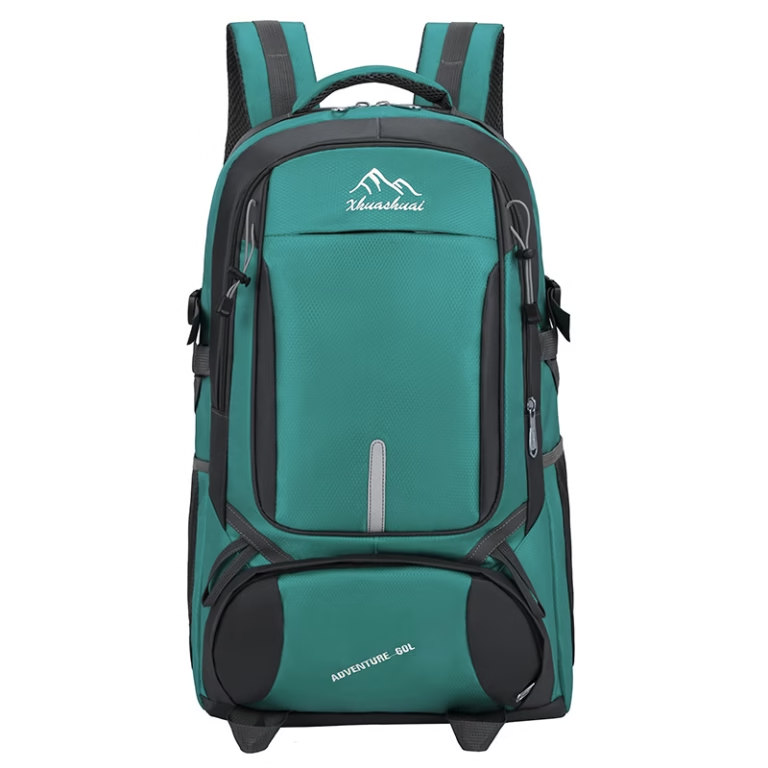
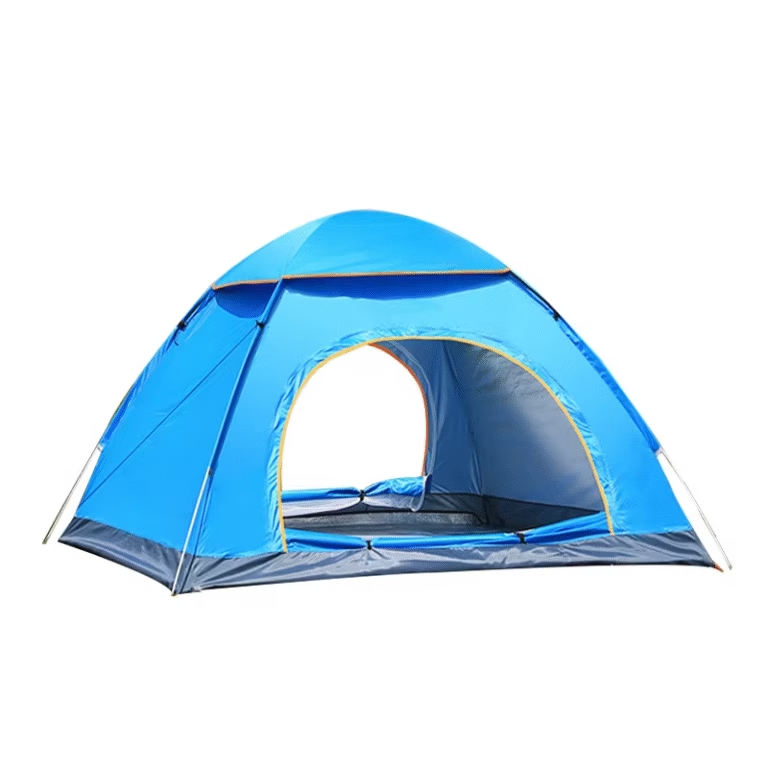
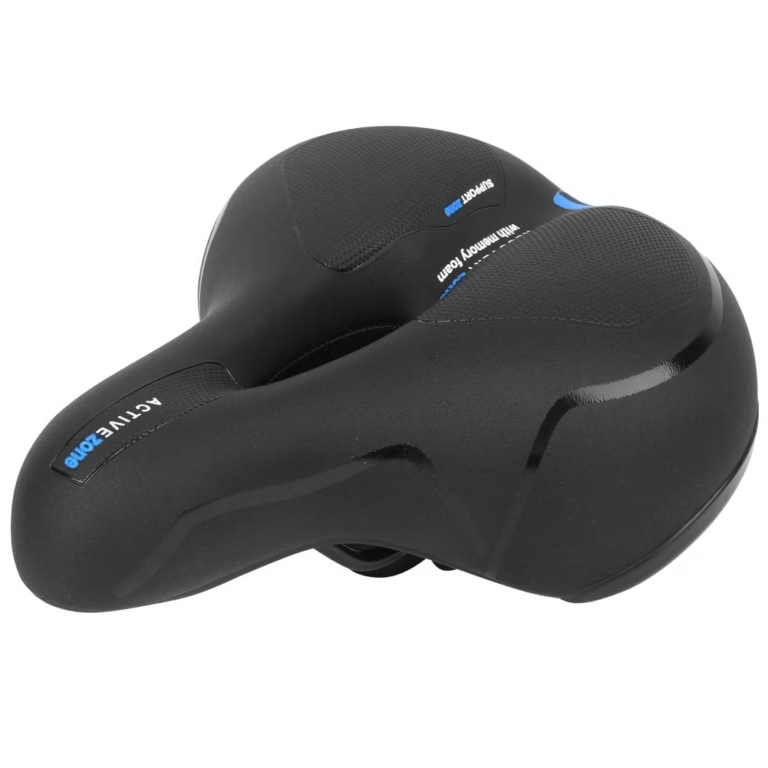
Browse the AnttifySport catalog for outdoor gear covered in this article. All products shown here are part of our wholesale lineup — wholesale pricing, low MOQ, and OEM/ODM support available. Contact our team for quotes.