Published: Sep 2026 · Category: B2B Buying Guide · Reading time: 11 min
Executive Summary
Most first orders from a new supplier fail for predictable reasons that show up on the second PO, not the first. The factory looks clean on the website, samples ship on time, and the first 5,000 units arrive in spec. Then the second order slips by three weeks, a third of the units have a stitching defect that wasn’t in the samples, and the factory’s idea of “corrective action” turns out to be a 10% discount on a re-run you can’t afford to wait for.
This guide walks wholesale buyers, IBD owners, and brand founders through the five-step framework that prevents that sequence. The steps are (1) license and audit verification, (2) a 50-unit sample evaluation, (3) three reference checks, (4) IP and compliance documentation review, and (5) a structured trial-order scaling plan. Each step has a specific deliverable and a specific go/no-go decision.
The framework applies whether you are building a private label program, expanding into a new product category, or replacing an underperforming supplier. The figures and supplier-type comparisons cited are drawn from public industry references; verify specific certification and audit figures against your supplier’s current documentation before signing a first production order.
Why supplier evaluation matters more than unit price
Most wholesale buyers ask the wrong first question. They focus on per-unit FOB price or minimum order quantity. Price and MOQ matter for unit economics, but the dominant variable for long-term sourcing success is supplier reliability. Four reliability variables drive roughly 80% of supplier-selection decisions:
- On-time delivery rate — the percentage of orders shipped on the agreed date; less than 95% across the last four quarters is a red flag.
- Quality consistency — defect rate across production batches; more than 2% on incoming inspection requires root-cause analysis before the next run.
- Communication responsiveness — typical reply time on email or messaging; more than 24 hours during business days delays every downstream decision.
- Compliance documentation — availability of test reports, certifications, and audit records; missing documents signal risk that surfaces at customs, not at quote time.
A buyer who skips supplier evaluation typically discovers these variables through delivery problems, defect chargebacks, and customs holds. The cheapest quote is rarely the lowest total cost once those variables are priced in. A vetted supplier at a 5-10% higher per-unit price usually produces a 20-30% lower total cost of ownership across a 12-month relationship.
Supplier types: who you’re actually evaluating
Before the framework, it helps to know what kind of supplier you’re talking to. The label on the email signature rarely matches the legal entity. Outdoor gear sourcing in 2026 involves four distinct supplier types, each with different strengths, failure modes, and verification requirements.
A useful rule of thumb: trading companies win on flexibility and communication, direct factories win on price at volume, OEM wins on brand differentiation, ODM wins on speed-to-market at the cost of competitive overlap. Most first-order sourcing mistakes happen when a buyer treats one type as if it were another — typically asking an ODM for exclusive tooling they don’t control, or asking a trading company for direct production-schedule visibility it doesn’t have.
Step 1: Verify business license and factory audit (15-30 days)
This step answers the question: does this supplier actually exist as claimed, and can they legally export what they want to sell you?
License verification checklist:
- Business license — current and registered to the address the supplier claims. Cross-check the registration number against the issuing authority (in mainland China this is the State Administration for Market Regulation; equivalent bodies exist in Vietnam, Bangladesh, India, and other sourcing countries). Licenses should be valid for at least 12 months past your first-order date.
- Export license — required in most jurisdictions for direct FOB shipments; without it the supplier cannot issue a commercial invoice in their name, which delays customs clearance by 2-6 weeks.
- Tax registration — confirms the legal entity behind the contract; protects against paying a deposit to a shell company that disappears before production.
- Bank account under the legal entity name — never wire a deposit to a personal account or a third-party company without written explanation.
Factory audit objectives:
The audit confirms physical operations match the verbal claims. Most wholesale buyers use one of three audit types, in declining order of reliability:
Audit report: what to look for
A legitimate third-party audit report should include verified figures for: production line count, total headcount, in-process QC stations, pre-shipment inspection process, fire safety, working-hours compliance, and a list of the factory’s last three export clients (with permission to contact at least one). Reports that omit working-hours and fire-safety sections, or that list only vague references like “European buyers,” should be re-requested.
Decision point at end of Step 1: proceed to Step 2 only if license is verified, export license is current, and audit report (on-site or video) confirms the claimed production capability. If any of the three fails, request a replacement or move to the next candidate.
Step 2: Sample evaluation — order and test 50 units (10-20 days)
This step answers the question: can this supplier produce a representative batch of the SKU at the quality level shown in the marketing sample, and what does their QC process actually look like?
The 50-unit sample is the single most valuable test in the entire framework. The marketing sample (often called the “golden sample”) is hand-finished and selected to win the order. The 50-unit sample tests whether the production line can replicate that quality without supervision.
Sample order structure:
- Quantity: 50 units minimum, ideally 50-100 for products with high cosmetic standards (powder-coated bottles, anodized aluminum, printed fabric).
- Spec: identical to the planned production spec, including packaging, hang tags, and barcodes. Sample-only shortcuts (no barcodes, generic cartons) signal a supplier who plans to charge for “production extras” later.
- Payment terms: same as planned production terms — if the supplier demands 100% upfront for the sample but standard 30/70 for production, that is a red flag.
- Lead time: ask for written confirmation of the sample lead time. A supplier who quotes 7 days and ships in 21 days will probably quote 30 days for production and ship in 60.
Sample test protocol:
Run the 50 units through this checklist before approving the supplier:
- Dimension check (all 50 units) — measure against spec; more than 5% outside tolerance is a fail.
- Visual cosmetic check (all 50 units) — under consistent lighting, against a reference sample; count defects by category (scratches, dents, color mismatch, print misalignment).
- Functional test (10-20 units) — drop test, leak test (for bottles and hydration), zipper cycle test, seam pull test (for packs and tents), load test (for racks and cages).
- Material verification (3-5 units) — weight, fabric composition, metal grade (XRF or mill cert), wall thickness.
- Compliance spot-check (2-3 units) — if any compliance claim was made in the quote (FDA, LFGB, REACH, Prop 65, CPSIA), spot-check that the sample packaging or hang tag carries the relevant mark.
Decision point at end of Step 2: proceed to Step 3 only if the sample pass rate is ≥90% with no single defect category above 5%. If the pass rate is 70-89%, request a corrected sample and re-test. Below 70% is a fail regardless of price.
Step 3: Reference check with three prior clients (5-10 days)
This step answers the question: how does this supplier actually behave across a full order cycle, including problems?
Marketing references are not references. A useful reference check uses three distinct prior or current clients, ideally from a similar product category and similar volume tier. The reference list should not come from the supplier’s website or sales deck — it should come from the audit report, from trade show conversations, or from the supplier’s bank or quality certification partner.
Three reference categories to target:
Reference interview questions (15-20 minutes per call):
- How many orders have you placed with this supplier in the last 24 months?
- What was your last on-time delivery rate? What was the longest delay you experienced?
- What defect rate did you see on incoming inspection, and how was it resolved?
- How long does the factory take to respond to a quality issue raised during production?
- Have you ever had to invoke a warranty claim or refund? How was it handled?
- What is the one thing you would change about working with this supplier?
- Would you place another order today?
Decision point at end of Step 3: proceed to Step 4 only if at least two of three references give a positive overall recommendation and the third is at least neutral. Any reference who would not place another order today is disqualifying regardless of the explanation.
Step 4: IP and compliance documentation review (5-10 days)
This step answers the question: will this supplier’s documentation protect you at customs, in a brand-dispute scenario, and during a compliance audit?
This step is split into two parallel tracks: IP protection (which protects your brand) and compliance documentation (which protects your shipment at port and your customer at retail).
IP protection checklist:
- NNN agreement (Non-use, Non-disclosure, Non-circumvention) — required when sourcing from a factory that has access to your brand, design files, customer list, or pricing. The agreement must be governed by the supplier’s local law to be enforceable; an agreement governed by US or EU law is often unenforceable against a foreign factory.
- Tooling ownership clause — written confirmation that any tooling, dies, molds, or custom plates paid for by the buyer are owned by the buyer and will not be used for other customers. Ask for a photo of the tooling with your asset tag.
- Design IP transfer — for OEM orders, written confirmation that all design files, technical drawings, and specifications transferred to the factory are licensed to that factory solely for production of your orders.
- Exclusivity terms (if claimed) — written terms covering geography, channel, time, and product category. Vague exclusivity (“we will not sell this design to your competitors”) is not enforceable.
Compliance documentation checklist:
Decision point at end of Step 4: proceed to Step 5 only if all IP protection documents are signed and at least the compliance documents relevant to your destination market are in hand. Missing compliance documents cannot be backdated; they need to be requested now or you risk a customs hold on the first production order.
Step 5: Trial order scaling plan (30-60 days)
This step answers the question: how do we turn a verified supplier into a long-term partner without exposing the full program to first-run risk?
The trial order is not a normal production order. It is a structured test that gathers the data needed to scale with confidence.
Trial order structure:
Trial order rules:
- Pay production deposit via escrow or trade assurance where possible, not wire transfer to a new supplier. Third-party escrow services, PayPal for B2B (where supported), or a confirmed letter of credit protect against non-shipment and provide a documented dispute-resolution path.
- Specify pre-shipment inspection in the purchase contract. Third-party inspectors (QIMA, AsiaInspection, V-Trust) charge $200-400 per man-day and produce a binding inspection report that triggers rework at factory cost if defects exceed agreed thresholds.
- Hold final payment until inspection passes. Standard 30/70 terms are reasonable; 50/50 is reasonable for first orders; 100% upfront is a red flag regardless of MOQ.
- Document everything in the contract: spec sheet version, packaging details, lead time, defect rate threshold, inspection terms, payment terms, shipping terms (FOB, CIF, DDP), governing law, dispute resolution venue.
- Keep one supplier as backup for the first three orders. Not as a known-quantity backup, but as a verifiable alternative in case the primary relationship fails. Two verified suppliers beat one perfect supplier in long-run risk terms.
Decision point at end of Step 5: the supplier becomes “qualified” after Trial Run 2 passes. Move them into normal procurement cycles and apply standard MOQ and lead-time assumptions.
Bottom line for sourcing teams
A five-step framework replaces the “send RFQ, get lowest price, place order” default with a verifiable decision chain. Each step produces a specific deliverable and a specific go/no-go decision. The whole framework takes 60-120 days — slightly longer than sending a single PO, and dramatically cheaper than discovering a problem on the third or fourth order.
The supplier-type comparison table above matters most at Step 1, because the wrong type of supplier for your business model is the most expensive mistake to unwind. Trading companies, direct factories, OEMs, and ODMs each have a role, but they cannot be substituted for each other without consequence.
Across hundreds of B2B relationships in the outdoor category, the pattern is consistent: buyers who skip Steps 1-4 pay for it in Steps 5 and beyond. Buyers who run all five steps typically discover within 90 days whether a supplier will scale, and they have the documentation to back out cleanly when the answer is no.
The cheapest quote is rarely the lowest total cost. The lowest total cost is the supplier who passes all five steps and remains in the program for three or more years.
About the Author
The AnttifySport Sourcing Team supports wholesale buyers, importers, and brand owners sourcing hiking, camping, cycling, and skiing gear from qualified Asian factories. We’ve worked with over 200 B2B clients across North America, Europe, and Australia since 2018, with a focus on low-MOQ custom orders and OEM/ODM partnerships for emerging outdoor brands.
Have a sourcing question or want to discuss your next product line? Reach out at https://www.anttifysport.com/contact/.
Further reading & sources
- Outdoor Industry Association, 2025 Outdoor Participation Trends Report — used for buyer-side industry scale and channel context
- SGS, Audit Methodology Reference — Manufacturing and Production Facilities — referenced for third-party audit report structure
- Intertek, Supply Chain Assurance — Audit and Inspection Service Definitions — referenced for on-site vs video audit reliability differences
- QIMA (formerly AsiaInspection), Product Inspection Service Definitions and Sampling Standards — referenced for pre-shipment inspection protocols and AQL levels
- U.S. Food and Drug Administration, Inventory of Effective Food Contact Substance Notifications — referenced for FDA food-contact compliance verification
- ECHA (European Chemicals Agency), REACH Regulation Database — referenced for EU chemicals compliance
- OEKO-TEX Association, Standard 100 Certification Reference — referenced for textile compliance
- California Office of Environmental Health Hazard Assessment (OEHHA), Prop 65 Safe Harbor Levels for Nickel Release and Lead — referenced for stainless and metal-component compliance
- Statista, Global Outdoor Apparel and Gear Wholesale Trade Patterns 2024-2026 — referenced for sourcing-country distribution
Public data sources cited; readers should verify specific certification, audit, and reference figures against your supplier’s current documentation and the latest editions of these references before finalizing a partnership decision. The supplier-type comparison is a generalized framework; specific suppliers may combine characteristics across categories.
This article is for informational purposes only and does not constitute legal, financial, or professional sourcing advice. Supplier evaluation criteria, regulatory requirements, and trade terms referenced here reflect publicly available industry data and general B2B sourcing conventions as of September 2026; specific sourcing decisions should be validated against current supplier documentation, applicable trade law in the buyer’s and seller’s jurisdictions, and the latest guidance from licensed customs brokers and trade-compliance professionals. The author and AnttifySport make no representations or warranties regarding the fitness of any specific supplier for a buyer’s particular use case. Pricing, MOQ ranges, and lead times referenced are industry-typical ranges derived from public sources and are not guaranteed by any specific factory or supplier.
Related Products from AnttifySport
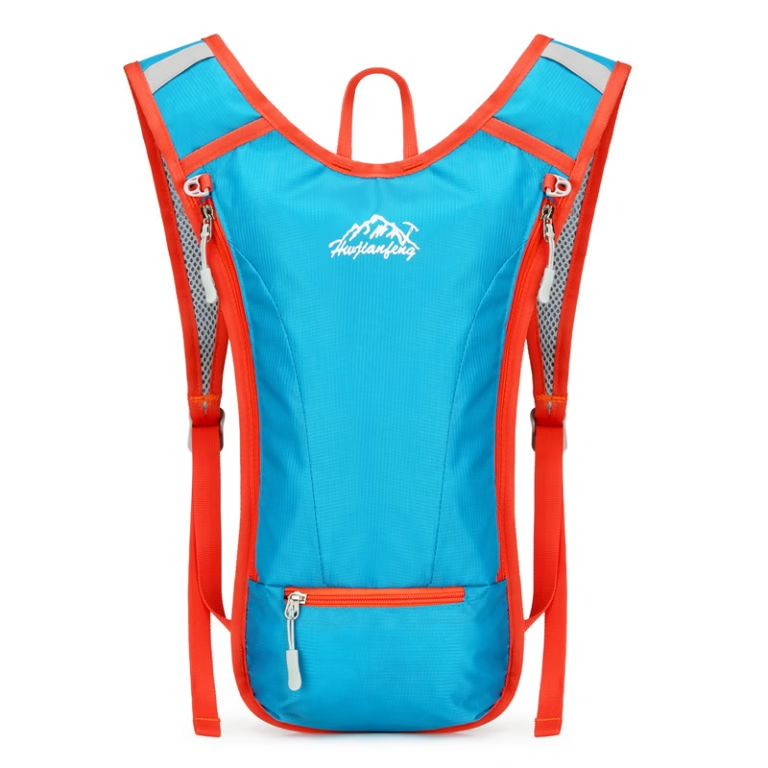
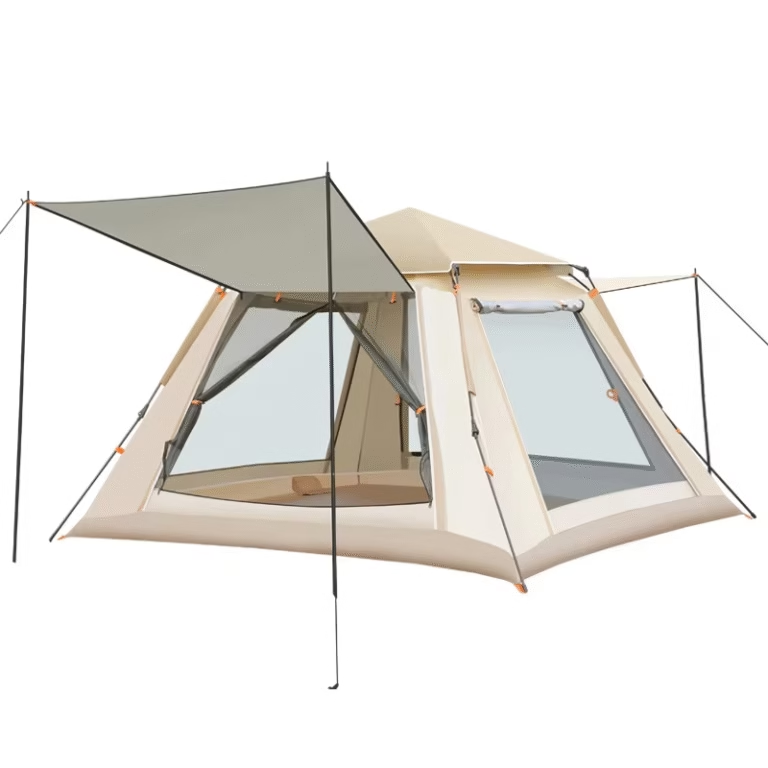
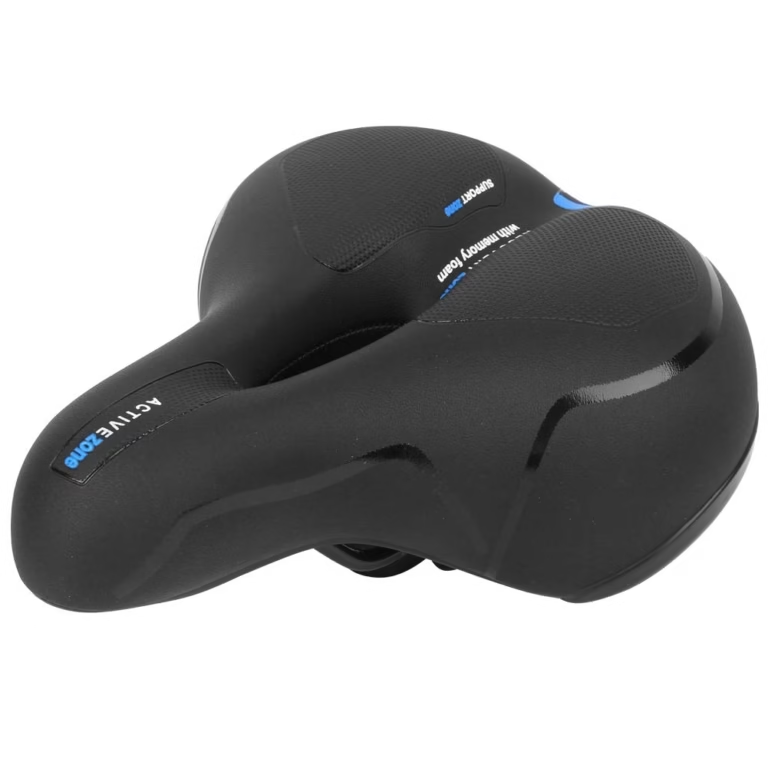
Browse the AnttifySport catalog for outdoor gear covered in this article. All products shown here are part of our wholesale lineup — wholesale pricing, low MOQ, and OEM/ODM support available. Contact our team for quotes.