Cycling Accessory Colour and Size Range Planning for Retail Stock
Published: 2026-11-09 | Category: B2B Buying Guide | Reading time: 11 min

Executive Summary
Colour and size range planning is the decision that determines whether a cycling accessory range sells or sits. Every extra colourway and every extra size multiplies the number of units a factory has to produce before a single item reaches a shelf, and it multiplies the number of units a retailer has to hold, count, price and reorder. A buyer who plans a range of twelve colours across four sizes is committing to forty-eight stock-keeping units from a category where the best-selling lines may account for seventy per cent of volume. A buyer who plans two colours across one size is committing to two, and can reorder faster, mark down faster, and get the reorder money back faster.
This guide walks through how to build a colour and size run for small cycling accessories — grips, bells, saddles, lights, bottle cages, pumps — for a retailer or distributor buying in small quantities. It covers how to read the factory’s minimum order quantity against colour count, where the real constraint sits, how to decide which variables to hold constant and which to release, and how sell-through data should change the range between seasons. The conclusion is not that fewer is always better, but that the range should be sized against the depth of the order, not against the size of the catalogue.
Why Colour Count Is the First Constraint, Not Size
Most small buyers begin range planning with sizes, because sizing feels like the customer-facing decision. But for cycling accessories the arithmetic usually punishes colour first. A factory colour minimum is typically calculated per colour per style, and it does not reduce when you take fewer sizes of the same colour. A size minimum, by contrast, is usually applied to the style as a whole and is spread across the colour range. In practice this means the same colour, in five sizes, frequently passes the same order quantity as one colour in one size — which is exactly the wrong trade for a small buyer.
There is a second reason colour comes first, and it is about how the goods sit in the warehouse. Colourways are what determine the visible shelf position, and a range with six colours for one style and three sizes for another produces a stock profile where the fast lines are scattered across the warehouse rather than concentrated. A picker pulling a reorder of the best-selling black grips has to find one bin. A picker pulling a reorder of the best-selling black grips from a range where black exists in three different packaging formats needs three bins and a mental decision about which one to reorder. Both approaches carry the same colour count, but only one of them is cheap to operate.
The practical rule that follows from this is straightforward: before adding a size, check whether adding a colour would have been cheaper. In almost every small-order category, it would have been.
The Three Levers and How They Multiply
A cycling accessory range is really three independent decisions multiplied together. The first is style — how many different products you carry. The second is colour — how many colourways of each style. The third is size or spec — how many sizes, lengths or capacities of each colourway. The multiplication is where the money goes, and it is the reason a range that looks modest on paper can be a very large commitment once produced.
| Lever | Typical small-order treatment | Where the constraint actually bites | |
|---|---|---|---|
| Style count | Six to ten SKUs per category | Almost never — this is what the buyer wants to maximise | |
| Colour count | Two to three per style | Hardest constraint — factory colour minimums apply per colour | |
| Size / spec count | One per style, two only where fit genuinely varies | Moderate — often shared across the colour run |
| Accessory type | Hold constant | Release where demand exists | Reason |
|---|---|---|---|
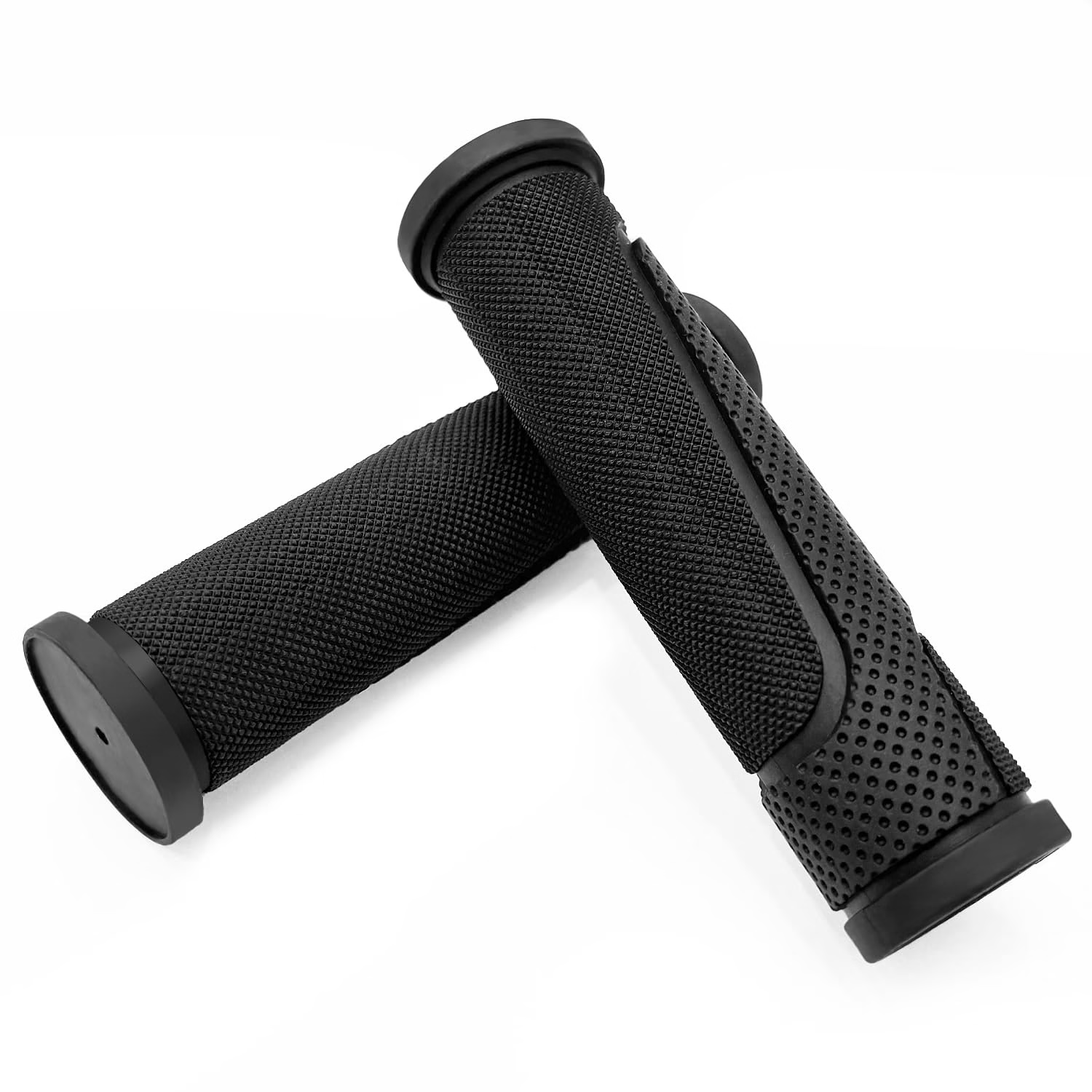
| Handlebar grips | Colour | Diameter (22.2 / 25.4 / 31.8 mm) | Colour is preference; bar diameter is a fit requirement that excludes the bike |
| Bike bells | Colour and size | Mount type (handlebar / seatpost / strap) | A bell that does not fit the mount is not a colour variant, it is a return |
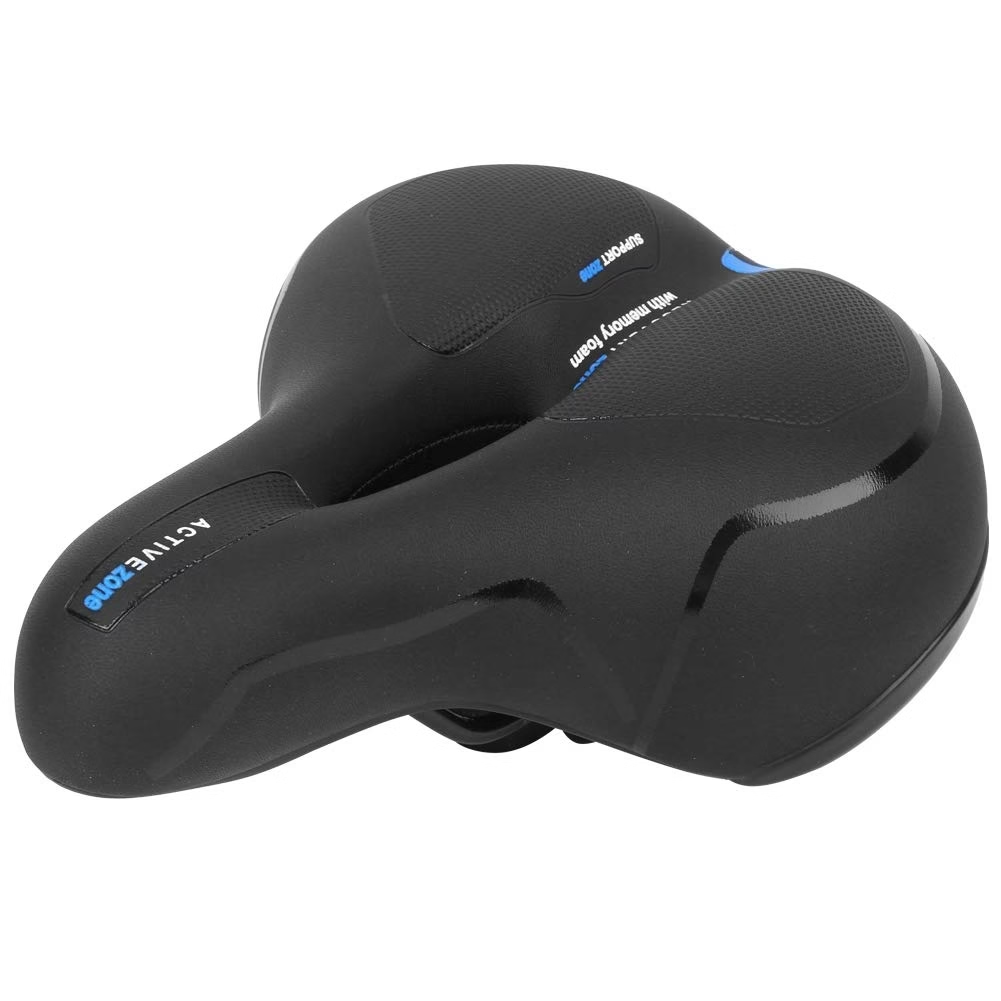
| Bike saddles | Colour | Width and rail type | Saddle width and rail spacing determine compatibility with the frame |
| Bottle cages | Colour and material | Bottle diameter and bolt pattern | Two-bolt and four-bolt patterns are mechanically incompatible |
| Rechargeable lights | Colour | Lumen band and mount type | Brightness and mounting are functional; buyers specify them precisely |
| Mini inflators | Colour | Pressure range and power source | Pressure ceiling and whether it is USB or 12V decides usability |
The pattern is consistent. Colour is a merchandising choice and can be restricted without hurting conversion much. Anything mechanical or dimensional is a fit requirement, and the cost of getting it wrong is not a lost sale, it is a returned product and a freight cost. Buyers who treat colour and size as equally negotiable end up with a range that has a high return rate, which is worse than a small range with no returns at all.
How Colour Count Interacts with Sell-Through
Colour count is often justified in a pitch as “giving the customer choice”. For a retailer, the useful framing is different: colour count fragments your sell-through data. If you carry four colours of a grip line, and each sells forty units a quarter, none of them reaches a level where you can reorder confidently, and you are left with four slow lines. If you carry two colours and they sell eighty units each, you have a reorder signal, a reorder quantity that fills the minimum efficiently, and a markdown decision that is actually informed.
There is a compounding effect. A colour that sells slowly holds cash, and slow colour sits in the warehouse taking space that the fast colour needs for its reorder buffer. So the cost of the fourth colour is not one quarter of a fast line’s sales, it is that quarter’s stock plus the space and the reorder delay it creates for the line that is actually working.
| Colour count | Units of depth for the same budget | Sell-through signal | Reorder behaviour |
|---|---|---|---|
| One colour | Twice the depth of a two-colour plan | Very clear | Full reorder whenever the line drops below cover |
| Two colours | Baseline | Clear enough to act on | Reorder the proven colour, drop the laggard |
| Three colours | Two thirds of baseline | Marginal — one colour is usually noise | Reorder decisions get delayed, cover drops |
| Four or more | Quarter or less of baseline | Weak across the board | Constant small reorders, high freight cost per unit |
The number to watch is not the sell-through percentage, which can be made to look acceptable by discounting, but the absolute unit movement per line per period. Below roughly the reorder quantity you cannot refill a line in one economical shipment, and every refill becomes a paid consolidation order with its own minimum. A range that produces one reorder per colour per quarter is being managed badly. A range that produces one reorder per style per quarter is being managed well.
Building the Range: A Working Method
The following method produces a range plan you can take to a supplier and defend, and it works the same way for every small cycling accessory category.
- Set the budget first, in units and in value. Not in styles. Decide the total number of units the first order can carry and what that order is worth, including freight, duty and the working capital tied up for a quarter. Everything below is constrained by this.
- Choose styles to fill the budget, not to fill a shelf. Aim for the maximum number of styles that fits the unit budget at a single colour and a single size. If the budget allows eight styles, take eight styles. Resist adding a ninth by reducing depth everywhere.
- Add the second colour only to the two or three styles you expect to be your volume leaders. This is where the second colour earns its cost. The tail styles stay single-colour, and if one of them turns out to sell, that is a future colour decision, not this order’s decision.
- Release size only where a mismatch causes a return. A different grip diameter is a different purchase; a different grip colour is a preference. Add sizes to the styles where fit varies and stay at one size elsewhere.
- Check the plan against every minimum before issuing the purchase order. Multiply style by colour by size per style, then compare against the per-colour, per-size and per-order minimums separately. If it clears only because of the per-style total, it is not actually clear.
- Agree a reorder pathway before the first order ships. The colour and size combinations that sold best in the first run should be reorderable at the same unit price with a shorter lead time. If that is not written down, the best-selling line will not be the one you reorder.
Applied to a concrete case: a distributor with room for eight hundred units across grips, bells, saddles, lights and cages might plan six styles of grips and bells at two colours each, and six styles of saddles, lights, cages and pumps at one colour each. That is twelve styles, eighteen stock-keeping units, and a range that still covers every category a cycling shop needs. A plan with the same twelve styles at three colours each is thirty-six units and roughly two thirds less depth per line, for no additional category coverage.
Questions to Ask a Supplier
The following is written to be sent with a quotation request. Each question has a reason, and each one produces information that either supports the range plan or tells you the supplier is not set up to support small orders.
- Is the minimum order quantity per colour, per size, per style, or per order — and what is each figure
- Is there a per-order value minimum separate from unit counts, and does it apply across styles
- Which colourways are available as stock colours with no additional setup or dye-lot fee
- What is the surcharge for a non-stock colour, and is it per colour or per order
- Can size and spec variants share one colour approval, and does that change the per-size minimum
- What unit price applies on reorder of an existing colour and size combination, and how long is the reorder lead time
- What is the packaging format per colour, and whether mixed-colour cartons are supplied as standard
- Whether custom colour matching is available under private label, and the minimum quantity for it
- Whether the supplier ships in neutral or branded packaging per colour, and how that affects MOQ
Where Range Planning Goes Wrong
The most common failure is matching a competitor’s shelf without checking their depth. A competitor may show twelve colours of grips on the wall because they buy in containers and replenish weekly. A buyer matching that wall with two hundred units per colour has copied the appearance and inverted the economics, and will be out of stock on the line that actually sells.
The second failure is treating a minimum order quantity as a discount to be negotiated rather than a constraint to be designed around. It is a constraint. The negotiation that helps is the one that changes the shape of the order — consolidating colours, consolidating styles, accepting a longer lead time, or taking a slightly larger quantity in a single colour — not the one that asks for the same plan at a lower price.
The third is planning the range once and never revisiting it. A range that was correct at launch is wrong within two seasons if the sell-through has moved, and the only reliable signal that it has moved is the unit data. Review the range at every reorder: which lines cleared the reorder threshold, which lines did not move at all, and whether the colour that was supposed to be the second choice is actually selling as the second choice or has become dead stock.
About the Author
This guide is written by the AnttifySport sourcing team, who work directly with manufacturers of cycling and outdoor equipment for the wholesale market. The recommendations reflect what has held up in actual order cycles rather than general policy language.
Further Reading on Range Planning
Related guides on AnttifySport covering the assortment and sourcing topics that sit alongside colour and size range planning.
- Cycling Accessories vs Bike Sales: Why the Margin Dollars Come From the Parts — how accessory categories are priced against the volume they carry.
- Backpack MOQ Guide for B2B Buyers — the same minimum-order arithmetic applied to a higher-value category.
- MOQ Negotiation Tactics for Small Wholesalers — what can and cannot be negotiated on a minimum order quantity.