Hiking Equipment Warranty and Returns Policy for Retail Resellers
Published: 2026-11-04 | Category: B2B Buying Guide | Reading time: 9 min

Executive Summary
A warranty policy is not a product specification. It is a commercial term, and for a small outdoor retailer it often determines whether a single defective item becomes a manageable expense or an unpayable one. The difference between the two outcomes comes down to three things that most buyers negotiate too late: how the scope of coverage is defined, how defect is separated from misuse, and what happens when a spare part is no longer available. Get these right in the supply agreement and a warranty claim becomes a routine administrative task. Negotiate them loosely and a single winter season of returns can absorb the margin on a dozen healthy products.
This guide sets out how to read a supplier warranty term, the specific clauses that matter for hiking equipment, and the questions to put on the table before your first order. It is written for buyers and small resellers rather than consumers, because the same twelve words in a consumer warranty and a wholesale one carry very different weight.
What a Supplier Warranty Actually Covers
Most supplier warranty language covers three categories of failure, and they are not equally valuable. Structural failure of the load-bearing component — a frame joint, a buckle that snaps under normal load, a seam that opens — is the strongest claim a buyer can make, because it is verifiable and hard to argue with. Manufacturing defects in materials or workmanship come next: abnormal wear on a fabric, a fault in a mechanism that worked when it left the factory, a finish that fails well inside its expected life. Everything else is where the interpretation happens, and it is where most returns disputes are actually fought.
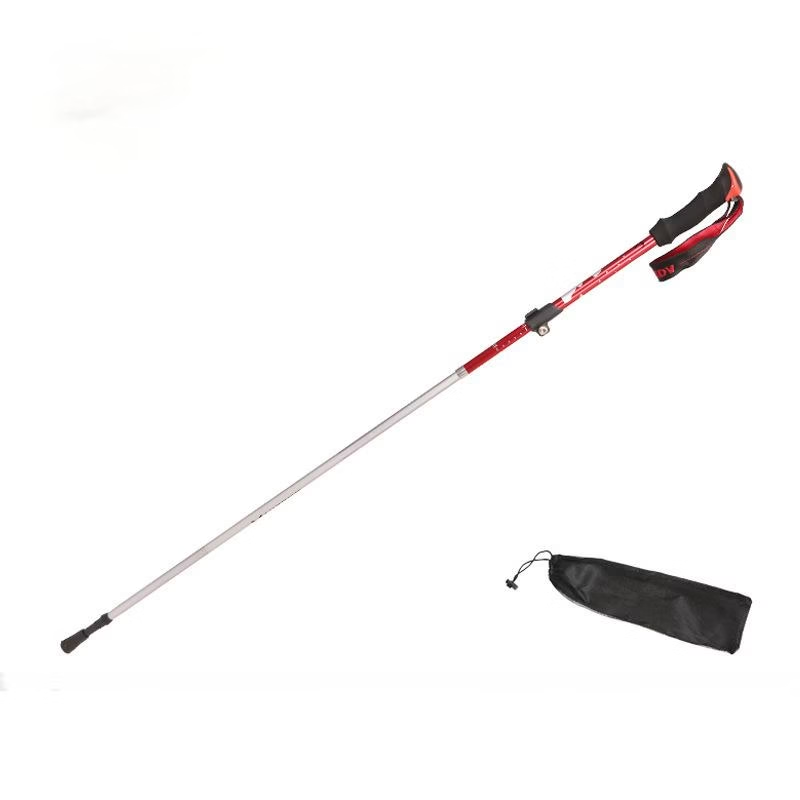
Consumable components sit in the weakest category, and this is not an accident. Soles, edge tape, foam in helmet liners, and the grip on a trekking pole are designed to wear out. If a supplier agrees to cover a worn grip on a pole at fourteen months, ask what they are really offering, because either the warranty is generous or the coverage is undefined. Generous and undefined is a liability, not a gift.
Defect, Misuse, and the Line in Between
The single most useful clause in a wholesale warranty is an explicit definition of misuse. Without it, every claim is a negotiation, and the negotiation is asymmetric: the buyer has the customer relationship, while the supplier has the information about how the item was actually used. A clause that names specific misuse categories removes that asymmetry entirely.
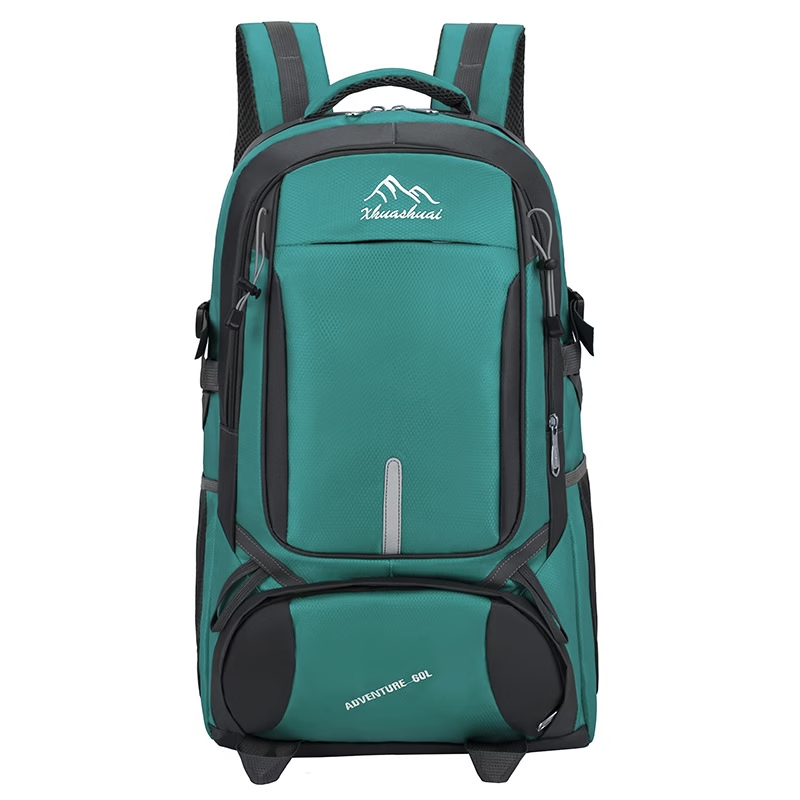
For hiking equipment specifically, the categories worth having named are recognisable and defensible. Load beyond the rated limit — a backpack filled past its stated volume capacity, a tent frame loaded beyond its wind rating, a stove run above its fuel type — is misuse. Modification is misuse, and it is worth stating whether any modification voids the warranty entirely or whether repair by a third party is treated as damage instead. Damage from an accident, a vehicle roof rack, or a washing machine is misuse. Chemical exposure and incorrect storage are misuse. Conversely, a zipper that fails because the supplier fitted a sub-standard coil is a defect, and that distinction should survive any clause about fair use.
What to Negotiate Before the First Order
Four clauses do most of the work in a wholesale warranty. Asking for them explicitly is far more effective than hoping they appear in a standard form.
- Duration measured from production, not from your purchase date. A twelve-month warranty that starts when the goods leave the factory means a buyer with a two-month sales cycle is already selling warranty-covered inventory. Ask whether the clock starts at production, at dispatch, or at your receipt, and get the answer in the agreement.
- Evidence burden that matches the value of the claim. For a low-value item, requiring photographic proof and serial-number verification before replacement may cost more to administer than the item is worth. For a high-value item such as a technical tent, that requirement is entirely reasonable. The clause should scale with the claim.
- A stated remedy ladder. Repair first, then replacement, then credit. If the order of remedies is not specified, the default behaviour of most suppliers is to offer the cheapest option, which for a retailer means a credit against the next order rather than a working replacement for the customer.
- A time limit on the claim window. A buyer who holds a claim open indefinitely is exposed to being told the claim is out of time at the moment a judgement is finally reached. A defined window — ninety days from the point the defect is confirmed — protects both sides.
| Clause | Weak position | Strong position | Why it matters |
|---|---|---|---|
| Warranty start date | From my order date | From production date | Production start means you sell warranty-covered stock from day one |
| Misuse definition | Not stated | Named categories: overload, modification, accident, chemical exposure | Without it every claim becomes a negotiation you lose |
| Remedy order | Credit only | Repair, then replacement, then credit | Credit against the next order is not a working replacement for the customer |
| Spare parts | Not discussed | Named components, stated stock period, post-warranty price | Availability determines whether the warranty has any real value |
| Return freight | I pay it | Supplier pays above a stated threshold | Claims below the threshold otherwise never get filed |
| Claim window | Open indefinitely | 90 days from confirmed defect | Protects both sides from claims surfacing years later |
Spare Parts Availability Is the Real Test
Every warranty in the industry has a shelf life, and no clause in the agreement will change that. What a clause can change is how much of the remaining life is useful to you. This is the point at which many buyers discover that a generous-looking warranty is commercially worthless, because the replacement component for a five-year-old product no longer exists.
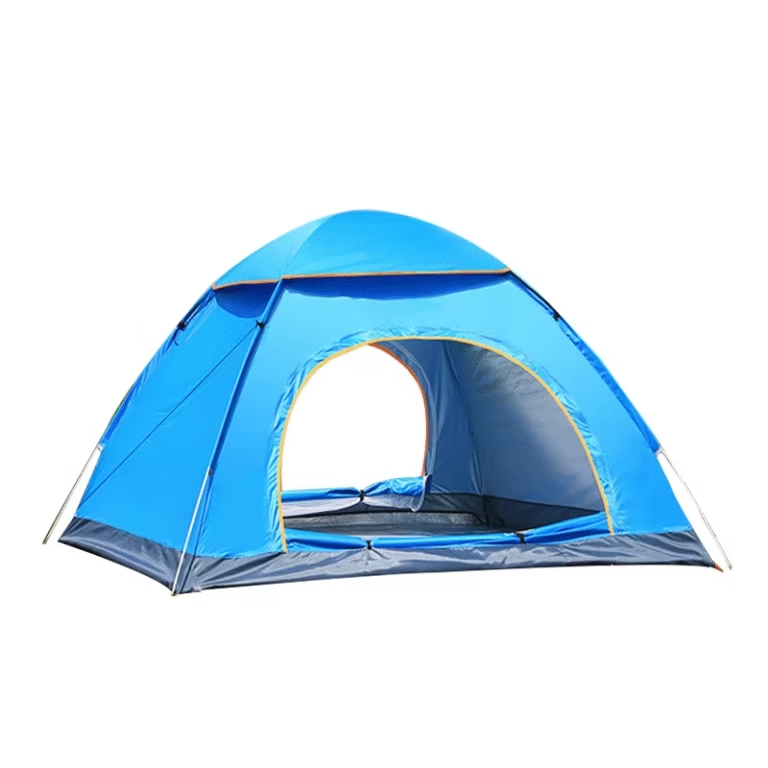
The exposure is worst on items with a high component count that are still in active use. A trekking pole with a basket, a grip, a strap, a lock, and a replaceable tip has more ways to fail than a solid shaft, and the failure-prone parts are the ones a supplier will drop first. A tent with a proprietary hub, unusual-length poles, and a custom fly material has a similar profile. When you negotiate warranty terms, ask directly which components are held in spare-parts stock, for how long, and at what price after the warranty period. The answer tells you more about the real life of the product than the warranty duration does.
Returns logistics and who pays the freight. A warranty claim that costs more to settle than the item is worth is not a warranty, it is a process. The freight arrangement is what usually decides this. Three models are common: the supplier pays return freight for every claim, which is the model you want but rarely get; the buyer pays and is credited back, which is workable if the turnaround is short and the credit is automatic; and the buyer absorbs the cost, which in practice means the claim is never filed for low-value items.
On a mixed order that matters disproportionately. A single broken buckle on a low-value item will sit in a drawer if filing the claim costs the buyer money. A single collapsed pole on a high-value item gets escalated because the customer is angry. The right structure for a small reseller is a claim threshold below which the buyer absorbs the cost, and an explicit instruction to the supplier to issue credit automatically once that threshold is met — rather than leaving each small loss as a decision point that adds friction to every order.
Building a Simple Warranty Register
You do not need a system, but you do need a record. The minimum that proves useful is a line per claim with six fields: the date the customer reported it, the product and SKU, the batch or production date, the failure described in the customer’s words, the remedy agreed, and the date it was closed. The production date is the one people forget, and it is the one that determines whether the claim falls inside the warranty period at all.
Keep failures in the language the customer used. A warranty argument almost always turns on whether the item was used as intended, and the phrase a customer chooses carries information that a paraphrase loses. If someone reports a pole that snapped while being twisted rather than loaded, the distinction between misuse and defect lives in those words, and a register that smooths them into “damaged” removes your only evidence.
Where This Intersects With Product Selection
Warranty terms and product choice are not separate decisions. A pole with more replaceable components is easier to warrant than a bonded one-piece, even if both are described as warrantable, because a bonded pole failure means total replacement while a component failure means a part. The same applies to a tent with standard pole diameter versus a proprietary system, and to a backpack with a replaceable buckle versus an integrated one. Where you have a genuine choice, component replaceability is worth more than a nominally longer warranty.
There is a wholesale catalogue of hiking equipment at AnttifySport covering the categories where warranty exposure concentrates — packs, tents, poles, and the accessories around them. Each SKU page lists the specification, so the replaceability question can be answered from the product data before the question is ever put to a supplier.
Questions to Put to the Supplier
The following list is written to be used as written. Each question has a specific reason attached, and each produces an answer that is either a clear commitment or a clear signal that the terms need work.
- Does the warranty period run from production date or from my order date?
- Which failures are explicitly excluded as misuse, and which components count as consumable?
- What is the remedy order — repair, replacement, or credit — and is credit issued automatically?
- How long are spare parts held after the warranty ends, and at what price?
- Who pays return freight, and is there a value threshold below which I absorb it?
- What is the maximum time a claim can stay open, and what evidence do you require at each value band?
Common Mistakes to Avoid
The most common mistake is accepting warranty language without writing any of it down, because it feels like a formality when the relationship is good and the volume is growing. It stops being a formality in the first season when a customer returns a product and the two sides remember the conversation differently. The second is negotiating the duration while leaving the remedy order undefined, which is how a buyer ends up with a twelve-month warranty that can only be settled in the form of credit against the next order. The third is treating spare-parts availability as a separate question, when it is the question that determines whether the warranty has any value at all.
About the Author
This guide is written by the AnttifySport sourcing team, who work directly with manufacturers of outdoor equipment for the wholesale market. The recommendations reflect what has held up in actual order cycles rather than general policy language.
Further Reading & Sources
Related guides on AnttifySport covering the wider sourcing and quality topics that warranty terms sit inside.
- How to Vet Chinese Outdoor Gear Suppliers: 4-Phase Process — the factory-side checks that determine whether a warranty term is honoured in practice.
- How to Evaluate Outdoor Gear Suppliers Before Your First Order — building the supplier relationship that warranty terms depend on.
- First Sample Order Strategy for Small Outdoor Gear Buyers — testing a product properly so quality failures surface before you commit volume.
- Outdoor Gear Wholesale Margins by Category (2026) — what margin cushion you need before you can absorb warranty cost.