Published: Sep 2026 · Category: B2B Buying Guide · Reading time: 8 min
Executive Summary
Container selection is the single biggest cost lever most outdoor gear importers leave on the table. A brand that picks the wrong container type (20FT, 40FT, 40FT HC, or LCL) can pay 30-60% more per CBM than a competitor running the same volume, and a brand that miscalculates usable space routinely ships at 55-65% utilization when 80-85% is the realistic target. For an importer moving one 40-foot container per month, that gap translates to $30,000-90,000 of avoidable freight spend per year, before detention, demurrage, and dead freight penalties.
The five-step framework below covers container type selection (Step 1), CBM math (Step 2), freight forwarder selection (Step 3), the September 2026 ocean freight market via Drewry WCI benchmarks (Step 4), and customs pre-clearance including HS codes, FDA registration, CE marking, and BL documentation (Step 5). Verify specific rates and regulatory thresholds against your forwarder’s current quote and the latest customs ruling before booking.
Step 1: Choose between 20FT, 40FT, 40FT HC, and LCL using a decision matrix
Most brands make this decision based on total CBM and miss four other variables: cargo density, SKU mix, destination port congestion, and cash flow timing. Container types: a 20FT standard (TEU) holds 26-28 CBM usable, rated for 21-22 metric tons; right for dense, heavy product like yoga mats, climbing harnesses, and hydration bladders. A 40FT standard (FEU) holds 54-56 CBM, rated for 26-27 tons; the workhorse for mixed outdoor apparel, mid-size backpacks, sleeping pads, and tent bundles. A 40FT High Cube (HC) holds 60-67 CBM with extra internal height for bulky items like ski bags, expedition tents, and winter sleeping bags. LCL is a service, not a container: your cartons are consolidated with other importers’ cartons, charged per CBM or per weight ton (whichever is higher).
The decision matrix:
Four variables beyond volume. Cargo density: outdoor apparel runs 200-400 kg/CBM; tents, sleeping bags, and ski gear run 50-120 kg/CBM. The 20FT is payload-limited at 21 metric tons; if your cargo hits 21 tons before volume, you must move to the 40FT regardless of CBM. SKU mix: 200 uniform 60×40×40 cm cartons stack cleanly to 80% utilization, while 800 cartons at 30×20×15 cm leave air gaps at 55-65%. Destination port congestion: a 40FT at Long Beach in peak month can sit 5-10 days before drayage, while a 20FT typically clears faster. Cash flow timing: a 20FT costs 50-60% of a 40FT in absolute freight, so lower upfront payment, lower duty exposure, and lower inventory carrying cost. Three 20FT shipments over a quarter can be financially smarter than a single 40FT for a brand with constrained working capital. When LCL still wins: order size below 12 CBM, first-time supplier validation with a 5-8 CBM pilot order, and multi-origin consolidation at a Chinese hub port. The FCL-vs-LCL crossover sits at roughly 12-15 CBM for most trade lanes in 2026. Below that crossover, LCL typically wins. Above it, FCL wins on cost, transit time, and damage rate.
Step 2: Calculate container utilization with the CBM formula
The CBM formula is one line: CBM = Length (m) × Width (m) × Height (m) × Quantity of cartons. A single 0.6 m × 0.4 m × 0.4 m carton in a quantity of 500 is 0.6 × 0.4 × 0.4 × 500 = 48 CBM, which fits a 40FT standard with room to spare but fills a 20FT to 100% theoretical utilization (not achievable in practice). For mixed SKUs, calculate each SKU separately, then sum. The 20FT theoretical capacity (33 CBM) and 40FT (66 CBM) reflect internal volume; realistic utilization is lower because carton dimension mismatch leaves air gaps, stacking inefficiency means the top layer is rarely flush with the container ceiling (plan for 5-10 cm of vertical dead space), pallet constraints add 15 cm of vertical space, and weight-driven voids occur when dense cargo hits the 21-ton 20FT payload limit at lower volume utilization. Plan for 80-85% of theoretical capacity as the realistic target.
Carriers charge by whichever is higher: actual weight or volumetric weight. For air freight, volumetric weight = Length (cm) × Width (cm) × Height (cm) ÷ 5000; for LCL ocean freight, the divisor is 6000. If your cartons are large but light (sleeping bags, packable rain shells, inflatable pads), the volumetric weight often exceeds the actual weight, and you pay for the volume even though the cargo is light. For FCL this matters less because the rate is a flat fee per container.
Worked example for a 40FT HC shipment. Imagine the following order: 600 cartons of 40L backpacks (0.55 × 0.40 × 0.30 m, 7,200 kg, 39.6 CBM), 400 cartons of trekking poles (1.10 × 0.15 × 0.15 m, 4,800 kg, 9.9 CBM), 300 cartons of sleeping pads (0.50 × 0.30 × 0.30 m, 2,400 kg, 13.5 CBM), 200 cartons of headlamps (0.40 × 0.30 × 0.30 m, 1,400 kg, 7.2 CBM). Total: 1,500 cartons, 70.2 CBM, 15,800 kg. A 40FT HC at 67 CBM usable cannot fit this at 100% utilization; theoretical utilization is 70.2/67 = 105%, which is impossible. Three options: (1) step down to a 40FT standard at 54-56 CBM usable and split the shipment; (2) step up to two 40FT HC at 67 CBM each and accept 52% utilization in each; (3) reduce the order to fit one 40FT HC at 90% utilization (roughly 60 CBM) and defer 10 CBM to the next order cycle. Going above 90% utilization is a damage risk; below 60% is leaving money on the table.
Step 3: Choose a freight forwarder and find the FCL-vs-LCL cost crossover
A good freight forwarder does more than book a container. They advise on container type, negotiate carrier rates, coordinate origin pickup, handle export customs clearance, prepare the Bill of Lading, and coordinate destination drayage. The wrong forwarder quotes a low headline rate and quietly adds fees at every handoff.
Three categories of forwarders for China outbound. Large global integrators (Flexport, DHL Global Forwarding, Kuehne+Nagel, Sinotrans) offer strong digital tracking and bonded warehousing. Per-shipment cost is often 5-15% above smaller forwarders, but reliability and documentation discipline are higher; for brands shipping 4+ containers per month on the transpacific, this category is worth the premium. Mid-size China-based forwarders (YQN Logistics, AEB Logistics, CIMC, CN Logistics) are volume leaders on Asia-outbound lanes with strong relationships with major carriers (Maersk, CMA CGM, MSC, COSCO, Hapag-Lloyd, ONE, Evergreen, Yang Ming). Per-CBM cost is typically 10-20% below the integrators. For brands shipping 1-3 containers per month, this category offers the best value. Small specialist forwarders and consolidators serve LCL-only shippers and Amazon FBA sellers. Use this category for LCL under 10 CBM and pilot shipments, not for FCL commitments.
The FCL-vs-LCL cost crossover in 2026 sits at approximately 12-15 CBM for most Asia-to-US and Asia-to-EU lanes. A 20FT FCL at 24 CBM usable (80% of 30 CBM theoretical) on the Shanghai-Los Angeles lane in September 2026 cost approximately $1,800-3,500 base ocean freight, plus $400-700 in surcharges (BAF, THC, documentation, EU ETS where applicable), for an all-in of roughly $2,400-4,200 for 24 CBM, or $100-175 per CBM. The same 24 CBM shipped LCL at $80-130 per CBM (mid-2026 Freightos FBX LCL benchmark) costs $1,920-3,120. The totals overlap, meaning the crossover happens within the LCL volume range itself. Practical rule: request both FCL and LCL quotes whenever your shipment is between 10-18 CBM. Below 10 CBM, LCL almost always wins. Above 18 CBM, FCL almost always wins.
How to evaluate a forwarder before booking. Ask five questions: (1) What carriers do you hold contracts with for my lane? (2) What is the all-in rate, including every surcharge (BAF, THC at origin and destination, documentation, EU ETS, AMS, ISF, seal fee, BL fee)? (3) What is the typical transit time and on-time performance for this lane in the last 90 days? (4) Who handles customs clearance at destination, and is that included? (5) What is your cargo insurance offering (All-Risk vs Free of Particular Average; typical cost is 0.3-0.5% of cargo value)? For a brand shipping its first container, a mid-size China-based forwarder with documented experience on the specific trade lane is the safest starting point.
Step 4: Read the 2026 China-to-US and China-to-EU ocean freight market
Ocean freight rates in 2026 have moved through three phases: a depressed early-2026 trough, a mid-year rally driven by capacity discipline, and a September plateau as carrier blank sailings absorb demand. The Drewry World Container Index (WCI) tracks spot rates on the eight major container trade lanes every week. The four benchmarks that matter most for outdoor gear importers are Shanghai-Los Angeles, Shanghai-New York, Shanghai-Rotterdam, and Shanghai-Genoa.
Drewry WCI benchmarks, week of 10 September 2026:
- Shanghai to Los Angeles: $7,352 per 40FT (Drewry WCI, 10 September 2026)
- Shanghai to New York: $9,726 per 40FT (Drewry WCI, 10 September 2026)
- Shanghai to Rotterdam: $3,997 per 40FT (Drewry WCI, 10 September 2026)
- Shanghai to Genoa: $4,216 per 40FT (Drewry WCI, 10 September 2026)
These are dated spot benchmarks; actual contract and FAK (Freight All Kinds) rates may differ by 5-15%. The composite WCI for the same week was $4,476 per 40FT, marking a second consecutive week of stability after a 10-week rally from the early-2026 trough. In Q1 2026, transpacific rates bottomed at roughly $2,500-3,500 per 40FT Shanghai-LA, well below the 2021-2023 crisis-era peaks of $15,000-20,000 per 40FT. Carriers responded with aggressive blank sailings, pushing the Shanghai-LA rate up roughly 130% from trough to September peak. The Asia-Europe lane rose more modestly, from $2,552 per 40FT Shanghai-Rotterdam in late March 2026 to $3,997 by mid-September, a 57% increase. The transpacific rally has been steeper than the Asia-Europe rally because the Red Sea diversion has not affected the transpacific lane and demand recovery has been stronger in North America than in Europe. If your outdoor gear is destined for the US market, locking in Q4 2026 rates now is reasonable. If your destination is Europe, the upside risk is lower and you can wait another 4-6 weeks.
Surcharges to budget for in 2026. The base ocean freight rate is roughly 70-80% of your all-in landed cost; surcharges add 20-30% and have grown faster than base rates. BAF/LSS runs $200-600 per 20FT and $400-1,200 per 40FT. THC at origin and destination runs $150-300 per 20FT and $250-500 per 40FT at each end. Documentation fees are $50-150 per shipment for BL, AMS, and ISF. The EU ETS surcharge averages approximately $168 per dry 40FT on Asia-North Europe routes (about 6-7% of base freight), effective from 2024 onward. Peak Season Surcharge (PSS) is applied from mid-summer to early Q4; Maersk announced a $1,000 per 40FT PSS for Far East Asia-Middle East from July 2026. Demurrage and detention accrue at $75-200 per day and $50-150 per day respectively, after the typical 4-7 day free time at port.
The practical procurement playbook for late 2026. Three moves: (1) Book Q4 sailings 4-6 weeks earlier than 2025; the 2026 capacity environment is tighter and blank sailings are being announced week-to-week. (2) Lock in Q1 2027 contract rates with your forwarder in November-December 2026; annual contracts typically renew in Q4. (3) Diversify your carrier mix; a typical mid-size brand should have access to 3-4 carriers on each lane to maintain negotiating leverage.
Step 5: Clear customs before the container sails, not after it arrives
Customs pre-clearance is where outdoor gear importers lose the most time and money. A container that arrives at Long Beach without a properly filed ISF, an accurate HTS classification, and (for relevant products) an FDA Prior Notice can be held 5-14 days while the issues are resolved. The cost of a single demurrage event ($1,500-3,000) is more than the cost of doing the pre-clearance work upfront.
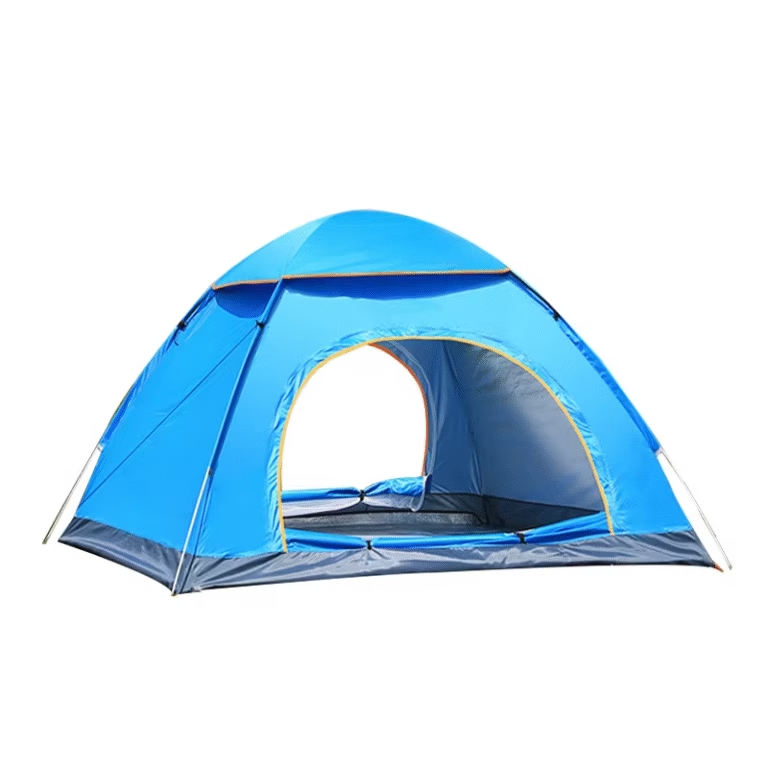
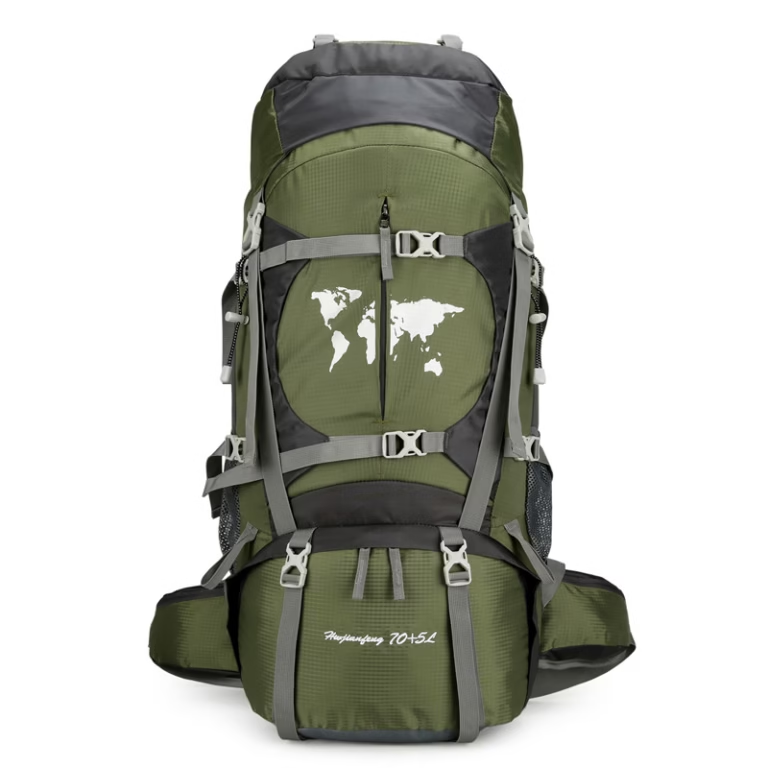
HS code selection: the 5% mistake. The Harmonized Tariff Schedule (HTS) classifies every importable product into a 10-digit code that determines the duty rate. For backpacks, the primary HTS code is 4202.92.31.20 (man-made fiber, e.g., nylon or polyester), with a general duty rate of 17.6%. Cotton backpacks qualify under 4202.92.15.00 at 6.3%. Leather backpacks are at 4.5%. Backpacks with plastic outer surfaces face 20%. For tents, the relevant HTS code is 6306.22.10.00 (backpacking tents, synthetic fibers), which is duty-free. Non-backpacking tents (car camping, family tents) are classified under 6306.22.90 and carry an 8.8% duty. For sleeping bags, the HTS code is 9404.30, with down-filled bags typically under 9404.30.40.40 with a 4.4% duty rate. A 1% misclassification on a $50,000 container is $500. A 5% misclassification is $2,500. Over a year of monthly shipments, that is $30,000 of avoidable duty. The cost of getting a CBP binding ruling is typically $200-500 per ruling. The math strongly favors getting it right.
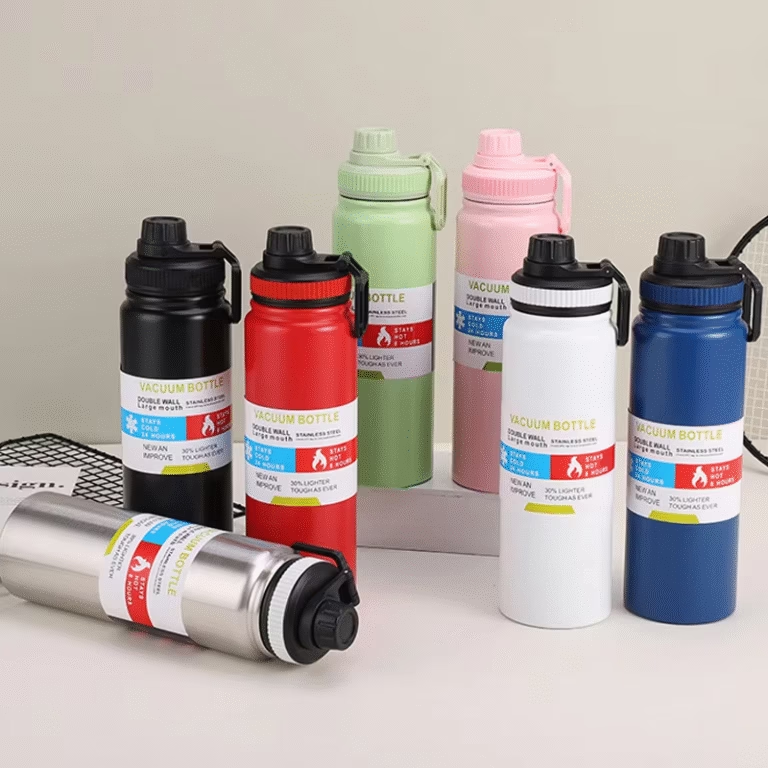
FDA registration for food-contact outdoor gear. The U.S. FDA regulates certain outdoor gear that comes into contact with food or beverages, including hydration bladders, water bottles, camping cookware with food-contact surfaces, and insulated food containers. The 2026 biennial FDA Food Facility Registration renewal window runs from October 1 through December 31, 2026, applying to all registered facilities during every even-numbered year. Missing the deadline can result in cancellation of the registration and prevent food-contact shipments from entering the United States until the facility is properly re-registered. For importers, the key obligations are FSVP compliance (hazard analysis, supplier evaluation, documented verification activities, records retained for at least two years), Prior Notice (filed 15-30 days before arrival for water-borne cargo), and supplier approval (documented hazard analysis before the first shipment).
CE marking for sleeping bags and EU textile regulations. Sleeping bags sold in the EU must comply with the EN 13537 / ISO 23537 standard for temperature rating labeling (EN 13537 was superseded by ISO EN 23537:2016, then ISO 23537-1:2022). The standard requires a thermal manikin test that produces four temperature results: upper limit, comfort, lower limit, and extreme. There is no legal obligation for brands to conform in the strict sense, but the standard has become the de facto baseline for sleeping bag temperature claims in both Europe and North America. For other outdoor gear sold in the EU, REACH restricts the use of certain chemicals in textile and plastic products. The General Product Safety Regulation (GPSR), effective December 2024, requires all consumer products sold in the EU to have a designated responsible person established in the EU. CE marking for personal protective equipment (PPE) such as climbing harnesses and helmets is required under the PPE Regulation (EU) 2016/425, which requires third-party certification by a Notified Body, not self-declaration. The cost of CE certification for a new PPE product ranges from $3,000-15,000 per product line.
Documentation checklist before the Bill of Lading is issued: Commercial Invoice with HS codes, country of origin, unit and total values, Incoterm; Packing List with carton count, gross/net weight, dimensions, carton numbers; Certificate of Origin if required by a free trade agreement; ISF (Importer Security Filing) for US-bound ocean cargo, filed 24-48 hours before vessel loading; AMS transmission for US-bound cargo; FDA Prior Notice for food-contact products, filed 15-30 days before arrival; CE/REACH/GPSR compliance documentation for EU-bound cargo; Letter of Credit documents if payment is by L/C; Insurance certificate if cargo insurance is not arranged by the forwarder. The cost of a single missing document: $500-3,000 in demurrage, plus reputational damage with the destination warehouse.
Comparison table: FCL vs LCL vs Air for outdoor gear
Bottom line for sourcing teams
Container loading optimization is a compound decision, not a single number. The five steps work together; optimizing one while ignoring the others leaves most of the savings on the table.
For a typical mid-size outdoor brand shipping 2-4 containers per month, the practical framework is: (1) Calculate CBM for the actual SKU mix, not the theoretical container capacity, and target 80-85% utilization. (2) Pick the container type based on volume, density, and cash flow, not volume alone. (3) Use LCL below 12 CBM and FCL above 18 CBM, and request both quotes between 10-18 CBM. (4) Choose a mid-size China-based forwarder with documented lane experience for shipments under 4 containers per month, and migrate to a global integrator as volume scales. (5) Lock in Q4 2026 rates now and Q1 2027 contract rates in November-December 2026. (6) File ISF, Prior Notice, and CE/REACH documentation before the Bill of Lading is issued.
Budget $2,000-5,000 for the freight forwarder selection and customs pre-clearance setup process during your first container. Run a 5-8 CBM LCL pilot order as the final validation before committing to a full FCL commitment with a new supplier. Three months of upfront specification saves three years of avoidable demurrage, misclassification penalties, and per-CBM overspend.
About the Author
The AnttifySport Sourcing Team supports wholesale buyers, importers, and brand owners sourcing camping, hiking, cycling, and skiing gear from qualified factories. We have worked with over 200 B2B clients across North America, Europe, the United Kingdom, and Australia since 2018, with a focus on low-MOQ custom orders, OEM/ODM partnerships, and freight optimization for emerging outdoor brands. Have a sourcing question or want to discuss your next container booking? Reach out at https://www.anttifysport.com/contact/.
Further reading & sources
Related guides on AnttifySport and the public data sources referenced in this article.
- Shipping Container Consolidation Strategies for 2026 Importers: FCL vs LCL Decision Matrix and Freight Cost Breakdown — forwarder selection and consolidation economics.
- How to Evaluate Outdoor Gear Suppliers Before Your First Order: A 5-Step B2B Vetting Framework — supplier qualification before booking your first container.
- Payment Terms & Letters of Credit for Outdoor Gear Imports — financing model options including L/C, D/P, and open account.
- Drewry World Container Index (WCI) — Latest Trackers and Indices — weekly spot benchmarks for the eight major container trade lanes.
- Flexport HTS Code Database — Outdoor Gear — Harmonized Tariff Schedule lookup for backpacks, tents, sleeping bags, and apparel.
- U.S. FDA — Food Facility Registration Biennial Renewal 2026 — registration renewal window October-December 2026 and FSVP importer obligations.
- EN 13537 / ISO 23537 — Sleeping Bag Temperature Rating Standard — European standard for sleeping bag thermal manikin testing and labeling.
All 2026 ocean freight rate figures are drawn from Drewry’s World Container Index assessed the week of 10 September 2026 and Freightos FBX LCL benchmarks. HS code classifications reflect the 2026 U.S. Harmonized Tariff Schedule and the EU Combined Nomenclature as of the publication date. FDA facility registration timelines reflect the 2026 biennial renewal window (1 October through 31 December 2026). Verify specific rates, classifications, and regulatory thresholds against your forwarder’s current quote, your customs broker’s binding ruling, and the latest official guidance from CBP, EU customs authorities, and FDA before booking a shipment. Cost ranges cited are industry-typical as of September 2026 and are not guaranteed for any specific lane, carrier, or supplier.
Public data sources cited; readers should verify specific figures against the latest available editions of these reports before making sourcing decisions based on this analysis. Container specifications, freight rates, and regulatory requirements vary by route, season, and destination country — confirm current rates with your freight forwarder and customs broker before booking. HS code classifications and duty rates are subject to change; verify with your customs broker or local tariff authority. This article is for informational purposes and does not constitute legal, tax, or logistics advice.
Related Products from AnttifySport
Browse the AnttifySport catalog for outdoor gear covered in this article. All products shown here are part of our wholesale lineup — wholesale pricing, low MOQ, and OEM/ODM support available. Contact our team for quotes.